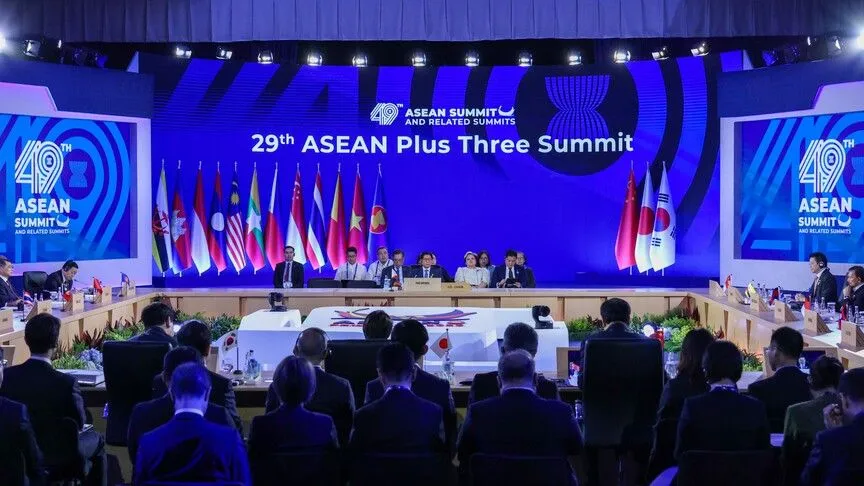
中国、日本和韩国周二在马尼拉举行的第29届东盟与中日韩(10+3)领导人会议期间,讨论了日益加剧的地缘政治动荡及其对地区稳定的影响,呼吁加强合作以应对共同挑战。
China, Japan and South Korea discussed growing geopolitical disruptions and their impact on regional stability during the 29th ASEAN Plus Three Summit in Manila on Tuesday, calling for stronger cooperation to address shared challenges.
担任东南亚国家联盟(东盟)轮值主席的菲律宾总统小费迪南德·马科斯警告称,数千英里外的动荡正通过食品和能源价格上涨影响东亚和东南亚,凸显了全球经济变动对整个地区民众的直接冲击。
Philippine President Ferdinand Marcos Jr., who chairs the Association of Southeast Asian Nations (ASEAN), warned that disruptions thousands of miles away were affecting East and Southeast Asia through rising food and energy prices, highlighting the immediate impact of global economic shifts on people across the region.
在会议开幕时,马科斯呼吁区域合作的成果要“切实可见,并以同样的紧迫性惠及我们的人民”,称这种伙伴关系能提供“当下更大的安全感和对明天的信心”。他表示,“10+3”框架为制定切实可行的措施和金融安排、维护经济稳定提供了平台。
Opening the summit, Marcos called for the benefits of regional cooperation to be "tangible and reach our peoples with the same urgency," saying the partnership could provide "greater security today and confidence for tomorrow." He said the ASEAN Plus Three framework offered a platform for developing practical measures and financial arrangements to safeguard economic stability.
他说:“随着冲突、供应中断、金融不确定性和自然灾害给我们的经济带来新压力,这些都是我们可以在此基础上继续建设的基石。”
"These are foundations we can build upon as conflict, supply disruptions, financial uncertainty, and natural disasters place new pressures on our economies," he said.
日本首相高市早苗表示,“10+3”框架下的合作增强了国家自主性和韧性,强调了在现有金融合作和粮食安全努力之外,拓展灾害应对和打击有组织犯罪合作的机遇。她重申日本支持东盟的核心地位和团结。
Japanese Prime Minister Sanae Takaichi said cooperation under the framework strengthened national autonomy and resilience, highlighting opportunities to expand collaboration on disaster response and combating organized crime alongside existing efforts in financial cooperation and food security. She reaffirmed Japan's commitment to supporting ASEAN centrality and unity.
韩国总统李在明表示,自近三十年前建立“10+3”框架以来,国际政治经济格局已变得“更加复杂和不确定”。
South Korean President Lee Jae Myung said the international political and economic landscape had become "more complex and uncertain" since the ASEAN Plus Three framework was established nearly three decades ago.
他说:“在一个地区发生的冲突和冲击迅速威胁到每个人日常生活之际,正是‘10+3’发挥作用的时刻,它在危机时刻始终展现出的力量将更加耀眼。”
"At a time when conflicts and shocks occurring in one region are rapidly threatening everyone's daily lives, now is precisely the moment when the role of ASEAN Plus Three, which has consistently demonstrated its strength in times of crisis, will shine even brighter," he said.
李某呼吁加强该地区应对和从复杂危机中恢复的能力,同时为可持续增长奠定基础。
Lee called for strengthening the region's ability to respond to and recover from complex crises while laying the groundwork for sustainable growth.
中国农业部长张祝也警告地缘政治紧张局势升级、全球经济增长放缓以及风险叠加,同时将东亚的经济成就描述为“显著”。他说,该地区仍继续面临能源供应、粮食安全和供应链稳定方面的挑战。
Chinese Agriculture Minister Zhang Zhu also warned of rising geopolitical tensions, slowing global economic growth and overlapping risks, while describing East Asia's economic achievements as "remarkable." He said the region nevertheless continued to face challenges involving energy supplies, food security and supply chain stability.
“我们中国人认为,众人拾柴火焰高。面临的困难越多,越需要团结和协调,”他说。
"We Chinese believe that the flame runs high when everyone adds wood to the fire. The more difficulties we face, the more unity and coordination we need," he said.
张祝强调,互信仍是区域合作的基础,敦促各国为互信、和平与稳定“作出贡献”,同时承担更大责任,而非将地缘政治算计置于首位。
Zhang emphasized that mutual trust remained the foundation of regional cooperation, urging countries to "contribute" to mutual trust, peace and stability while assuming greater responsibility rather than prioritizing geopolitical calculations.