英国工人遭遇三年多来首次实际工资缩水,全球能源价格居高不下,威胁到首相安迪·伯纳姆提振生活水平的承诺。
British workers are suffering their first real-terms pay cut in more than three years, as elevated global energy prices threaten Prime Minister Andy Burnham’s promise to boost living standards.
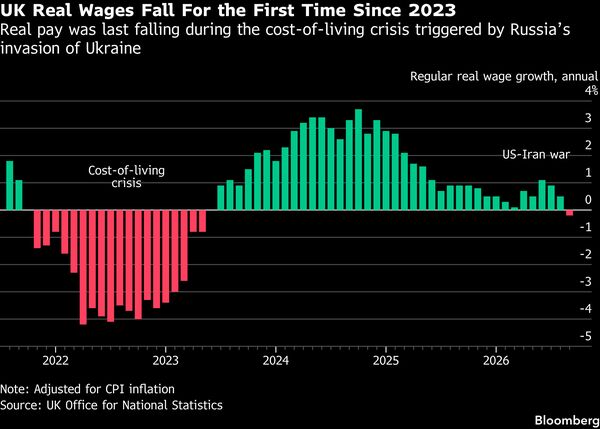
英国国家统计局周二表示,按消费者物价指数(CPI)调整后的正常工资在截至9月的一年里下降了0.2%,这是自2023年5月以来的首次下跌。虽然名义工资仍以3.5%的速度增长,但已不再跟得上飙升的燃料价格和能源账单,后者将通胀推高至近一年来的最高水平。
Regular pay adjusted for CPI inflation fell 0.2% in the year to September, the first drop since since May 2023, the Office for National Statistics said Tuesday. While nominal wages are still growing by 3.5%, they’re no longer keeping up with surging fuel prices and energy bills, which have pushed up inflation to the highest level in almost a year.
这标志着英国从上一轮生活成本危机中复苏的结束,当时工人实际收入连续一年半变穷。伯纳姆今年早些时候上台后承诺在生活成本方面给民众“喘息空间”,但美伊冲突使全球价格压力居高不下。
It marks the end of Britain’s recovery from the last cost-of-living crisis, when workers became poorer in real terms for one and a half years. Burnham pledged “breathing space” with the cost of living after coming to power earlier in the year, but the US-Iran conflict has kept global price pressures high.
按实际价值计算,自伯纳姆7月接替前任基尔·斯塔默以来,工资略有下降。
In real terms, wages are down slightly since Burnham took over from his predecessor Keir Starmer in July.
实际薪酬萎缩增加了家庭因伊朗战争而承压的证据。10月消费者信心暴跌,抵押贷款需求降至33个月低点,购物者更倾向于购买小额犒劳商品而非大宗消费。
Shrinking real pay adds to evidence that households are coming under pressure from the war in Iran. Consumer confidence plunged in October, demand for mortgages is at its lowest in 33 months and shoppers are prioritizing small treats over big-ticket purchases.
英格兰央行正在留意更高能源成本是否促使工人要求加薪,从而使通胀更加根深蒂固。周二公布的劳动力市场数据几乎没有显示所谓的二轮效应迹象,但英央行担心明年初可能出现更确凿的证据。
The Bank of England is looking out for signs that higher energy costs are prompting workers to demand higher wages, making inflation more entrenched. Tuesday’s labor market figures provided little evidence of so-called second-round effects, but the BOE fears more conclusive evidence may surface early next year.
英央行本月三年多来首次加息,官员发出进一步加息的信号,以抵御中东冲突带来的价格压力。
The BOE raised interest rates for the first time in over three years this month, with officials signalling further increases are likely to fend off price pressures from the Middle East conflict.