在距离战场数英里的地下掩体中,一名乌克兰无人机指挥官注视着实时画面,发现一名俄罗斯士兵正躲藏在树林里,随即命令一名飞手前去将其击杀。几分钟内,那名士兵便在一团烟雾中消失。随后,后方办公室开始运转起来。
In an underground bunker miles from the battlefield, a Ukrainian drone commander watching a live feed spots a Russian soldier skulking in some trees and orders a pilot to go in for the kill. Within minutes, the soldier disappears in a puff of smoke. Then the back office swings into action.
一段短视频被自动发送给审核员,以核实战果。任务参数——从所用无人机和弹药的类型,到确切的时间、地点和参与人员——都会被自动记录。通过分析这些数据,指挥官可以挑选飞手执行任务、决定采购哪些无人机,并追踪俄军的部署动向。
A short video is automatically sent for an auditor to verify the damage. Parameters from the mission—from the type of drone and munition used to its exact time, place and participants—are logged automatically. Analyzing the data allows commanders to select pilots for missions, choose which drones are worth purchasing and track the disposition of Russian forces.
这套基本自动化的流程,帮助乌克兰的无人机部队成为世界上最致命的作战力量之一。乌克兰无人系统部队表示,上周有一天他们造成俄军806人伤亡,创下纪录。这是乌克兰防御行动的一部分,在战争进入第五年之际,这一行动几乎遏制住了俄军的推进。
This largely automated process has helped turn Ukraine’s drone army into one of the world’s deadliest fighting forces. Ukraine’s Unmanned Systems Forces said they killed or wounded a record 806 Russian soldiers one day last week, part of a Ukrainian defensive effort that has all but stopped Russian advances in this fifth year of war.
自2022年俄罗斯入侵以来,乌克兰一直依靠无人机技术的进步,来对抗这个庞大邻国更为强大的军队。起初,乌克兰人像《百战天龙》里的马盖先那样,用现成的技术拼凑装备。如今,他们追求的是像麦当劳那样的效率和标准化。
Since the start of the Russian invasion in 2022, Ukraine has relied on advances in drone technology for an edge over its giant neighbor’s more powerful military. At first, Ukrainians cobbled together their equipment using off-the-shelf tech in the style of MacGyver. These days, they are aiming for efficiency and standardization like McDonald’s.
“你干掉了10个混蛋。好,这个数字不错。那你用了多少架无人机?”乌克兰无人系统部队指挥官罗伯特·布罗夫迪少校在总结这一思路时说。
“You killed 10 a—holes. OK, that’s a good number. How many drones did you use for that?” said Maj. Robert Brovdi, commander of Ukraine’s Unmanned Systems Forces, summing up the approach.
布罗夫迪曾是粮食贸易商和艺术收藏家,他把数据驱动商业的原则注入了战争艺术。
Brovdi, a former grain trader and art collector, has infused the principles of data-driven business into the art of war.
这位51岁的军人在俄罗斯入侵时加入乌克兰军队,组建了一支无人机小队,并凭借犀利的帖子和来自战场的直观视频在网上积累了一批追随者。
The 51-year-old joined Ukraine’s military when Russia invaded, building up a drone team and an online following with his snarky posts and graphic videos from the field.
周二,布罗夫迪发布了用于袭击连接乌克兰克里米亚与俄罗斯的桥梁的武器照片,这次大胆袭击有无人机部队参与。“神圣的桥已经疲惫了,是时候用橡皮艇了,”他在即时通讯应用Telegram上写道。“这散发着——简直是臭气熏天——帝国历史耻辱的味道:在重要地缘政治博弈前夕给沙皇的一记‘皇家’重拳。”如今,一根接一根抽烟、小口喝茶的布罗夫迪又回到了某种办公室,领导着一家企业,它一半是科技公司,一半是杀戮机器。
On Tuesday, Brovdi posted photos of weapons used in a daring attack on the bridge connecting Ukraine’s Crimea and Russia, carried out with participation from drone forces. “The sacred bridge has grown weary; it’s time for rubber boats,” he wrote on the Telegram messaging app. “It reeks—it’s practically stinking—of the empire’s historical shame: a ‘royal’ punch to the tsar on the eve of important geopolitical maneuvers.”These days, the chain-smoking, tea-sipping Brovdi is back in an office of sorts, leading an enterprise that is part tech company, part killing machine.
效率对乌克兰尤为重要,因为它无法与俄罗斯的资源相匹敌。克里姆林宫押注,源源不断的徒步士兵,或从小型摩托车到四轮摩托的各种小型车辆,能够夺取足够多的土地,使战争朝着有利于俄罗斯的方向转变。乌克兰用于防守前线的步兵人数只有对方的几分之一,因此依靠无人机来阻止他们。
Efficiency is particularly important for Ukraine, which can’t match the resources of Russia. The Kremlin has bet that a stream of soldiers on foot, or small vehicles from scooters to quad bikes, can gain enough ground to turn the war in Russia’s favor. Ukraine, with many times fewer infantry to defend the front lines, relies on drones to stop them.
这一做法正在奏效。布罗夫迪的无人机部队称,他们占乌克兰军队不到3%,却占对俄罗斯目标打击的三分之一以上。
The approach is working. Brovdi’s drone forces say they account for less than 3% of Ukraine’s troops, but over one-third of strikes on Russian targets.
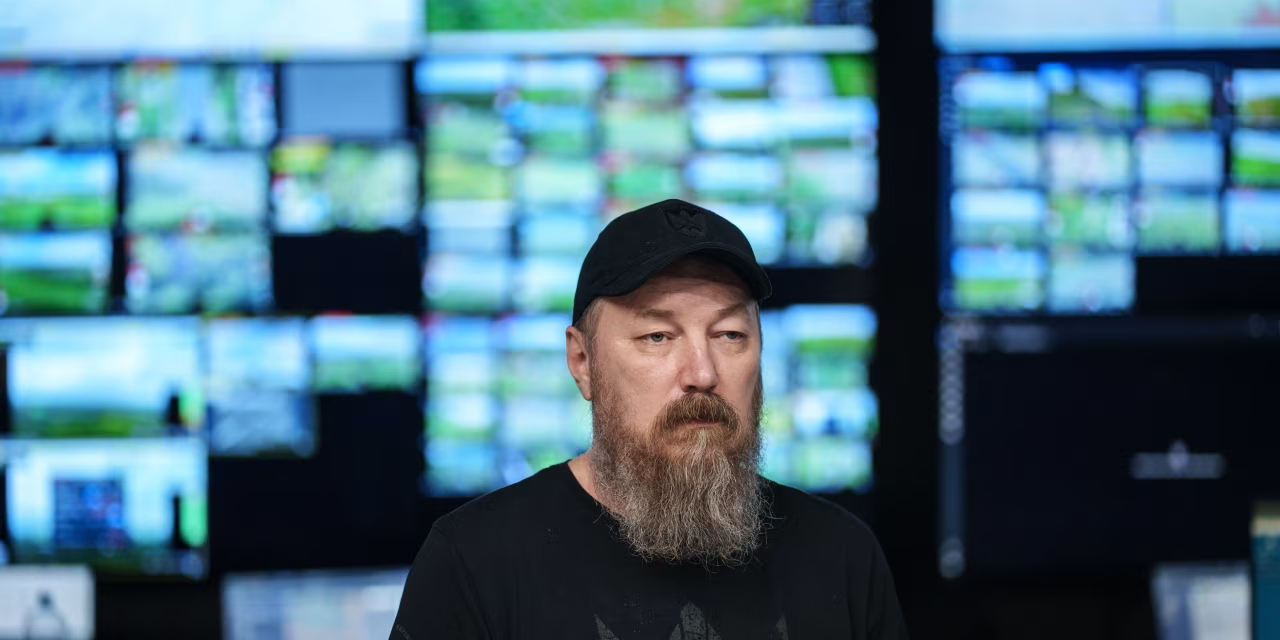
为了解这一切如何运作,《华尔街日报》获得了独家机会,在数十个分析与行动中心之一度过了12小时轮班,这些中心是无人机部队行动的神经中枢。
To see how it all works, The Wall Street Journal gained exclusive access to spend a 12-hour shift in one of dozens of analytical-and-operations hubs that are the nerve centers of the drone army’s operations.
在这里,所谓的“战斗队长”们扫视成排的屏幕寻找俄罗斯士兵,协调乌克兰无人机操作员,并帮助他们选择打击目标。他们与情报队长、电子战和防空专家以及记录击杀战果的审计人员并肩工作。
Here, so-called “battle captains” scan banks of screens for Russian soldiers, coordinate Ukrainian drone operators and help them choose what to target. They work alongside intelligence captains, electronic warfare and air-defense experts and auditors logging kills.
无人机团队使用量身定制的软件上传有关其任务的数据。这些信息用于帮助指挥官确定购买哪些类型的武器、如何调整装备设计,以及俄罗斯人在何处部署各类装备。
The drone teams use tailor-made software to upload data about their missions. That information is used to help commanders figure out which types of weapons to buy, how to tweak equipment designs and where the Russians are deploying various types of equipment.
“这里有人力、技术和资金资源,问题是如何尽可能高效地使用它们,”该中心的主任说,他的呼号是“木星”。“只不过在我们这里,目的不是赚钱,而是用钱换取尽可能多的击杀。”任务结果经过处理后,会显示在房间中央的一块屏幕上,记录着该部队成功打击的目标——包括士兵和装备。
“There are human, technical, and financial resources and the question is how to use them as effectively as possible,” said the hub’s director, who goes by the call sign Jupiter. “It’s just that in our case, it’s not about making money, but exchanging it for as many kills as possible.”The results of the missions, once processed, are visible on a screen in the middle of the room that logs the unit’s successful strikes—on soldiers and equipment.
附近一块较小的屏幕上显示着其他统计数据,包括每击杀一名俄罗斯士兵的平均成本(10月为817美元,低于5月的约1000美元)以及平均所需无人机数量(三架)。
Other stats are displayed on a smaller screen nearby, including the average cost per Russian soldier killed ($817 in October, down from around $1,000 in May) and the average number of drones it took (three).
这支部队的业务或许是杀戮,但其氛围却颇像一家热闹的科技公司。
The unit’s business may be killing, but there is something of a buzzy tech company about its atmosphere.
一台印有该企业标志的咖啡机为穿着连帽衫和橡胶凉鞋的年轻人补充能量。墙上的屏幕与艺术品形成对比,其中包括乌克兰艺术家玛丽亚·普里马琴科的一幅花卉原画,也挂在那里。书架上摆放着关于人工智能、管理以及艺术与设计的书籍。
A coffee machine branded with the enterprise’s logo refuels young men clad in hoodies and rubber sandals. The screens on the walls contrast with works of art, including an original painting of flowers by the Ukrainian artist Maria Prymachenko that also hangs there. Books on artificial intelligence, management, and art and design stand on bookshelves.
中心入口处排列着该部队阵亡士兵的名字——每次轮班开始前,这都提醒着他们工作的代价。过去一年里,整个无人机部队损失的人员不到百分之一的一半。
The entrance to the center is lined with the names of fallen soldiers from the unit—a reminder of the cost of their work before the beginning of each shift. Over the past year, the entire drone forces lost less than half a percent of its personnel.
布罗夫迪还掌握了其技术主管角色的另一个方面:在社交媒体上积极活跃。他和他的部队分享成功击杀的精彩片段,向数十万粉丝展示一些俄罗斯士兵生命的最后时刻,从拼命逃跑的人到扔东西的人——在最近的一段合集里,有人扔出一架无人机——徒劳地试图阻止飞行器。
Brovdi has mastered another part of his tech-chief role: a bullish social-media presence. He and his units share highlights of successful kills, displaying to their hundreds of thousands of followers the last moments of life of some Russian soldiers, from some who flee desperately to others who throw things—including, in one recent compilation, a drone—in a vain effort to stop the craft.
管理人才是指挥官职责的关键部分。一位经验丰富的飞行员向布罗夫迪抱怨说,他多年来一直执行侦察任务,而一些新手却被分配了轰炸任务。
Managing the talent is a key part of a commander’s role. One experienced pilot complained to Brovdi that he had spent years flying reconnaissance missions while some newbies were given bombing missions.
布罗夫迪决定为侦察飞行员安排“自由猎杀时间”,让他们在发现附近有车辆时,引爆布设在敌后的地雷。
Brovdi decided to allocate “free hunting time” for recon pilots to detonate mines placed behind enemy lines if they see a vehicle close by.
布罗夫迪说,这类调整有助于让最优秀的士兵留在最适合他们的岗位上。
Such tweaks can help retain the best soldiers in their best roles, Brovdi said.
“我们确实需要他的经验,因为没有人能像他那样在空中坚持一个半小时。”
“We actually needed his experience, because no one else can hang in the air for an hour and a half as well as he can.”