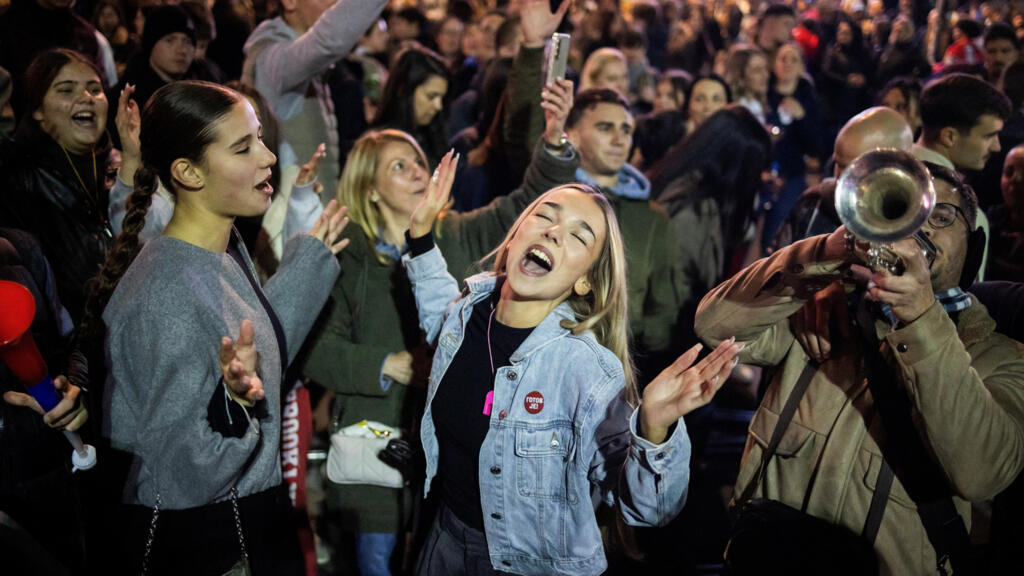
一份由塞尔维亚学生议会选出的学者、工程师、艺术家和活动家名单,在周日的选举中击败了长期执政的总统亚历山大·武契奇领导的右翼塞尔维亚进步党。这一令人震惊的胜利,是在近两年学生主导的反腐败抗议之后取得的——并可能为其他希望将街头示威转化为实质性政治变革的运动提供范例。
A list of academics, engineers, artists and activists chosen by Serbia’s student assemblies defeated long-ruling president Aleksandar Vucic's right-wing Serbian Progressive Party Sunday. The shock victory comes after nearly two years of student-led anti-corruption protests – and may serve as a model for other movements hoping to turn street demonstrations into concrete political change.
将近两年前,塞尔维亚第二大城市诺维萨德一座刚翻修完毕的火车站的混凝土雨棚坍塌。抗议运动将这起坠落事故归咎于普遍存在的腐败,造成16人死亡。如今,这起事故也将执政党拉下了马。
Almost two years ago, a concrete canopy at a freshly renovated railway station in Serbia’s second city of Novi Sad collapsed. The falling canopy, which the country’s protest movement has blamed on widespread corruption, killed 16 people. Now, it has brought the country’s ruling party down with it.
塞尔维亚右翼民粹主义总统亚历山大·武契奇周日承认在该国议会选举中失败。但他究竟向谁认输,目前尚难判断。赢得普选票并获得议会明显多数席位的力量,既非传统反对党,也非任何意义上的政党。
Serbia’s right-wing populist president Aleksandar Vucic conceded defeat in the country’s parliamentary elections on Sunday. Just who exactly he has conceded to remains harder to judge. The force that won the popular vote, and a clear majority of parliamentary seats, is not a traditional opposition party – or any kind of party at all.
取而代之的是,议席将由“学生名单”的候选人填补,这是一批鲜为人知的学者、经济学家、运动员、工程师、艺术家和活动家,他们由示威者占领大学近两年来自发形成的无名学生议会以多数票选出。
Instead, the seats will be filled by candidates belonging to the Student List, a collection of little-known academics, economists, athletes, engineers, artists and activists chosen by majority vote by the nameless student assemblies that have sprung up in the universities occupied by demonstrators for almost two years.
这些被称为“全体会议”的机构,一直是这场抗议运动的指导核心,该运动将数万人带上街头,旨在推翻示威者所描述的、在武契奇日益专制的14年统治下扎根的腐败和裙带关系文化。现在,由他们来决定哪些候选人将出任塞尔维亚下一任总理,哪些人将掌管国家的各个部委。
These plenums, as they are known, have served as the guiding hand of a protest movement that has brought tens of thousands of people into the streets to overturn what demonstrators described as a culture of corruption and cronyism that had taken root under 14 years of Vucic’s increasingly authoritarian rule. Now, it falls upon them to determine which of the candidates will serve as Serbia’s next prime minister and which will run the country's ministries.
全权归全体会议 伦敦政治学者布拉尼斯拉夫·拉德利奇表示,学生全体会议在引导诺维萨德坍塌事故引发的公众愤怒方面发挥了关键作用。
All power to the plenums London-based political scientist Branislav Radeljic said that the student assemblies had been crucial in channelling the public fury unleashed by the Novi Sad collapse.
他说:“学生全体会议通过集体决策、去中心化和刻意设定的宽泛议程,帮助将大规模动员转化为制度变革。这些会议在各个学院单独组织,让学生们能够辩论诉求、商定策略并就关键决定进行投票。这创造了一种共同拥有感和合法性,同时要求行动者向同伴证明提案的合理性,而不是听命于单一领袖。” 无需追溯到彼得格勒苏维埃即可找到先例。贝尔格莱德大学塞尔维亚政治学教授内博伊沙·弗拉迪萨夫列维奇表示,这种直接民主实验多年来一直是巴尔干半岛学生抗议运动的常态。
“The student plenums helped turn mass mobilisation into institutional change through collective decision-making, decentralisation and a deliberately broad agenda,” he said. “Organised at individual faculties, the assemblies allowed students to debate demands, agree on tactics and vote on key decisions. This created a sense of shared ownership and legitimacy, while requiring activists to justify proposals to their peers rather than defer to a single leader.”You don’t have to go all the way back to the Petrograd Soviet to find precedents. Nebojsa Vladisavljevic, a professor in Serbian politics at the University of Belgrade, said that these experiments in direct democracy had been a staple of student protest movements across the Balkans for years.
他说:“这种高度去中心化的横向组织模式,在该地区并不算新鲜——大约二十年来,学生们一直通过公开集会,即他们所谓的全体会议,以这种特定方式组织自己。这包括贝尔格莱德学生,还有克罗地亚萨格勒布、波黑萨拉热窝和图兹拉、北马其顿斯科普里的学生。” 自2024年11月以来,学生一直充当塞尔维亚抗议运动的先锋,当时疑似执政党支持者袭击了由学生和教师在贝尔格莱德戏剧艺术学院组织的默哀守夜活动。学生们迅速占领了该建筑,引发了一波大学封锁潮,导致全国停课。
“This horizontal model of organisation, highly decentralised, is not that novel when it comes to this region – students have organised themselves in this particular way via public assemblies, or plenums as they call them, for probably about two decades now,” he said. “And that includes Belgrade students, but also students in Zagreb, Croatia, Sarajevo and Tuzla in Bosnia and Herzegovina, and Skopje in North Macedonia.”Students have served as the vanguard of Serbia’s protest movement since November 2024, when suspected ruling party supporters set upon a silent vigil organised by students and teachers at Belgrade’s Faculty of Dramatic Arts. The students swiftly occupied the building, setting off a wave of university blockades that shut down classes across the country.
“抗议活动广泛蔓延,”弗拉迪萨夫列维奇说。“所有国立大学的所有院系或学院都被封锁了数月之久,在此期间,学生们在所有问题上都在这些全体会议和工作组中做出决定。”闭门会议规则很简单。每个学生都有权参加全体会议。在全国各地被占领的大学建筑中,学生们提出提案,由同伴进行辩论,通常要经过多轮会议。决定以多数票通过。
“The protest spread out widely,” Vladisavljevic said. “All faculties or schools of all state universities were under blockade for several months, and during this period, students made all their decisions in these plenary sessions and working groups on all sorts of issues.”Behind closed doors The rules are simple. Every student has the right to participate in plenary sessions. In occupied university buildings across the country, students put forward proposals to be debated by their peers, often over multiple sessions. Decisions pass by majority vote.
国际政治与经济研究所高级研究员安娜·约维奇-拉齐奇表示,全体会议对于在日益壮大的学生运动内部和外部建立信任至关重要。
Ana Jovic-Lazic, a senior research fellow at the Institute of International Politics and Economics, said that the plenums had been crucial in building trust both within and without the growing student movement.
“在一个政党往往与个别领导人紧密绑定的政治环境中,学生们提供了一种不同的组织和决策方式,”她说。“对集体决策的强调赋予了参与者一种主人翁意识和责任感。这也有助于该运动保持独立于既有政党,鉴于人们对传统政治行为者的普遍不信任,这一点尤为重要。”弗拉迪萨夫列维奇说,通过刻意将自己塑造成一股无领导的力量,学生运动也保护自己免遭执政的塞尔维亚进步党严格控制下的媒体单独抹黑。
“In a political environment where parties are often strongly identified with individual leaders, the students offered a different way of organising and making decisions,” she said. “The emphasis on collective decision-making gave participants a sense of ownership and responsibility. It also helped the movement maintain its independence from established political parties, which was particularly important given the widespread distrust of traditional political actors.”By deliberately casting itself as a leaderless force, Vladisavljevic said the student movement was also shielding itself from being singled out for slander by a media that has been tightly controlled by the ruling Serbian Progressive Party.
他说:“这与塞尔维亚大约十年来所经历的政权性质有关——它不仅是威权主义的,还是个人化的,并且不仅仅建立在镇压之上,还特别建立在媒体操纵之上。”“他们专门针对知名的反对派人物和政府批评者。通过这种方式,他们在过去几年里成功削弱了反对派。”伦敦大学学院斯拉夫与东欧研究学院政治与文化社会学教授埃里克·戈尔迪表示,缺乏面向公众的人物,使得学生运动比其前身更难被削弱。
“It has to do with the nature of regime that we had in Serbia for about 10 or so years – which is not just authoritarian, but also personalist, and which is based not purely on repression, but is specifically on media manipulation,” he said. “They specialised in targeting a prominent opposition personalities and government critics. And in that way, they successfully undermined opposition in previous years.”Eric Gordy, professor of political and cultural sociology at University College London’s School of Slavonic and East European Studies, said that the lack of public-facing figures had made the student movement more difficult to undermine than its predecessors.
他说:“这是一个没有领导人的运动,在媒体环境中,一直有人试图抹黑反对运动,而他们(学生运动)成为一个难得多的目标——他们是一个移动的目标。”“你无法通过集中攻击某个人物并对其进行诽谤来抹黑这场运动。”直接行动学生们不愿让传统广播电视媒体设定叙事,而是自己组织面向更广泛公众的外联活动,举行公众集会,并开展穿越全国的马拉松式自行车骑行,以直接联系大城市以外的社区。
“It's a leaderless movement, which in terms of the media environment where there is a constant effort to try to discredit movements of opposition, they become a much more difficult target – they’re a moving target,” he said. “You can't discredit the movement by concentrating on a personality and defaming them.”Direct action Unwilling to let the traditional broadcast media set the narrative, students instead organised their own outreach to the wider public, holding public rallies and marathon cycling trips across the country to connect directly with communities outside the major cities.
学生们还呼吁塞尔维亚各地民众建立自己的地方议会,即“zborovi”,把他们直接民主的实验从校园传播到校外。自3月以来,全国各地涌现出数十个这样的议会——尽管他们经过艰苦辩论提出的要求,在迫使地方政府官员作出让步方面收效甚微。
Students also called on people across Serbia to set up their own local assemblies, or zborovi, to spread their experiment in direct democracy off campus. Scores of these assemblies have sprung up across the country since March – though their painstakingly debated demands have had little success in eking concessions from local government officials.
约维奇-拉齐奇说:“我认为尤其重要的是,学生们成功地将他们的诉求与大学之外更广泛人群的共同关切联系了起来。他们对问责和机构正常运转的坚持,引起了更广泛公众的共鸣。”在长达一年多的大规模街头示威未能为其关于诺维萨德坍塌事故的问责诉求争取到结果后,学生运动将目光投向了更传统的国家权力机关。
“What I find especially significant is that the students managed to connect their demands with concerns shared by people well beyond the universities,” Jovic-Lazic said. “Their insistence on accountability and functioning institutions resonated with a much broader public.”Having failed to secure its demands for accountability for the Novi Sad collapse through more than a year of mass street demonstrations, the student movement set its sights on more traditional organs of state power.
这场运动开始推动提前选举,随着学生议会投票并否决名单、逐步敲定一份候选人名单,一批议会候选人开始在闭门磋商中浮现。
The movement began pushing for early elections, and a slate of parliamentary candidates began to emerge behind closed doors as the student assemblies voted and vetoed a list into shape.
拉杰利奇说:“通过进入选举政治并让学生议会参与候选人遴选,它试图将集体授权转化为正式制度。现在的关键考验是,维持动员的分散化实践能否同样带来问责、协调和有效治理。鉴于学生运动所选人员的素质,我相信他们能够做到。”群众路线这场运动极简的政治纲领,也在“学生名单”的广泛吸引力中发挥了核心作用。
“By entering electoral politics and involving student assemblies in candidate selection, it sought to transfer collective authorisation into formal institutions,” Radeljic said. “The key test now is whether the decentralised practices that sustained mobilisation can also deliver accountability, coordination and effective government. Given the calibre of the people selected by the student movement, I believe they can.”The mass line The movement’s minimalist political programme has also played a core role in the Student List’s mass appeal.
从学生议会中产生的这份11点纲领,将一系列有针对性的反腐措施与更广泛的社会政策结合起来,包括为年轻人提供可负担住房以及投资农村医疗。
The 11-point programme that emerged from the student assemblies combines a raft of targeted anti-corruption measures with broader social policies including providing young people with affordable housing and investing in rural healthcare.
尽管其支持者将其描绘为拆除该国司法、媒体和公务员系统十多年来威权控制的蓝图,但这份纲领刻意避开了那些会暴露这一广泛联盟运动内部深刻分歧的更为棘手的政策讨论。
While its supporters paint it as a blueprint for dismantling more than a decade of authoritarian control of the country’s judiciary, media and civil service, the programme deliberately steers clear of the thornier policy discussions that would reveal deep divides within the broad-church movement.
戈尔迪说,这种有意向政治光谱各个角落的人伸出广泛触角的做法,意味着激进左翼的代表与右翼民族主义者并肩而立。
Gordy said that the intentionally expansive outreach to people from every corner of the political spectrum meant that representatives from the radical left were rubbing shoulders with right-wing nationalists.
他说:“学生运动内部至少有三股不同的潮流。其中一股是激进的民主派,他们主张‘让我们尝试改造社会,从而消除威权主义和腐败,并且不让它们卷土重来’。”“第二股是程序上的民主派,他们主张‘让我们尝试建立法治,但基本上我们的角色不是政治性的,我们想做的是为政党接管创造条件。’”他补充说:“第三股是所谓的‘民族派’——也就是说,在与该地区其他国家关系这些问题上,他们比以往的做法更为激进。”“为了应对选举,他们可以说已经宣布休战,但现在他们将争夺权力和对政府的控制权。”
“There are at least three different currents within the student movement. You have one that's a radical democratic current that's saying, ‘Let's try to remake the society so that authoritarianism and corruption are eliminated and don't return’,” he said. “Second, you have a procedurally democratic group saying, ‘Let's try to establish rule of law, but basically our role is not political, and what we want to do is create the conditions for the political parties to take over.’" “And then third, you've got a so-called ‘national group’ – that is, the ones who are more radical on these questions of relations with other states in the region than what has been,” he added. “They've sort of declared a truce in order to face the election, but they're going to be competing for power and control of the government now.”