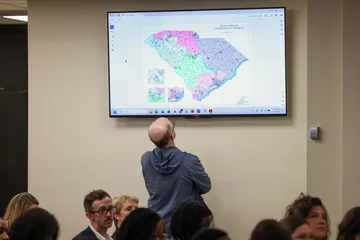
二十年前,政治学家发现了一种会适得其反的“自毁式选区划分”,这种划分方式让试图操纵国会选区界线以获取党派优势的绘图者反而搬起石头砸了自己的脚。他们称之为“愚蠢曼德”(dummymander)。
Two decades ago, political scientists identified a certain breed of self-defeating gerrymander that backfired on mapmakers who tried to rig congressional district lines for partisan advantage. They called it a “dummymander.”
“愚蠢曼德是指一方实施的选区划分,在十年周期内反而使另一方受益,看起来倒像是由受益党而非执政党设计的,”伯纳德·格罗夫曼和托马斯·布鲁内尔在《愚蠢曼德的艺术》一文中写道。这一现象源于1990年代深南部由民主党控制的州议会。在政治版图向共和党倾斜的重组过程中,为了保住现任议员席位,他们在1990年人口普查后,将仅存的选票优势分散到了过多的选区中。
“A dummymander is a gerrymander by one party that, over the course of the decade, benefits the other party, and actually looks as if it was designed by that party rather than the party in power,” wrote Bernard Grofman and Thomas Brunell in “ The Art of the Dummymander.”The phenomenon came out of Democratic legislatures in the Deep South in the 1990s. Attempting to protect incumbents amid a political realignment toward Republicans, they spread what was left of their voting strength across too many districts after the 1990 census.
格罗夫曼和布鲁内尔将这种处境比作救生艇。“任何救生艇的载客量都是有限的,”他们说,“如果你试图超载,小船可能会沉没,或者至少倾覆,把一批人冲下船去。”过去两年里,民主党和共和党围绕重划众议院选区展开博弈,这场博弈始于得克萨斯州共和党通过新版选区图,将多达五个席位转向己方。其他州也纷纷跟进,其中包括加利福尼亚州民主党的报复性划分。法院叫停了双方部分努力,最终形成的全国版图在净效应上向共和党倾斜了约九个席位。
Grofman and Brunell compared their situation to a lifeboat. “The carrying capacity of any lifeboat is limited,” they said. “If you try to overload it, the boat may sink, or at least tip over, washing a number of people overboard.”Over the last two years, Democrats and Republicans have battled to redraw House districts, in a process kicked off by Texas Republicans’ adoption of a new map that shifted as many as five seats their way. Other states joined in, including retaliation by Democrats in California. Courts blocked some of both parties’ efforts, with the resulting national map tilted toward Republicans by about nine seats, on net.
如今,分析人士预测将出现支持民主党的“蓝色浪潮”,选举观察家正在权衡共和党的努力是否会适得其反。结论是:今年大概率不会。但这场选举将检验,绘图者能在选区划分开始反噬之前,榨取多少党派优势。
Now, as analysts forecast a “Blue Wave” of support for Democrats, election watchers are weighing whether Republicans’ efforts could backfire. The upshot? Probably not this year. But the election will test just how much partisan advantage mapmakers can squeeze out before a gerrymander starts working against them.
民主党在1990年代的“愚蠢曼德”并未立即显现:在1992年的一次选举中,民主党绘制的地图奏效了。在北卡罗来纳州、南卡罗来纳州和佐治亚州,民主党赢得了29个众议院席位中的18个。他们唯一的失误是:试图通过选区划分将共和党人纽特·金里奇挤出其选区,结果迫使他搬到了一个新选区,在那里他以微弱优势获胜。
The Democrats’ ’90s dummymander wasn’t apparent immediately: For one election, in 1992, the Democratic maps worked. Across North Carolina, South Carolina and Georgia, Democrats won 18 of 29 House seats. Their only misstep: In trying to gerrymander Republican Newt Gingrich out of his district, they forced him to move to a new district where he won narrowly.
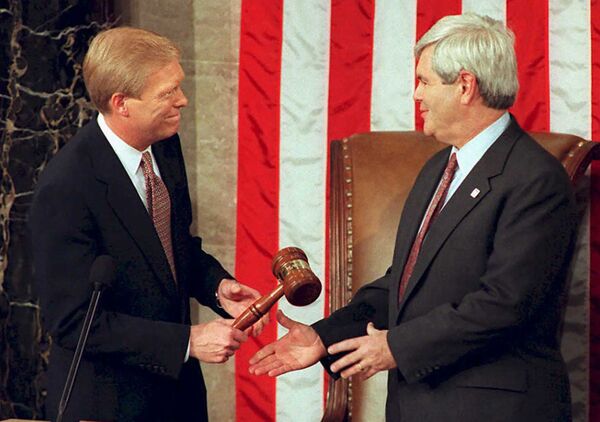
两年后,风向变了。在比尔·克林顿总统的首个中期选举中,金里奇领导了“共和党革命”,并因此获得了议长之槌。那18个被“愚蠢曼德”保护的民主党席位减少到了10个。
Two years later, the weather turned. Gingrich led the “Republican Revolution” during President Bill Clinton’s first midterm and was rewarded with the speaker’s gavel. The 18 dummymandered Democratic seats were reduced to 10.
如今潜在的“愚蠢曼德”有所不同。首先,众议院选区本应每十年重新划分一次,紧随美国人口普查之后。1990年代民主党的“愚蠢曼德”出现在宪法规定的重新洗牌之后。而2025年和2026年的中期选区划分纯粹是投机取巧。在唐纳德·特朗普总统的敦促下,得克萨斯州和佛罗里达州等共和党主导的州重新绘制了地图——目的不是为了保护脆弱席位,而是为了扩大其优势。
Today’s potential dummymanders are different. For starters, House districts are meant to be redrawn once a decade, following the US census. The Democratic dummymanders in the 1990s came after constitutionally required reshuffling. The mid-decade gerrymanders of 2025 and 2026 were purely opportunistic. Republican-led states like Texas and Florida redrew maps at the urging of President Donald Trump — and not to protect vulnerable seats, but to extend their advantage.
这些选区划分还有一个不同之处:它们可能在首次选举中就适得其反,而不是像南方民主党早期的“愚蠢曼德”那样产生延迟反应。
These gerrymanders are also different in that they could conceivably backfire in their first election, rather than producing the delayed reaction of the Southern Democrats’ earlier dummymander.
“现在是‘愚蠢曼德’的完美风暴,”现为达拉斯德克萨斯大学政治学教授的布鲁内尔说。配方是:极端的党派选区划分——主要由共和党实施——加上一位不受欢迎的总统和经济逆风的中期选举。
“We are in a perfect storm for dummymanders,” said Brunell, now a political science professor at the University of Texas at Dallas. The formula: extreme partisan gerrymandering — mostly by Republicans — and a midterm election with an unpopular president and economic headwinds.
有些“愚蠢曼德”比其他的更愚蠢。真正的考验不是共和党在周二的选举中是否会失去席位——而是他们是否会比保留旧选区时处境更糟。“‘愚蠢’程度可以有高低之分,”布鲁内尔说。
Some dummymanders are dumber than others. The real test isn’t whether Republicans lose seats in Tuesday’s elections — it’s whether they’re left worse off than if they had left the old districts in place. “There can be degrees of dummyness,” Brunell said.
共和党绘制选区地图的目标是抵御约 10 到 12 个百分点的“蓝色浪潮”。RealClearPolitics 对通用国会选举民调的平均值目前显示民主党领先略超 8 个百分点——这意味着如果民调大体准确,共和党仍很可能从新地图中获益。
Republicans drew their maps to withstand a blue wave that crests at about a 10- to 12-point margin. The RealClearPolitics average of generic congressional polls now gives Democrats an advantage of just over 8 points — meaning that if the polls are broadly right, Republicans will still likely end up benefitting from the new maps.
卡内基梅隆大学教授乔纳森·塞瓦斯曾受法院指定担任特别主事绘制自己的选区地图,他说,真正的“自掘坟墓式选区划分”似乎不太可能,是民主党的“一厢情愿”。
Jonathan Cervas, a Carnegie Mellon University professor who has drawn his own maps as a court-appointed special master, said a true dummymander seems unlikely and is “wishful thinking” by Democrats.
塞瓦斯认为,即使这种情况发生,导致共和党失去众议院控制权的也不会是糟糕的选区划分,共和党目前仅以少数席位优势控制众议院。
And even if it happens, Cervas argues, it won’t be bad mapmaking that loses the House for Republicans, who now control the chamber by a handful of seats.
塞瓦斯说:“一切都高度全国化,得克萨斯州发生的选情变化与其他地方发生的变化是一样的。”
“Everything is so nationalized that the shifts that happen in Texas are the same shifts that happen everywhere,” Cervas said.
假设选民在全国范围内以大致相同的幅度转向民主党,那么在“蓝色浪潮”波及得克萨斯州和佛罗里达州之前,共和党就会在未重新划分选区的州——如密歇根州、宾夕法尼亚州、亚利桑那州、爱荷华州、威斯康星州和科罗拉多州——失去数十个竞争激烈的选区。
Assuming that voters move toward Democrats in roughly equal measures across the country, Republicans will have lost dozens of competitive districts in states that weren’t redrawn — like Michigan, Pennsylvania, Arizona, Iowa, Wisconsin and Colorado — before the blue wave gets to Texas and Florida.
塞瓦斯说:“到那时,这已经无关紧要了,因为他们无论如何都会失去那么多席位。”
“At that point,” said Cervas, “it would not have mattered because they would have lost so many seats anyway.”