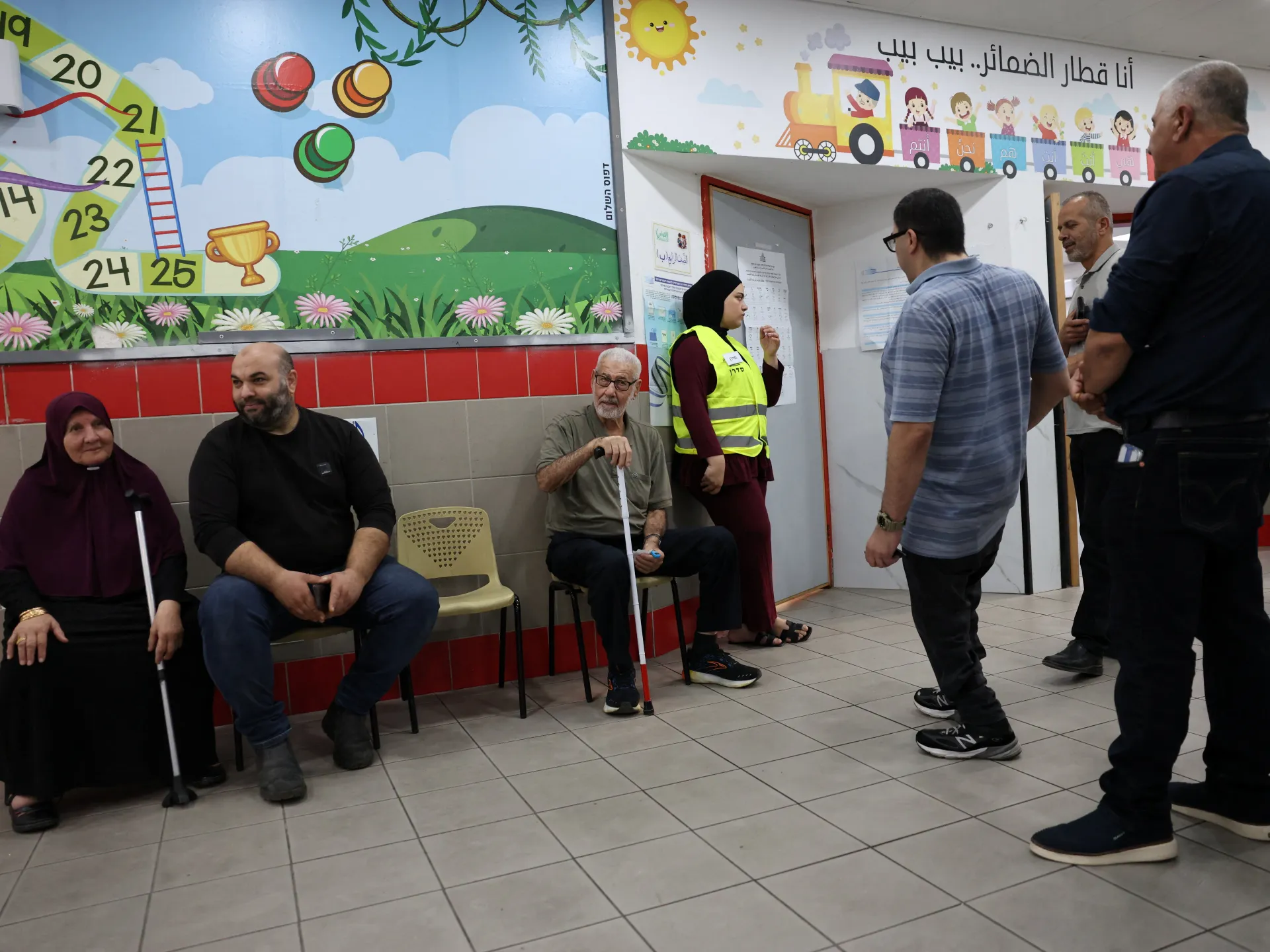
在10月27日的以色列大选中,共有38个党派参选。其中,仅有两个党派支持和平、平等以及结束对巴勒斯坦领土的占领。这两个党派均为“阿拉伯党派”——由以色列的巴勒斯坦公民组成。
In the October 27 Israeli elections, 38 parties ran for office. Of these, only two supported peace, equality and an end to the occupation of Palestinian territories. Both were “Arab parties” – made up of Palestinian citizens of Israel.
这两个党派取得了历史性成绩,在议会(Knesset)中获得了19个席位,此前约有80%的巴勒斯坦公民投出了选票。
These two parties earned a historic result, securing 19 seats in the Knesset, after some 80 percent of Palestinian citizens cast a vote.
这种前所未有的投票率导致总理本雅明·内塔尼亚胡未能获得多数席位。其阵营赢得53个席位,而犹太人主导的反对派阵营赢得48个席位。
This unprecedented turnout contributed to Prime Minister Benjamin Netanyahu’s failure to secure a majority. His bloc won 53 seats, while the Jewish-led opposition won 48.
巴勒斯坦人的选举动员立即被渲染为一种威胁,巴勒斯坦社区现在面临内塔尼亚胡阵营成员加剧的煽动。亲内塔尼亚胡阵营指控大选被“窃取”,并正呼吁限制“阿拉伯人的投票权”。
The electoral mobilisation of Palestinians was immediately spun as a threat and Palestinian communities now face intensified incitement by members of Netanyahu’s camp. The pro-Netanyahu camp has alleged that the election was “stolen” and is now calling for restrictions on the “Arab vote”.
因此,巴勒斯坦人的选举成功为以色列政治暴露了一个令人不适的问题:当那些在政治舞台上被非正式孤立、但其选票在形式上拥有平等效力的公民,变得足以决定谁来执政时,会发生什么?
Thus, Palestinian electoral success exposed an uncomfortable question for Israeli politics: what happens when citizens who are informally isolated on the political scene but whose vote is formally equal become powerful enough to determine who governs?
巴勒斯坦公民面临一个根本性问题:他们能否真正决定政治结果?如果能,这是否意味着他们成为平等公民?
Palestinian citizens face a fundamental question: Can they truly determine the political outcome and if they can, does that make them equal citizens?
形式上的纳入,非正式上的排斥 以色列的巴勒斯坦公民长期面临是否投票的两难困境。如果他们不进行动员投票,犹太右翼上台的风险很高。如果他们确实投票,却无法保证他们的参与能转化为保护或惠及其社区的政策。
Formal inclusion, informal exclusion Palestinian citizens of Israel have long faced a dilemma over voting. If they do not mobilise to vote, the risk is that the Jewish right would come to power is high. If they do vote, there is no guarantee that their participation would translate into policies that protect or benefit their communities.
1999年,阿拉伯选民投票率达到约75%,巴勒斯坦裔公民压倒性地支持工党的埃胡德·巴拉克,反对内塔尼亚胡。一年后,阿里埃勒·沙龙访问阿克萨建筑群,第二次巴勒斯坦大起义爆发,以色列警察打死13名巴勒斯坦裔公民。愤怒与幻灭导致阿拉伯选民抵制2001年大选,投票率跌至约19%。沙龙获胜。
In 1999, Arab turnout reached approximately 75 percent in the elections and Palestinian citizens overwhelmingly supported Ehud Barak of the Labour Party against Netanyahu. A year later, after Ariel Sharon’s visit to Al-Aqsa compound and the outbreak of the second Intifada, Israeli police killed 13 Palestinian citizens. Outrage and disillusionment contributed to an Arab boycott of the 2001 election, when turnout fell to about 19 percent. Sharon won.
如今,巴勒斯坦选民的参与依然具有影响力。巴勒斯坦选民投票率越高,亲内塔尼亚胡阵营和反内塔尼亚胡阵营这两大主要阵营获得的议席就越少,从而可能改变议会的力量对比。10月27日即是如此。
Today, Palestinian electoral participation still retains its sway. Higher turnout among Palestinians means fewer seats for two main blocs – the pro- and anti-Netanyahu camps – which could tip the balance in the Knesset. This is what happened on October 27 .
但由犹太人主导的政党拒绝与巴勒斯坦政党合作组阁,削弱了巴勒斯坦政党这一潜在的关键地位。
But this potentially powerful position of the Palestinian parties has been diminished by the refusal of Jewish-led parties to work with them on government formation.
2021年4月,极右翼政客贝扎莱尔·斯莫特里奇拒绝内塔尼亚胡试图在巴勒斯坦政党“统一阿拉伯名单”(Ra’am)支持下组建政府,这一排斥逻辑由此显露。斯莫特里奇辩称,这样做会鼓励更多巴勒斯坦选民投票,从而让巴勒斯坦社群助力左翼重掌以色列政权。因此,接纳巴勒斯坦政党将挑战犹太右翼的政治统治地位。
The logic of this exclusion was made clear in April 2021, when far-right politician Bezalel Smotrich rejected Netanyahu’s attempt to establish a government supported by one of the Palestinian parties, Ra’am. Smotrich argued that doing so would encourage greater Palestinian turnout which would allow the Palestinian community to enable the return of the left to power in Israel. Accepting Palestinian parties would therefore challenge the Jewish right’s political dominance.
“统一阿拉伯名单”最终加入了纳夫塔利·贝内特和亚伊尔·拉皮德组建的短命联合政府,且未提出任何民族诉求,但其参与以在民族问题上作出重大让步为代价。巴勒斯坦政治领袖首次承认以色列为犹太国家,甚至愿意搁置民族问题,转而关注民生和社会经济议题。
Ra’am eventually joined the short-lived coalition government formed by Naftali Bennett and Yair Lapid, without making any national demands, but its participation came at the cost of significant concessions on national issues. For the first time, Palestinian political leaders recognised Israel as a Jewish state and were even willing to set aside the national question in favour of addressing civil and socioeconomic issues.
尽管作出这些让步,贝内特-拉皮德政府最终仍因两名联合政府成员反对与巴勒斯坦代表共同执政而辞职,导致政府垮台。
Despite these concessions, the Bennett–Lapid government ultimately collapsed following the resignation of two coalition members who opposed sitting in a government alongside Palestinian representatives.
内塔尼亚胡随后意识到,为防止未来出现任何“变革政府”,他需要使巴勒斯坦政党失去合法性,并限制其政治代表性。
Netanyahu then realised that to prevent the formation of any future government of change, he needed to delegitimise the Palestinian parties and limit their political representation.
2023年10月7日之后,巴勒斯坦公民的政治空间急剧收缩。学生因社交媒体发帖面临纪律处分;员工丢掉工作;反战言论引发警方调查和逮捕。
Following October 7, 2023, Palestinian citizens experienced a sharp contraction of political space. Students faced disciplinary proceedings over social-media posts; employees lost jobs; antiwar speech prompted police investigations and arrests.
选举进程本身也反映了这种氛围。以色列中央选举委员会投票决定取消两个巴勒斯坦选举名单的资格,以及议员奥费尔·卡西夫和巴勒德党主席萨米·阿布·谢哈德的资格。最高法院最终推翻了对这两个名单的禁令。
The electoral process itself reflected this climate. Israel’s Central Elections Committee voted to disqualify both Palestinian electoral lists, along with lawmaker Ofer Cassif and Balad chairman Sami Abu Shehadeh. The Supreme Court eventually reversed the bans on the lists.
与此同时,攻击巴勒斯坦人——包括以色列的巴勒斯坦公民——成为政治常态。在本次选举前,媒体机构“阿拉伯邮报”对超过1万条选举相关社交媒体内容进行了分析。该机构报告称,内塔尼亚胡阵营候选人的帖子中有40%涉及阿拉伯人或巴勒斯坦人,其中94%带有敌意。
Meanwhile, attacking Palestinians, including Palestinian citizens of Israel, became a political staple. Ahead of this election, media outlet Arabic Post conducted an analysis of more than 10,000 election-related social-media items. It reported that 40 percent of posts by candidates from Netanyahu’s camp concerned Arabs or Palestinians, and that 94 percent of those were hostile.
更令人担忧的是,内盖夫地区拉姆党活动人士的住所遭到警方突击搜查,缘由是涉嫌选举贿赂,导致三名男子被捕。
More troubling were the police raids on the homes of Ra’am activists in the Negev, following suspicions of electoral bribery which led to the arrest of three men.
警方承认在无搜查令的情况下进行了搜查,后来的报道质疑证据的力度。三名男子均获释。但这些指控的连锁反应助长了针对巴勒斯坦社区的猜疑叙事。
Police acknowledged searches without warrants and later reports questioned the strength of the evidence. All three men were released. But the ripple effect of those allegations helped shape a narrative of suspicion against the Palestinian community.
对巴勒斯坦选票的攻击 在此次选举中,经过多年的打压和煽动,巴勒斯坦公民没有退缩。他们组织起来,以空前的数量投票,并取得了显著成果。他们赌上一把,认真对待自己的公民身份,主张享有完全政治平等的权利,并在塑造国家未来中拥有实质性发言权。
Attacks on the Palestinian vote In this election, after years of repression and incitement, Palestinian citizens did not retreat. They organised, voted in unprecedented numbers and achieved a remarkable result. They took a gamble by taking their citizenship seriously and by asserting their right to full political equality and a meaningful say in shaping the country’s future.
然而,除非他们投选的政党满足犹太人主导的反对派设定的条件,否则这些政党将面临孤立:即承认以色列为纯粹的犹太国家,将哈马斯定性为“恐怖”组织,并接受强制性的兵役或国民服务——目前巴勒斯坦公民可免除此项义务。
However, the parties they voted for face isolation unless they fulfil the conditions set by the Jewish-led opposition: namely, recognising Israel as exclusively Jewish, labelling Hamas a “terrorist” organisation and accepting compulsory military or national service, from which Palestinian citizens are now exempt.
换言之,巴勒斯坦人只有在巴勒斯坦问题上彻底投降、拥抱犹太复国主义、并接受自己作为不平等公民的地位后,才能获得本应拥有的政治权力。
In other words, Palestinians can access the political power they should have only if they fully capitulate on the Palestinian question, embrace Zionism and accept their own status as unequal citizens.
与此同时,巴勒斯坦社群也面临加剧的煽动,尤其是来自亲内塔尼亚胡阵营的煽动。政客和公众人物抛出选举操纵的指控,坚称“阿拉伯人窃取了选举”。
In parallel, the Palestinian community also faces intensified incitement, particularly by the pro-Netanyahu camp. Politicians and public figures are throwing claims of electoral manipulation, insisting “the Arabs stole the election”.
前克内塞特副议长莫谢·费格林甚至宣称,巴勒斯坦人的选举动员是以色列政治的“10月7日”。总理之子亚伊尔·内塔尼亚胡称以色列的巴勒斯坦公民是“除伊朗核威胁外,对以色列国生存构成的最大危险”。
Former Deputy Knesset Speaker Moshe Feiglin went as far as declaring that the Palestinian electoral mobilisation was the “October 7” of Israeli politics. Yair Netanyahu, the prime minister’s son, called Palestinian citizens of Israel “the greatest danger to the survival of the State of Israel—aside from the Iranian nuclear threat”.
许多巴勒斯坦公民如今担心,政治上的成功可能招致进一步的恐吓、限制或暴力,而非获得认可。
Many Palestinian citizens now fear that political success could bring further intimidation, restrictions or violence rather than recognition.
因此,巴勒斯坦公民的高投票率迫使以色列社会及其政治建制,正视以色列作为犹太国家的身份与其自称民主国家这一主张之间的内在矛盾。
Thus, the high voter turnout among Palestinian citizens has forced Israeli society and its political establishment to confront the inherent contradiction between Israel’s identity as a Jewish state and its claim to be a democracy.
这一根本困境最终可能以犹太政治主导地位告终,导致出台进一步削弱巴勒斯坦公民公民权利、并扩大种族隔离和犹太至上制度的立法。
This fundamental dilemma may ultimately be resolved in favour of Jewish political dominance, leading to legislation that further undermines Palestinian civil rights and expands the system of apartheid and Jewish supremacy.
如果下一届克内塞特提出专门旨在限制巴勒斯坦人投票权的法案,也不足为奇。社交媒体上已出现此类呼声。
It would not be surprising if a bill were introduced in the next Knesset aimed solely at restricting Palestinians’ voting rights. There are already calls on social media for such a move.
以色列民主研究所7月的一项调查发现,右翼犹太阵营中仅有46%的受访者支持巴勒斯坦公民的投票权。
A July survey by Israel Democracy Institute found that only 46 percent of respondents in the right-wing Jewish camp supported Palestinian citizens’ right to vote.
在当前现实中,随着加沙的种族灭绝,犹太以色列人中日益增长一种感觉,即他们能做的事不再有任何限制,这推动国家对巴勒斯坦公民几乎毫无约束地行事。如果以色列社会不改变方向,其民主的假象可能很快就无法维持。
In the current reality, following the genocide in Gaza, there is a growing sense among Jewish Israelis that there are no longer any limits to what they can do, pushing the state to act with virtually no restraint towards Palestinian citizens. If Israeli society does not change direction, its pretence of democracy may soon no longer hold.