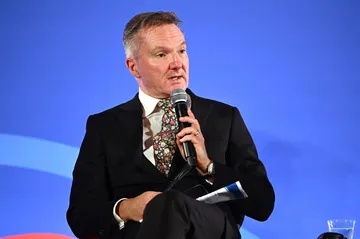
COP31气候大会将于下周在土耳其开幕。在当前的地缘政治格局下,各国能否取得进展?
The COP31 climate conference begins in Turkey next week. Can countries make headway in the current geopolitical landscape?
本期节目中,Akshat Rathi邀请了澳大利亚气候变化与能源部长、COP31谈判主席Chris Bowen,探讨他希望在本次气候大会上看到哪些突破、为何电气化议题如此重要,以及在面对一个对气候行动敌视的美国时,是否还能取得进展。
This week on , Akshat Rathi is joined by Chris Bowen, Australia’s minister for climate change and energy and the president of negotiations at COP31, to ask what breakthroughs he hopes to see at the climate conference, why electrification is so high on the agenda and whether progress can be made in the face of a climate-hostile US.
Akshat Rathi:下周,澳大利亚和土耳其将在土耳其城市安塔利亚共同主办COP31气候大会。届时,成千上万的外交官、谈判代表、商界人士和活动家将再次尝试为低碳未来规划路径。但在当前的地缘政治泥潭中,各国究竟该如何取得进展?这里是《Zero》,我是Akshat Rathi,本期节目:COP31值得关注的看点。
Akshat Rathi Next week, Australia and Turkey will be co-hosting the COP31 climate conference in the town of Antalya, Turkey. Once again, tens of thousands of diplomats, negotiators, business people and activists will attempt to chart a path toward a low-carbon future. But how exactly can countries make progress in this current geopolitical quagmire? This is Zero, I’m Akshat Rathi and this week: What to look out for at COP31.
对于收听音频版播客的听众,本集是我们推出的关于电气化的新视频系列的一部分。如果您想观看视频版,请访问我们的网站或YouTube频道。欢迎来到节目,Chris。
For those of you listening to the audio version of this podcast, this episode is part of a new video series we are making on electrification. If you'd like to Welcome to the show, Chris.
Chris Bowen:很高兴与你同台,Akshat。我是你播客的忠实听众,经常收听。很荣幸能参加你的节目。
Chris Bowen Great to be with you, Akshat. I'm a very big fan of your podcast. I'm a regular listener.
Akshat Rathi:谢谢。我们先从COP谈起,因为每届COP都各不相同,每一届都必须试图让世界更接近《巴黎协定》的目标。那么,如果在本届大会的最终决定文本中通过哪三件事,你会认为这次会议取得了成功?
Great to join you. Thank you. We're going to start with COP because each COP is quite different, and each one must try and bring the world closer to the goals of the Paris Agreement. Now, what are three things that, if they get signed off at this COP in the final decision text, would allow you to call it a success?
谢谢,阿克沙特。我是说,显然,首先,这也是一个略有不同的缔约方大会,因为澳大利亚和土耳其之间有一项创新且独特的安排。也许我们稍后会谈到这一点。但就我们必须做的事情而言,你完全正确。我们必须推进工作。我们必须在多边主义上取得进展。多边主义正受到质疑,正遭受攻击,我们需要表明它仍在发挥作用。当然,作为谈判主席,我们有责任引导谈判。我们不发号施令。我们必须引导谈判走向成功且雄心勃勃的结果。
Thanks, Akshat. Well, I mean, obviously, firstly, this is a little bit of a different COP also, because we have an innovative and unique arrangement between Australia and Turkey. Maybe we'll get to that later. But in terms of what we have to do, you're 100% right. We have to take the ball forward. We have to make progress on multilateralism. Multilateralism is being questioned. It's under attack, and we need to show that it's continuing to work. And obviously, though, as chair of the negotiations, we have a role to do to steer the negotiations. We don't dictate. We have to steer toward a successful and ambitious outcome.
但要回答你的问题,如果我们离开安塔利亚时,能明确显示出我们决心继续为将升温控制在1.5摄氏度而努力,尽管已经出现超标,我会非常高兴。正如联合国环境规划署(UNEP)报告所明确指出的,这比以往任何时候都更加紧迫。我们也希望看到电气化方面取得进展。我们有行动议程和谈判,二者截然不同。土耳其在行动议程和推动“35 by 35”(2035年实现35%电气化)方面做得很出色。
But to answer your question, look, I'd be very happy if we leave Antalya with a clear indication of our determination to continue to work to 1.5C, despite the overshoot. As the UNEP [United Nations Environment Programme] report makes clear, it's more urgent than ever. We're also looking to see progress on electrification. We have the action agenda and the negotiations, which are quite separate. Turkey is doing a great job on the action agenda and promoting 35 by 35 [35% electrification by 2035].
谈判是另一回事,但尽管如此,全球在电气化方面有很大势头。所以我想试着在谈判和主席国主导的决定中体现这一点。
The negotiations are quite separate, but nevertheless, there's lots of momentum around the world on electrification. So I'd like to try and capture that in the negotiations and in the presidency-led decision.
还有一些对我们非常重要的问题,因为它们对小岛屿发展中国家至关重要,从我们的角度来看,特别是太平洋岛国。海洋在气候变化中作为世界最大气候调节器的重要性,以及我们需要更多关注适应问题,并与此相关,确保最需要资金的国家能够获得资金。
And then a couple of issues that are very important to us, because they're important to small island developing states, and from our point of view, the Pacific particularly. The importance of oceans in climate change as the world's largest climate regulator, and also where we need to focus more on adaptation and linked to that, access to finance for those countries that need it the most.
最需要资金的国家获得的资金最少——全球气候融资中仅有 0.2% 用于小岛屿发展中国家的适应。例如在大会前会议期间,我们带人们去了图瓦卢,这个真正处于前线的国家,澳大利亚和新西兰正共同资助将图瓦卢的陆地面积扩大 30%,以帮助其生存。但我们需要更多地关注小岛屿发展中国家获得融资的问题。显然,还有其他议题是缔约方可以并且将会提出的,我们会将其纳入考量。但对我来说,这些是我希望取得实质性进展的关键领域。
The countries that need the finance the most are getting it the least — 0.2% of the world's climate finance is going to small island developing states for adaptation. And at pre-COP, for example, we took people to Tuvalu, which is really at the frontline, where Australia and New Zealand are co-funding a 30% expansion of the landmass of Tuvalu to help them survive. But we need to focus more on access to finance for small island developing states. Obviously, there are other issues that parties can and will raise, and we'll incorporate those. But for me, they are key areas I'd like to make strong progress on.
所以我将尝试逐一涉及这些方面。但让我先从您提到的那份报告谈起,即联合国环境规划署的报告,该报告基本确认科学家们已达成共识:世界将突破 1.5°C。是的,气温可以回落,但代价巨大。
So I'm going to try and touch on each one of those in turn. But let me start with the report that you highlighted, which is the United Nations Environment Programme's report, essentially confirming that scientists have come to a consensus now that the world is going to shoot past 1.5C. And yes, it can come back down, but at great expense.
您说,为了让这一目标保持活力,并确保这一巨大代价尽可能小,世界各国政府需要采取行动。《巴黎协定》以及历届缔约方大会,允许各国发出这些行动将会发生的信号。而这些信号确实会转化为现实世界的行动。您在开场白中省略了一个词,这个词在过去五年的每一届缔约方大会上都出现过,我想,那就是“落实”。
And you said, to keep that goal alive, and to ensure that great expense is as small as possible, there needs to be action that governments around the world take. And the Paris Agreement and the COPs that happened, allow countries to give the signal that these actions will happen. And those signals then really do turn into real world action. There is a word that you eliminated from your opening remarks, which is a word that has shown up at every COP in the last five years, I think, which is implementation.
因为《巴黎协定》2015 年的大部分内容已达成共识。现在关键在于尝试落实这些行动,以便真正防止升温过快。您认为过去五年里,有哪些成功落实的例子是缔约方大会上的对话所促成的?
Because much of what the Paris Agreement was in 2015, has been agreed upon. And it is now about trying to implement those actions so that you can actually keep warming from rising too quickly. Are there examples that you think where over the past five years, successful implementation has happened as a result of what talking happens at COP?
是的。首先,如果听众听到背景里有铃声,我现在正在澳大利亚议会,正在进行一次投票点名。我不需要去参加,但铃声是召集议员用的,以防你们听到背景噪音。是的,我的意思是,我认为这是落实与加速并行,我们两者都需要。落实至关重要。但我们也不能把它当作不努力做得更多的借口。所以既要加速,也要落实。
Yes. And firstly, if our listeners can hear bells ringing in the background, I'm in the Australian Parliament at the moment, and there's a vote just being called. I don't need to go, but there's bells ringing to call members of Parliament, in case you hear that background noise. And yes, I mean, I see it as implementation and acceleration, we need to do both. Implementation is crucial. We can't use it as an excuse not to try and do more, though, as well. So it's acceleration and implementation.
归根结底,阿克沙特,我认为如果你看看巴黎会议以来,世界发生了显著变化。在巴黎,如果你说可再生能源投资将是化石燃料投资的两倍,你会说,“那结果很好。”我们知道这就是缔约方大会(COP)重要的原因,我们看到巴黎会议后可再生能源投资持续激增。我们看到哥本哈根会议后投资暴跌。所以缔约方大会传递的信息非常、非常重要。我认为我们在实现迪拜会议提出的“翻倍和三倍”目标方面还不完全在正轨上,但作为世界整体,我们在这方面做得不错。
Ultimately, Akshat, I think that if you look at, since Paris, the world has changed remarkably. In Paris, if you said renewable energy investment would be double fossil fuel investment, you'd say, ‘well, that's a very good outcome.’And we know this is why COPs are important, we saw renewable investment continue to surge post-Paris. We saw it crater post-Copenhagen. So the message that COPs send is very, very important. And I think we're not quite on track for doubling and tripling from Dubai, but we are doing well, as the world, in that regard.
我认为迪拜会议的决定至关重要。所以在迪拜同意将能源效率翻倍、可再生能源装机容量翻三倍,这固然很好,但以国家自主决定的方式,我们都在推进落实。我们在落实损失与损害等方面还有更多工作要做,例如公正转型机制,它们是关键的落实任务——特别是公正转型机制,是本次缔约方大会的一项关键落实任务。但我确实认为有一些我们已经落实的良好案例,也有一些关键领域需要将落实作为今年的重点。
And I think that the Dubai decision was so important. So there's an example of all very well in Dubai to agree to double energy efficiency and triple renewable energy, but in a nationally determined way, we're all getting on with it. We've got more work to do to implement things around loss and damage, for example, and the just transition mechanism, they are key implementation tasks — particularly the just transition mechanism, a key implementation task for this COP. But I do think there's good examples of where we have implemented, and there's some key examples where implementation has to be a focus this year.
我们要坚持减排,因为我认为这需要与适应措施同步进行。关于适应问题,我稍后再谈。但还有两件事你在开场发言中没有提到,那就是这次缔约方大会召开时的当前形势。会议是在一系列战争背景下举行的,或许与世界最相关的是那场推高能源价格的战争——中东战争。此外还有厄尔尼诺现象,它正在推高全球气温,让本已恶劣的气候影响变得更加严重。在这种背景下,你是否看到各国更愿意做出妥协,以便在本次缔约方大会上达成更具雄心的成果?
Let's stick to cutting emissions, because I think that needs to be done alongside adaptation. And I'll come to adaptation later. But there are two other things that you did not bring up in your opening remarks, which is the current circumstance in which this COP meeting is happening. Which is during a set of wars, perhaps the most relevant one for the world is the one that's driving energy prices high, which is the war in the Middle East. And there’s also the El Niño that is raising temperatures around the world and making already worse climate impacts, even worse. With that background, do you see countries more willing to make compromises to come to a more ambitious outcome at this COP?
我认为,能源危机确实集中了人们的注意力,给了我们更大的推进空间。我同意这一点。正如你所说,厄尔尼诺现象也是背景因素之一。厄尔尼诺现象就是气候变化。我的意思是,厄尔尼诺现象定期都会出现,但这是一个超级厄尔尼诺,它将放大气候变化的影响,是气候变化的实时体现。但能源危机,你是对的。
Well, I think certainly the energy crisis has focused people's minds and has given us more scope to make progress. So I agree with that. And El Niño, as you said, is also in the background. El Niño is climate change. I mean, we have El Niños regularly, but this is a super El Niño and it will magnify the impacts of climate change and it is climate change in action. But the energy crisis, you're right.
显然,我正在与许多国际同行交谈,世界上没有任何一个人对我说过,你知道吗,这场能源危机表明我们需要更多化石燃料。没人这么说。他们说的恰恰相反,可再生能源是世界上许多许多国家的主权能源。借用一句老话来改述一下,阳光要行程1.5亿公里才能到达地球,却不需要穿越霍尔木兹海峡那150公里。没有任何战争能阻挡风。对于拥有可再生能源资源的国家来说,这是主权能源。即使对于那些没有这类资源的国家,它们也需要实现多元化。
I mean, obviously I'm talking to a lot of my international colleagues and no one has said to me anywhere in the world, you know what this energy crisis shows us? We need more fossil fuels. No one is saying that. They're saying the contrary, that renewable energy is sovereign energy for many, many countries around the world. And to paraphrase the old saying, the sun has to travel 150 million kilometers to Earth. It doesn't have to travel the 150 kilometers through the Strait of Hormuz. No war can get in the way of the wind. And for those countries that have renewable energy resources, it's sovereign. And even for those who don't, they need to diversify.
以新加坡为例,该国不具备大规模发展陆上可再生能源的条件。土地空间有限,但新加坡也不愿继续依赖化石燃料进口。因此,新加坡正与澳大利亚等国合作,实现能源需求和用能方式的多元化。所以,我基本赞同您的观点,这两方面因素既凸显了采取行动的紧迫性,也有望为行动提供更多动力。
Take Singapore, for example, they're not in a position to have massive onshore renewables. They don't have much room, but nor do they want to remain reliant on fossil fuel imports. So they're working with countries like Australia to diversify their energy needs, energy uses. So essentially I'm agreeing with you, both of those things do one, underline the imperative for action, but two, hopefully give us more momentum for action.
但这种地缘政治局势也可能产生反作用。先看美国,该国现已退出《巴黎协定》,不会直接参与谈判,甚至计划明年退出联合国气候机构。但在特朗普总统领导下,无论美国是否坐在谈判桌前,该国都在利用其影响力试图阻挠气候进程。今年早些时候,美国叫停了国际海事组织原定通过的碳收费,这将影响全球排放。
But this geopolitical situation also can work against you because let's start with the US, which is now out of the Paris Agreement. It is not going to be on the floor of negotiations, participating directly. It is set to even leave the United Nations climate body next year. But under President Trump, the country is wielding its influence to try and halt climate progress, regardless of whether it's there on the negotiating floor or not. Earlier this year, it stopped the carbon fee that the International Maritime Organization was set to pass.
作为谈判主席,当第二大排放国、历史上最大的温室气体排放国表现得像个“流氓国家”,试图破坏这些行动时,要让仍留在《巴黎协定》中的所有其他国家达成雄心勃勃的成果,这会让您的工作难上加难吗?
And that's going to have an impact on global emissions. As the President of Negotiations, how much harder does it make your life to get all the rest of the countries that are still part of the Paris Agreement to actually come to an ambitious outcome when the second largest emitter, and historically the largest emitter of greenhouse gas emissions, is acting like a rogue state trying to undo those actions?
我想说的是,阿克沙特,他们不在那里。这将是美国缺席的第二届缔约方大会。他们在贝伦缺席,在巴库则出席了。约翰·波德斯塔当时即将离任,但他仍然非常活跃,代表其国家参与。但并非他们在安塔利亚的会场游荡、反对采取行动。他们不再是缔约方。在理想世界里,美国会出席、参与并主张采取行动?没错,但他们没有。
Well, I guess all I'd say, Akshat, is they're not there. This will be the second COP where the United States hasn't been present. They weren't present in Belem. They were present in Baku. John Podesta was on the way out. He was still, though, very active, representing his nation. But it's not the case that they are wandering around the halls of Antalya advocating against action. They're not parties anymore. In a perfect world, would the United States be present and participating and arguing for action? Well, sure, but they're not.
所以我们只能应对现状。也不是说他们在那里与各方争辩。他们不在对话之中。这是他们有权做出的决定。他们退出了公约,退出了缔约方大会。因此,他们不是我们在缔约方大会上谈判的对象。
So we deal with it. And it's not like they're there sort of arguing with parties. They're not part of the conversation. That's a decision that they're entitled to take. They've left the convention, they've left the COP. And so, therefore, they're not a country that we negotiate with at COP.
近几个月来,您会见了中印两国的对应官员,这两个国家是世界上另外两大排放国。您需要他们的支持,因为他们是缔约方,在谈判中分量很重,尤其是在最后时刻敲定最终协议时。我们先谈印度,因为印度在缔约方大会上的立场相当一贯。任何要求印度提高气候雄心、减少排放的尝试,印度都表示必须以获得资金支持为前提。
You have, in recent months, met your counterparts, both in China and India, the other largest emitters in the world. And you will need their support, given they are parties and they bring a lot of weight to negotiations, especially in the last moments when the final agreement has to come together. Let's start with India, because India's stance at COP summits has been pretty consistent. Any attempts that require India to increase its ambition on climate to reduce its emissions, India says, must be matched by access to finance.
考虑到许多新兴市场面临债务危机,不仅是印度,还有许多国家,您如何看待第三十一届缔约方大会回应资金诉求,以确保发展中国家来到谈判桌前,并以您期望的程度参与?
Given the debt crisis that many emerging markets are facing, not just India, but a lot of countries, how are you seeing COP31 answering the call for finance in a way that would ensure that developing countries are coming to the table and participating at the level that you would want them to?
关于印度,是的,我与我的同行、部长亚达夫、布彭德尔先生进行了非常热烈的讨论。首先,我认为重要的是要承认印度正在做的一切。我的意思是,印度的成就令人瞩目。让数以百万计的家庭实现通电,让他们首次用上电力,同时还在实现脱碳。这不是要对印度说教,说你们应该做得更多,因为印度做得非常出色。所以这是首先要说的。
So on India, yes, I have had very warm discussions with my counterpart, Minister Yadav, with Bhupender-ji. Firstly, I think it's important to recognize everything India is doing. I mean, India's achievements are remarkable. Electrifying access to millions and millions of houses, having access to electricity for the first time, at the same time as decarbonizing. This is not about anyone lecturing India that you should be doing more, because India is doing a great job. So that's the first thing to say.
第二,我想说我发现印度政府通过亚达夫部长表现得非常建设性、非常投入、非常积极。亚达夫部长实际上出席了在斐济举行的会前会议,这显示了真正的、我认为是致力于建设性参与的承诺。我请亚达夫部长共同主持一条谈判流程,亚达夫部长同意了。我对印度迄今为止的合作深表感谢,并期待继续进行讨论。
Second, to say I have found the Indian government, through Minister Yadav, very constructive, very engaged, very positive. Minister Yadav actually came to pre-COP in Fiji, and that shows a real, I think, commitment to being constructive. I've asked Minister Yadav to co-facilitate a stream of negotiations, and Minister Yadav has agreed to do that. I am very grateful for India's cooperation thus far, and I look forward to ongoing discussions.
关于资金,这不是一个资金大会,因为我们在巴库完成了NCQG(气候融资新集体量化目标),我们认为这是我们现在需要着手落实的事情。所以这回到你之前关于落实的问题。这不是关于重设目标。这在涉及资金的程度上,是关于我们如何实现这些目标,以及我们需要做什么,才能将已有的资金——通过多边开发银行、或通过直接的国家对国家支持、或我们所谓的多元化和创新资金来源——输送给最需要这些资金的国家。
On finance, this is not a finance COP, in that we did NCQG [New Collective Quantified Goal on Climate Finance] in Baku and we regard that as being something we now need to get on and implement. So that goes back to your previous question about implementation. This is not about resetting targets. This is about — to the degree it's about finance — it's about how we're going on meeting those targets, and what do we need to do to get the finance that is already there, through multilateral development banks, or through direct country-to-country support, or what we call diverse and innovative sources, to those countries that need it the most.
每个国家都必须适应。每个国家都在为此花钱。显然,发展中国家需要支持,从我们的角度来看,脆弱国家和小岛屿发展中国家处于最前沿,正如我之前所说,它们只获得了现有资金的0.2%。所以让我们专注于这一点。
Every country has to adapt. Every country is spending money on it. Obviously, developing countries need the support, and from our point of view, vulnerable states and small island developing states are at the forefront, and as I said before, they're getting 0.2% of existing finance. So let's focus on that.
您一直关注的一个问题是,澳大利亚支持太平洋韧性基金,目标是在COP31之前筹集约5亿美元,最终达到15亿美元。目前该基金已筹集约1.9亿美元,对吗?您预计谁会出资填补1.9亿到5亿美元之间的缺口?
Well, there is one thing that you have been focused on, because Australia is backing the Pacific Resilience Facility, and you aim to raise something like $500 million by COP31, and ultimately $1.5 billion for this fund. So far, it's got about $190 million, right? Who do you expect to contribute to fill up that gap between $190 and $500 million at COP31?
我不知道我们能否在COP31前达到5亿美元,但我们当然希望尽快达到这一水平。我们一直在与太平洋岛国合作推进此事。该基金现在已投入运营,这是一个重大进展。直到最近几个月它还只是一个概念,现在已投入运营并开始运作。在COP前会议上,太平洋韧性基金获得了一些很好的承诺,因此我欢迎英国、丹麦、荷兰和爱尔兰在COP前会议上作出的新增或增加承诺。
Well, I don't know if we'll get to $500 million by COP31, but we'll certainly want to get to that 500 level as soon as possible. We've been working with the Pacific on that. It's now operational, which is a big step forward. It's been a concept until recent months. It's now operational and working. There were some good commitments to the Pacific Resilience Fund at pre-COP, so I welcome the commitments of the United Kingdom, and Denmark, and the Netherlands, and Ireland, who all made new or increased commitments at pre-COP.
我正在与各国讨论它们可能在COP上宣布的内容。我无法与您分享这些信息,Akshat,因为这是我与那些部长之间的私下交流,但我希望会有更多国家站出来承诺出资。所以,这对我们来说是一个持续的关注重点,因为世界上有许多重要的基金。
I am talking to countries about what they might announce at COP. I'm not in a position to share that with you, Akshat, because it's private between me and those ministers, but I'm hopeful that more countries will step forward. So look, it is an ongoing focus for us because there are many important funds around the world.
我非常尊重世界银行行长彭安杰的工作,也尊重我的好友亚洲开发银行行长和绿色气候基金负责人的工作。他们都在做很好的工作。亚行行长和绿色气候基金负责人都出席了COP前会议,这非常好。彭安杰未能出席,但他非常专注于气候融资。所以我们在落实方面还有更多工作要做,但从我们的角度来看,太平洋韧性基金很特别,因为尽管绿色气候基金、亚行和世界银行的工作都很出色,但这个基金是由太平洋岛国为太平洋岛国设立的,我们认为它发挥着独特作用。
I've got great respect for the work being done by Ajay Banga at the World Bank, and my friend, the president of the Asian Development Bank and the head of the Green Climate Fund. They're all doing good work. The head of the ADB and the head of Green Climate Fund both came to pre-COP, which was excellent. Ajay couldn't make it, but he's very focused on climate finance. So we've got more work to do on the implementation, but the PRF is special from our point of view because as great as all the work that the GCF and the ADB and the World Bank does, it's by the Pacific for the Pacific, and we think that's got a role to play.
鉴于地缘政治紧张局势,国防预算已成为世界许多国家的优先事项,您看到这种关于资金流向的张力——即资金从气候领域转向国防领域——的对话有多激烈?欧洲许多国家都在这么做,包括英国。您如何看待当前正在发生的这种转变?
Given that defense budgets have become a priority for a lot of countries around the world with geopolitical tensions, how much have you seen this conversation between the tension for where the money needs to go, take over money from climate going into defense? Many countries in Europe have done it, including here in the UK. How are you thinking about this shift that's happening right now?
这是其中一个因素。这不是唯一因素,甚至我认为也不是我心中主要的因素。土耳其部长穆拉特·库鲁姆在COP前会议上谈到了这一点,您可能注意到了,他说我们都把预算的X个百分点投入国防。也许我们应该把X个百分点投入气候融资。但我认为这是……坦白说,是的,您说得对,国防话题是相关的。不过我想指出,气候变化本身就是国防和国家安全问题。
It's one of the factors. It's not the only factor or even, I think, the main factor on my mind. Murat Kurum, the Turkish minister, said something about this at pre-COP, you might have picked up, where he said we all put X percentage of our budgets into defense. Maybe we should be putting X percentages into climate finance. But I think it's part of… look, to be very, very frank with you, yes, you're right, the defense conversation is a relevant one. Although I would point out that climate change is a defense and national security issue.
如果我们任由气候变化不受遏制地发展,将会有更多与气候相关的移民。那是国家安全问题。如果出现更多干旱、饥荒和洪水,那会引发国家安全担忧。所以我们实际上是在用不同的方式谈论同一件事。我认为,在气候变化上投入资金是解决国家安全问题的根因,而非主要解决其后果。
If we let climate change run unabated, there'll be more climate-related migration. That's a national security issue. If there's more droughts and famines and floods, that causes national security concerns. So we're really talking about the same thing in different ways. And I would argue that spending money on climate change is dealing with the cause of national security issues, less so the effect.
但坦白说,还有其他问题。在世界范围内,民粹右翼正在崛起。他们说,看看我们在遥远国家的人身上浪费了多少钱。气候变化不是真的。为什么我们要把钱花在从未听说过的国家身上?他们那边全是懒汉,诸如此类的民粹右翼废话。显然,这影响着世界各地这些事务的政治。
But there are other issues as well, to be very frank with you. Around the world, the populist right is on the rise. They say, look at all this money we're wasting on people in far away countries. Climate change isn't real. Why are we spending money on these countries we've never heard of? And they're all lazy over there, all that sort of populist right-wing nonsense. Obviously, that impacts on the politics of these things around the world.
部长们必须考虑如何解释,支持并非本国境内的离岸气候行动为何符合国家利益。这无可厚非。部长们是政治家。我们、你们、我们所有人都必须思考如何向民众为这件事辩护、作出解释。因此,我会把这归入与你们谈到的国防压力同类的范畴。
Ministers have to think about how they're going to explain how it's in the national interest to support climate action offshore in a country that's not yours. That's fair enough. Ministers are politicians. We, you, all of us have to think about how we're going to justify this and explain this to our people. So I would put that in a similar category to the pressures that you're talking about on defense.
嗯,这种压力正以某种方式显现在本届缔约方大会上:目前已表示将出席世界领导人峰会的世界领导人数量,远少于以往几届大会。许多世界最大经济体不派国家领导人出席,包括印度。这表明气候优先级正在下降。但让我谈谈一个似乎达成共识较多的领域。你在开头列举的、被视为第三十一届缔约方大会(COP31)可能取得成功的项目中指出了这一点,即电气化目标,也就是你提到的“35×35”。具体而言,就是力争到2035年,将以电力形式输送至全球的最终能源占比提高到35%。
Well, that pressure is showing up in some way at this COP, because the number of world leaders that have, at least for now, signaled that they will come to COP at the World Leaders Summit, it's far smaller than in previous COPs. Many of the world's largest economies aren't sending their world leaders, including India. So that's a signal that climate priorities are going down. But let me come to a place where it seems like there is more of an agreement. And you pointed to it at the start on the list of items that you see could be a success for COP31, which is the electrification target, the 35 by 35 you talked about. Which, to go into the details, is the goal to try and increase the amount of final energy coming to the world in the form of electricity to 35% by 2035.
目前这一比例约为23%。考虑到过去30年仅缓慢上升,这是一个快速增长。中国近期表示支持这一目标。但该目标仍处于行动议程上,即各国将在本届大会上作出的自愿承诺范畴。你们是否在努力争取将这一目标写入COP31的最终决定文本?因为那样的话,所有国家都会谈论它,并最终签署承诺。
And it's about 23% today. So it is a rapid rise, given it's only risen slowly over the past 30 years. China recently indicated that it is supportive of that goal. But the goal remains on the action agenda, which is the voluntary side of commitments that countries will make at this COP. Are you working toward getting this goal in the final decision text of COP31? Because that would then mean all countries are talking about it and then eventuallyg up to it.
是的,你说得对,这在行动议程中。我的朋友穆拉特·库鲁姆负责争取尽可能多的国家签署承诺,以帮助实现到2035年实现35%减排的目标。如果他能让100个国家同意,那将是巨大的成功。如果我们让100个国家同意进行谈判,那将是彻底的失败。因此这是不同的考验。我们必须达成几乎一致的共识,也就是说几乎全体一致。所以我已经表明,我希望在我们由总统主导的决定中看到关于电气化的强有力成果。
Yeah, you're right, it's in the action agenda. My friend Murat Kurum has the job of getting as many countries as he can, which I'm supporting, to sign the pledge to help get to 35 by 35. If he gets 100 countries to agree to that, that's a great success. If we get 100 countries to agree on negotiations, that's a terrible failure. So it's a different test. We have to have consensus, which means very close to unanimous. So I have signaled that I would like to see a strong outcome on electrification in our presidency-led decision.
具体形式则取决于与各方的谈判。我并不是在这里规定必须这样、那样,或者必须打上某些符号,否则就不予采纳。但目前围绕这一议题的势头很强。我们努力在行动议程中寻找可以在谈判中体现的内容是件好事,因为显然同一批部长既在处理行动议程,也在进行谈判。这只是不同的考验和不同的结果。因此,我们确实会与各方讨论,如何在总统主导的决定中最好地体现电气化的势头。
What that looks like is a matter for negotiation with the parties. I'm not here to say it must be this, and that I dotted, and that T crossed, or we won't put it in. But there's a lot of momentum around it. It's good that we are trying to find things in the action agenda that we can reflect in the negotiations, because obviously the same ministers are dealing with both. It's just a different test and a different outcome. So yes, we will be talking to parties about how we can best reflect the momentum around electrification in the presidency-led decision.
在这种情况下,电气化是为了让能源使用更高效,因为所有这些电动设备的效率要高得多。我们在节目中经常谈到这一点,但人们仍希望对电气化的某些方面有更明确的了解。虽然它已以当前形式列入行动议程,但能否请你解释一下它到底如何运作?每个国家是否必须制定自己的计划,以实现相同的“35%减排到2035年”目标,还是这是一个全球目标?这个目标的内部运作机制是什么?
In this case, electrification is the route to try and essentially be more efficient in the use of your energy, because all these electric devices are a ton more efficient. We talk about this on the show quite a bit, but there is an aspect of electrification that people would like clarity on. So while it is on the action agenda in its current form, can you explain how exactly it will work? Does every country have to come up with its own plan to reach the same goal of 35 by 35, or is it a global goal? What's the inner workings of this target?
这是一个全球目标。我们必须理解,不同国家有不同的国情,在不同国家,这件事关乎的内容也不同。在高度工业化的国家,主要涉及工业高温供热,也就是迄今为止只能依靠化石燃料、主要是天然气来解决的领域,比如水泥、化肥和炼钢。在非洲,则关乎烹饪,即家庭烹饪。所以,各地的考验非常、非常不同。
It's a global goal. We have to understand different countries have different circumstances, and it's about different things in different countries. In heavily industrialized countries, it's primarily about industrial high heat, things that you can, up until this point, only use fossil fuels for, gas primarily. You know, like cement and fertilizers and steel making. In Africa, it's about cooking, home cooking.
因此,我们不能在堪培拉或安卡拉发号施令,说你们必须这样做。关键在于围绕到2035年达到35%这一全球目标携手合作,每个国家都在其中发挥某种作用,同时承认不同国家有不同的机遇和不同的挑战。所以这绝不是自上而下地要求“你们本国必须达到35%”,而更像是:让我们共同努力,争取在全世界范围内达到35%。
So very, very different tests. And so we can't in Canberra or in Ankara say, this is how you're going to do it. But it's about working together on that global goal of 35% by 2035, and every country playing some role in that, but recognizing that different countries have different opportunities and different challenges. So it's very much, it's not a top down, you must get to 35 in your own country. It's more, let's work together to try and get to 35 around the world.
对于签署加入的国家,是否存在某种问责机制?因为行动议程上有许多事项,多年来已有许多国家签署加入。例如,到2023年,三倍核电就曾作为一项目标获得签署通过。但这些自愿性目标的后续落实可能很有限,也可能充满挑战。电气化目标中是否纳入了某种机制,以确保我们持续讨论这件事,并推动各国真正实现这一目标?
Is there any way in which there'll be accountability for the countries that sign up? Because there are a lot of items on the action agenda that many countries over the years have signed up to. Tripling nuclear, for example, has been one goal in 2023 that was signed off on. But the follow up on these voluntary goals can be limited or can be challenging. Is there something that's being baked into the electrification goal that would ensure that we are talking about it and getting countries to actually get to this goal?
这是我热切希望看到它体现在主席国主导的决定和谈判中的原因之一,因为行动议程非常重要。我们正全力协助土耳其推进此事。各国在这方面采取行动至关重要。但如果它写入谈判文本和主席国主导的决定……就像你提到的核能,一些国家在迪拜签署了相关承诺,但那并未写入主席国主导的决定、即“覆盖性决定”中,而“将能源效率翻倍和可再生能源装机容量翻三倍”则写入了。
That's one of the reasons I'm keen to see it reflected in the presidency-led decision and the negotiations, because the action agenda is very important. And we are leaning in to help Turkey with that. And countriesg up to things there is very important. But if it's in the negotiations and the presidency-led decision… like you referred to nuclear, some countries signed pledges for that in Dubai, but it wasn't in the presidency-led decision, the cover decision, but doubling energy efficiency and tripling renewable energy was.
坦率地说,关于我们在该目标上的进展,有更多的分析。我们可以说,世界正在取得进展,但尚未达标。但可再生能源投资如此之高这一事实……在能源效率方面可能还有更多工作要做。但因为“翻倍和翻三倍”是缔约方大会的决定,所以围绕它有更多的分析和问责,而核能承诺我认为只有30个左右国家签署。实际上有190个、超过190个国家签署了“翻倍和翻三倍”目标,因为它当时写入了主席国主导的决定。您认为这一目标是否也需要包含电力应来自清洁能源这一要求?
There's a lot more, frankly, analysis of how we're going on that. We can say, yeah, well, the world's making progress, not there yet. But the fact that renewable energy investment is so high… There’s probably more to do on energy efficiency. But there is more analysis and accountability around that because it was a decision of the COP, as opposed to the nuclear pledge, which I think 30 countries or something like that, signed. 190, more than 190 countries in effect, signed up to the doubling and tripling because it was in the presidency-led decision at the time. Do you think this goal also needs to include that the electricity should come from clean sources?
同样,我们正在就此与各缔约方沟通。我听取了部长们关于此事的看法,听到了不同的意见。从务实角度来看,在几乎所有情况下,电气化都是一件好事。所以我是这样看的,就像你谈到的、正如你之前在节目中说的,能效非常关键。以交通为例,在几乎所有情况下,如果你从燃油车换成电动车,你都在为减排做一件很棒的事。
Again, we're talking to parties about that. And I'm hearing views from ministers about that. I've heard different views. The way I see it, pragmatically, in almost all circumstances, electrification is a good thing. So I think about it like, as you've talked about, as you said before on your show, efficiency is so strong. As an example, take transport. In almost all circumstances, if you switch from an internal combustion engine car to an electric car, you're doing a wonderful thing for emissions.
即使你的电网由煤电供电,且家中未安装太阳能电池板,如果你只是从燃煤电网充电,也能减少约 60% 的排放。显然,如果你使用的是可再生能源电网,或者家中安装了太阳能电池板并从家用太阳能系统充电,那么你的排放减少幅度可能超过 90%。90% 固然比 60% 好,但 60% 也比零强得多。
Even if your grid is powered by coal and you don't have solar panels at home, if you're just charging off a coal-fired grid, you are reducing emissions by something like 60%. Obviously, if you have a renewable grid or you have solar panels at home and you're charging off a home solar system, then you're probably reducing your emissions by more than 90%. Now, 90 is better than 60, but 60 is a hell of a lot better than zero.
因此我认为我的谈判方式相当务实。对于几乎所有电网——我们认为全球约三分之二的电网——所有的电气化都有利于减排。全球只有极少数电网情况较为复杂,但对于绝大多数电网,或者说绝大多数电网,电气化毫无疑问是好事,即使这些系统中仍含有相当多的化石燃料。
So I think my approach to negotiations is quite a pragmatic one. For almost all grids, we think around two-thirds of the grids in the world, all electrification is good for emissions reduction. There's a relatively small number of grids around the world where it's more questionable, but for almost all grids around the world, or a substantial majority of grids around the world, electrification is unquestionably a good thing, even if there's still quite a lot of fossil fuel in that system.
是的,这违背直觉,如果不深入谈论数据,很难让人理解,有时一谈数据反而会让人听不进去。但确实让人觉得不可思议:你运行的是一个完全“脏”的电网,可在电动设备上却能减少排放。你在谈判应对方面的回答里有一句话,我觉得我们需要深入探讨一下。你说决定必须由共识达成,几乎要一致同意。这一点我可以解释一下:谈判主席的权力在于,即使有一两个国家尚未完全同意,只要其余成员国同意,主席也可以敲槌通过。
Yeah, it is counterintuitive and it's hard to get this across without really talking about numbers and sometimes in those numbers, you lose people. But it does feel odd that you run a grid that is fully dirty and yet on an electric device, you would cut emissions. There was one line in your answer about how you'll deal with negotiations that I feel like we need to pull out a little bit on. You said the decision has to be by consensus, almost unanimous. And this is something I can explain, which is that the power that the President of Negotiations has is one where you can bring the gavel down even when one or two countries aren't quite agreed, if the rest of the cohort is agreeing.
历届主席都曾使用过这一权力。所以我必须问你,因为在缔约方大会(COP)接近尾声时,往往充当“捣乱者”角色的国家是沙特阿拉伯。你与沙特阿拉伯的对话进展如何?在艰难的谈判中,你将如何应对他们?
And this has been used by past presidents. So I must ask you, because the country that tends to be the sort of troublemaker toward the very end of COP is Saudi Arabia. How are your conversations with Saudi Arabia going and how do you tackle them during these tough negotiations?
共识嘛……我们想要尽可能强有力的共识。这意味着要与每一个缔约方对话,并努力就所有事项达成全面一致。关于沙特阿拉伯,我再次强调,我与我的对口同行、能源大臣阿卜杜勒阿齐兹王子关系良好。
Well, consensus is… we want as strong as possible a consensus as we can. And that means talking to every party and trying to get full agreement to everything. On Saudi Arabia, again, I have good relations with my counterpart, Prince Abdulaziz, the energy minister.
我亲眼看到,他们确实在采取行动。阿克沙特,我有个坦白:像你一样,我密切研究这些议题,我不想替他们说话,因为他们自己可以发声,但沙特阿拉伯已向我表明了建设性参与的意愿。我们进行了良好的对话。他们派高级别代表哈立德·阿布莱伊夫——他们的首席谈判代表——出席了会前筹备会。他们对某些问题持有特定立场,我们予以理解,并将与他们合作。但我渴望与他们合作,因为他们是缔约方大会进程中一个庞大且重要的国家。我尊重他们所扮演的角色。
I have seen firsthand, again, they're doing things. I have a confession for you, Akshat. I, like you, study these things closely and I don't want to speak for them because they can speak for themselves, but Saudi Arabia has indicated to me a keenness to be constructive. We've had good conversations. They came to pre-COP at a senior level, Khalid Abuleif, their chief negotiator. They have certain views about things, which we understand, and we will work with them. But I am keen to work with them because they're a big and important country in the COP process. And I respect the role that they play.
因此,正如你所指出的,我们要与印度、中国和沙特阿拉伯开展工作,正如我们要与每一个国家开展工作一样。在安塔利亚,无论首席谈判代表来自图瓦卢还是沙特阿拉伯,都不会被拒之门外与我会面。这是我的职责。
So we've got work to do with India and China and Saudi Arabia, the three countries you indicated, just as we have work to do with every country. No chief negotiator will be declined a meeting with me in Antalya, whether they're from Tuvalu or from Saudi Arabia. That's my job.
对谈判主席而言,除了必须作为各国之间的中立仲裁者外,有一点很有帮助,就是以一个在气候行动上具有自身公信力的国家、一个理解这些议题的部长身份出席缔约方大会。澳大利亚近年的故事有一个方面,我相信如果你听过这个播客,我多次提到过,那就是澳大利亚在屋顶光伏推广方面首先取得的成功,以及现在在电池储能方面的成功。
One thing that helps the President of Negotiations, as much as you have to be a neutral arbiter between countries, is to come to the COP with your own credibility as a country acting on climate, as a minister who understands these issues. And there is one aspect of the Australian story in recent years, which I'm sure, if you’ve listened to the podcast, I have brought up a number of times, which is Australia's success in its rollout of rooftop solar, first and now batteries.
大约三分之一的澳大利亚家庭安装了屋顶光伏,目前已有5%的家庭安装了电池。这大概是全球家庭电池推广速度最快的国家。从全国已安装电池总量来看,你们现在已跻身“重量级选手”行列。若按装机量排名,依次是中国、美国,然后是澳大利亚——而澳大利亚人口远少于前两国。您认为这种成功的“秘诀”是什么?您打算带到COP31(第31届联合国气候变化大会)与其他国家分享、供其复制?
Something like a third of Australian homes have rooftop solar, 5% already now have batteries. It's probably the fastest rollout of home batteries in the world. You are now punching above your weight with the big dogs in a way when it comes to the total amount of batteries installed in the country. If you rank it, it's China, the US and then Australia, which is not a populous country compared to the other two. What is the recipe of success that you think you can take to COP31 to share with other countries that they can replicate?
是的,谢谢你,阿克沙特,提到这一点。澳大利亚深知家庭的作用,也明白通往净零排放的道路要经过家庭。有了正确的政府政策和正确的支持,家庭就会做出回应。正如你所说,现在接近35%的澳大利亚房屋屋顶装有光伏板,5%装有电池。我们的家庭电池故事令我非常自豪,因为它是从零起步的。我们在18个月前推出了一项新计划,于2025年7月1日生效。
Yeah, thank you, Akshat, for mentioning that. One thing we do understand in Australia is the role of households and that the road to net zero goes through households. And with the right government policies and the right support, households will respond. So you're right, it's now close to 35% of Australian houses have solar panels on the roof and 5% have a battery. And our home battery story, I'm very proud of, and it's from a standing start. So we introduced a new scheme 18 months ago. It came into force on July 1, 2025, which in effect, it's a little bit more complicated than this, but for the sake of this conversation, provides a 30% rebate to households that put in a battery.
情况比这稍微复杂一些,但为方便交流,简单说就是给安装电池的家庭提供30%的回扣。截至目前,在过去18个月里,已有58.9万户家庭参与了该计划。等到这期节目播出时,数字将达到60万,我们每个工作日都在新增2000户。这就是澳大利亚人在切实行动。
Now, as we speak, 589,000 houses have done it in the last 18 months. By the time this goes to air, it'll be 600,000 and we're putting in 2,000 every working day, every weekday. That's Australians getting on with it.
有一点小差别,您刚才提到的澳大利亚电池排名在公用事业规模上是正确的。所以我们在大规模方面也在做。因此,在公用事业规模电池方面,是中国、美国和我们,但在家用电池方面,情况略有不同。尽管我们人口少得多,但我们的家用电池容量实际上比美国还大。我们的家用电池容量实际上也比中国或印度大。目前唯一领先我们的国家是德国。
And one small difference to what you said is, what you said about Australian battery rankings is correct on utility scale. So we're doing it on a big scale as well. So it's China, US and us on utility scale batteries, but on home batteries, it's slightly different. We actually have more home battery capacity than the US, despite our much smaller population. We actually have more home battery capacity than China or India. The only country now ahead of us is Germany.
我们有16吉瓦时。上次我查看时,我认为他们大约有23吉瓦时。所以我怀着对我的朋友、德国部长卡斯滕·施奈德应有的敬意,希望在未来几个月内夺得第一名,使澳大利亚在绝对值上——不是人均,我们人均已经是第一了——而是在绝对值上,成为世界家用电池之都。
We have 16 gigawatt hours. Last time I looked, I think they're about 23 gigawatt hours. So I'm hopeful with all due respect to my friend, Carsten Schneider, the German minister, I'm hopeful of taking that number one spot in the next few months and Australia being in absolute terms — not per capita, we're already there per capita — but in absolute terms, the home battery capital of the world.
但这里的成功秘诀是什么?有政策支持,有在家安装电池的补贴,或提供太阳能上网电价补贴。很多国家都在这么做。澳大利亚有什么不同之处,让你们能释放出更多潜力?
But what is the formula for success here? There's the policy support, there's subsidies to installing a battery at home or providing some feed-in tariff on solar. Lots of countries do that. What is it that Australia has done differently that allows you to unlock more?
我认为这是多种因素共同作用的结果。我们有所谓的小规模可再生能源计划,该计划为太阳能和电池都提供回扣。该计划针对太阳能持续的时间长得多,2000年就针对太阳能推出了,直到2025年才针对电池推出。这很重要。你们可以看到,在2025年7月1日之前,我们的电池装机量非常低。然后突然之间,砰,我们就敲开了德国的大门。
I think it's a combination of things. So we have what we call the small scale renewable energy scheme, which does provide rebates for both solar and batteries. It's lasted a lot longer for solar, came in in 2000 for solar, only in 2025 for batteries. That's important. And you can see that we had very low batteries until July 1, 2025. And then all of a sudden, bang, we're knocking on Germany's door.
其次,显然,我们拥有充足的阳光,澳大利亚人都知道这一点。第三,我们让民众安装变得简单。我跟一些部长交谈过,他们会问:这是怎么运作的?你们是怎么做到的?我会反问他们:在你们国家,装太阳能电池板有多难?我对美国人说,如果在澳大利亚,你想在自家屋顶装太阳能电池板还得申请市政许可,街头早就爆发骚乱了。
Secondly, obviously, you know, we're blessed with good sun and Australians know that. Thirdly, we make it easy for people. I've talked to some ministers and they say, you know, how does it work? How have you done this? And I ask them, well, how hard is it to get solar panels in your country? And I said to the Americans, if you had to have council permission to put solar panels on your roof in Australia, there would be riots in the street.
因为在澳大利亚,在自家屋顶装太阳能电池板是你与生俱来的权利。你不需要市政许可。你只需联系安装商,获取三份报价,告诉安装商“我想装太阳能电池板”,一个月后,你的屋顶上就会有太阳能电池板。所以对民众来说很简单。
Because it's your God given right to put a solar panel on your roof in Australia. You don't need council permission. You know, you call an installer, you get three quotes, you say to the installer, I want solar panels. A month later, you'll have solar panels on your roof. So it's easy for people.
结果我们培育出了一个良好的产业。澳大利亚现在有9000名获得认证注册的电池安装商,他们是技术工人、电工,一个能够高效完成安装的产业已经形成。于是这变成了一个自我实现的预言,并产生了一种社区精神。你看到邻居家装了太阳能电池板,这便成了自我实现的预言。你走过去,跟邻居烧烤或喝啤酒,问:那些太阳能电池板怎么样?
And we've developed a good industry as a result. There's 9,000 accredited registered battery installers now in Australia, tradespeople, electricians, and an industry has developed who can do it very efficiently. So it's become a self-fulfilling prophecy and you get a spirit of community. You see the neighbors putting solar panels in, it becomes a self-fulfilling prophecy. You go over to the neighbor, you have a barbecue or beer with them and say, how are those solar panels going?
他们会说:哦,你知道,我已经两年没收过电费账单了。你也该装。看,我有这个,看看我的电池。这是我手机上的应用程序,它显示我用了多少电。这成了整个街区的谈资,并自我实现。他们会问:找谁装的?哦,这是安装商,他很棒。这真的成了整个社区都支持的事情。
And they say: oh, well, you know, I haven't had an energy bill in two years. You should do it too. Look, I've got this, look at my battery. Here's my app on my phone. It shows me how much electricity I'm using. It becomes a whole neighborhood conversation and becomes self-fulfilling. And they say, well, who did you get to do that? Oh, here's an installer, he's great. It really becomes a thing which the whole community gets behind.
这需要一点时间,但正如我所说,一旦我们推出了家用电池政策,我本以为效果会不错,但即使是我,也惊喜地发现,在人口不足3000万的情况下,我们很快就有望实现100万块电池的安装目标。
And it takes a little while, but as I said, once we put that home battery policy in, I thought it would work well, but even I'm pleasantly surprised that we're well on track for a million batteries quite soon in a population of under 30 million.
这是一个传播上的挑战:英雄叙事容易让人理解,即某个男人或某个女人做了某事,或者出台了一项政策,结果“砰”地一声,一切都实现了。但现实中,执行环节要复杂得多,除非具备所有其他必要条件,否则政策并不总能成功。
It is a challenge in communication where the hero narrative is something that people grasp easily, where one man did something or one woman did something, or one policy came out, and as a result, bang, we have all this. But really the implementation part is much more complicated and the policy doesn't always succeed unless you have all these other ingredients coming through.
其中一个已经显现的方面是,你现在在一些州允许了一种选择,一种电价方案,让任何人在上午11点到下午2点之间可以免费用电。这个时间段告诉你,正值阳光最强烈的时候,电网上有大量太阳能电力。因此,如果更多人使用它,那很好。但“免费”是个陷阱,因为正如你所知,天下没有免费的午餐。总有人在以某种方式为其买单。具体是怎么买单的?
One aspect of this that is already showing up is you are now allowing, in some states, an option, a tariff for anybody to have free electricity between 11 a.m. and 2 p.m. The timing tells you it's the peak of sun, there's a lot of solar on the grid. And so if more people use it, that's great. But ‘for free’ is a catch because as you know, there is no free lunch. Somebody is paying for it somehow. How exactly?
我们这么做是因为我们的批发电价在白天中午时段经常为负,因为我们有太多的屋顶光伏。我们由屋顶光伏产生的能源更多。撇开不谈,我不是在说光伏电站、公用事业规模的光伏,那是另一码事。在澳大利亚,我们拥有的屋顶光伏装机量比燃煤发电还要多。加上我们有风电、公用事业规模光伏和一些水电。所以,能源在白天中午时段价格经常为负。
We did that because our wholesale prices are often negative in the middle of the day because we have so much rooftop solar. We have more energy generated by rooftop solar. Putting aside, I'm not talking solar farms, utility scale, that's separate. We have more rooftop solar than we have coal-fired power generation in Australia. Plus we have wind and we have utility solar and we have some hydro. So, the energy is often negative in the middle of the day.
所以我们想,澳大利亚人为什么不应该享用这部分电力呢?现在,这并不适合所有人。我们并不假装每个人都能或都应该这样做。这是给人们的一个选择。说实话,阿克沙特,我们发现接受这一优惠的人数——这一优惠现在必须在我们的几个州强制性地提供给人们——我们有一些复杂的宪制安排,但我们正在推进。最终,希望能在全国范围内适用。这几乎已经实现了。
So, we thought, well, why shouldn't Australians have access to that? Now, it's not for everyone. We're not pretending that everyone can or should do this. It's an option for people. And what we're finding, to be very honest with you, Akshat, is the numbers of people taking up the offer, which now must be compulsorily offered to people in several of our states. We have some complicated constitutional arrangements, but we're getting there. It'll eventually, hopefully, apply across the country. It's almost there.
但我们发现,参与的人数并不多,不像家用电池那样普及。但那些参与的人正将大量用电量转移到正午时段。因此,我们的市场运营商最近公开指出,上午 11 点 1 分,你会看到用电量上升。在电网数据中清晰可见,非常显著。从 10:59 到 11:01,就这样,直线上升。这在帮助我们。这惠及所有人,而不仅仅是参与者。
But what we're finding is the number of people taking it up is not huge, it's not like home batteries. But those who do are moving a lot of power to the middle of the day. So, our market operator recently pointed out publicly, one minute past 11 in the morning, you're seeing power use go up. You can see it in the grid, just remarkable. 10.59 to 11.01, like that, straight up. And that's helping us. That's helping everyone, not just those who are doing it.
因为显然,我们在某方面取得了良好进展,我为此感到自豪,那就是我们正在压平澳大利亚的“鸭子曲线”尾部。我们曾有过标准的“鸭子曲线”,就像加利福尼亚和其他地方一样,你知道,正午时段光伏发电量大但用电量少,夜间用电量大但光伏发电量少。
Because obviously, what we are making good progress in, and I'm proud of, is we are flattening the back of the duck curve in Australia. We had the normal duck curve, just like California and everyone else, you know, with lots of solar in the middle of the day and not much energy use and lots of energy use at night and not much solar.
这条曲线正变得越来越平,这归功于电池,但也归功于“Solar Sharer”(共享阳光计划),这是我们对能源公司必须在正午时段提供免费电力这一要求的称呼。因为如果你在家,如果你在家办公,或者你是退休夫妇之类的,你可以随时开洗碗机。所以,你会在上午 11 点开。如果你有电动汽车,你在家时可以随时充电。所以,你可以在上午 11 点充电。当然,正如我所说,这对你很棒,因为你不用付电费,但这也帮助我们管理电网,并为所有人降低了批发电价。
That's getting flatter and flatter and that is batteries, but it's also Solar Sharer, which is what we call the requirement for energy companies to offer free power in the middle of the day. Because if you're at home, if you're working from home, you're a retired couple or something like that, you can put your dishwasher on whenever you like. So, you do it at 11 o'clock in the morning. If you've got an EV, you can charge it whenever you like, if you're home. So, you can do that at 11 o'clock in the morning. And sure, as I said, that's great for you because you're paying nothing for your power, but it's also helping us manage the grid and reducing wholesale prices for everyone.
另一个澳大利亚长期落后的领域是电动汽车销量。2022 年,电动汽车仅占新车销量的 1%。嗯,今年销量大幅跃升。首次在 9 月,澳大利亚电动汽车销量超过了汽油车和柴油车。这纯粹是因为现在柴油和汽油的价格吗?还是说你认为还有其他因素促成了这一局面?
The other one, which for a long time, Australia was a laggard on, is electric vehicle sales. In 2022, they were 1% of all new cars. Well, they've shot up and shot up a lot this year. For the first time, electric cars in September outsold petrol and diesel cars in Australia. Is it purely down to the price of diesel and petrol right now? Or is there anything else that you think has made this possible?
这不仅仅是柴油和汽油成本的问题,尽管那显然非常重要。但要让澳大利亚人能够做出这些选择,我们所做的是,早在2023年危机爆发前很久,我们就引入了所谓的新车效率标准,也就是排放标准。澳大利亚和俄罗斯曾是世界上仅有的两个没有此类标准的主要经济体。这意味着我们成了低效车辆的倾销地,澳大利亚人也得不到他们应得的电动汽车选择。
It's not just purely the cost of diesel and petrol, although that's obviously very important. But to enable Australians to make those choices, what we did was, long before the crisis in 2023, we brought in what we call the new vehicle efficiency standards, which are emissions standards. Australia and Russia were the only two countries in the world, major economies, without standards. And that meant that we were a dumping ground for inefficient vehicles and we weren't getting the EV choices that Australians deserve.
坦白说,这非常有争议。对我来说在政治上非常困难,但我们让它通过了议会,经历了人们通常发动的各种恐吓宣传,但我们最终把它推行下来了。结果,等到危机来临时,我们拥有的车型、可供选择的范围已经激增。现在在澳大利亚能买到的最便宜的汽车就是电动汽车。
So, it was very controversial, frankly. It was very difficult for me politically, but we got it through the parliament and all the normal scare campaigns that people run, but we got it in. And as a result, by the time the crisis hit, the models that we have, the choice has gone through the roof. And so now the cheapest car you can buy in Australia is an EV.
我们上台执政时,在推行这项政策之前,澳大利亚市场上没有一款售价低于4万澳元的电动汽车。现在有15款不同车型售价低于4万澳元。因此,年轻人特别是首次购车者,他们大概率会买更便宜的车。所以,现在他们拥有了以前没有的选择。我们还推出了电动汽车减税政策,免除了通过雇主等渠道购买电动汽车原本需要缴纳的部分税费,这也有帮助。
And when we came to office, before we did this, there were no EVs available in Australia for under $40,000 AUD. Now there's 15 different models available for under $40,000. So, young people in particular, people buying their first car, they're probably going to buy a much cheaper car. So, now they have choices they didn't have. We also have an electric vehicle tax cut, which exempts EVs from some of the taxes that would normally be paid if you get them through your employer etc, that's helped.
但我认为,主要是标准和燃油危机这两者结合的结果。我听说,是的,每个国家都在经历增长,但澳大利亚过去六个月的增长幅度是全球最显著的。我认为是这两件事凑在一起产生了效果。
But I think it's primarily the combination of the standards and the fuel crisis. I have heard it said that, yes, every country that was experiencing an increase, but Australia's increase over the last six months has been the most dramatic in the world. And I think it's those two things coming together.
还有一个方面是,中国清洁技术出口到澳大利亚基本上是免关税的。无论是太阳能电池板、电池还是电动汽车。今年,澳大利亚是中国电动汽车出口的第三大目的地。正如我们刚才谈到的,澳大利亚并不是一个很大的国家。您是否担心对中国清洁技术的依赖,还是说这并不令人担忧?您是否乐于接受这样一个事实,即澳大利亚能以低廉的价格获得清洁技术?
There is also the aspect that you are essentially tariff-free for Chinese cleantech exports. So, whether that's solar panels, batteries, or electric cars. This year, Australia is the third top destination for Chinese electric car exports. And again, as we've talked about, Australia is not that big a country. Do you worry about the reliance on China for this cleantech or that's not a worry? You're happy to embrace the fact that you get access to cheap, clean technologies.
我认为这由澳大利亚消费者决定从哪个国家购买。我们在澳大利亚不再生产汽车了,过去我们生产过,但过去10年左右我们不再生产汽车了。每一辆车都将是进口车。因此,澳大利亚人可以自行选择从哪里购买。还有其他选择。现在有电动凯迪拉克可供选择,还有几款不同的车型,但中国电动汽车在澳大利亚非常受欢迎。
I think that's for the Australian consumers to decide which country. And we don't make cars in Australia anymore, we used to, but we don't make cars in Australia anymore for the last 10 years or so. Every car is going to be an import. So, Australians can make their choices about where they buy them from. There are other options available. There's an electric Cadillac available now, and there's a few different models around, but yes, Chinese EVs are very popular in Australia.
而且它们是很棒的汽车。设计非常出色,澳大利亚人非常欣然接受这一选择。就我个人而言,我不介意人们选择从哪个国家购买汽车。我们有严格的安全标准,并且我们一直在审视需要为各种事物制定什么标准。但基本上,我们相信要为驾驶者提供选择。
And they are great cars. They're very well-designed, and Australians are taking up that option with great alacrity. Now, personally, I don't mind what country people choose to buy their car from. We have strict safety standards, and we're always looking at what standards we need to put in for all sorts of things. But basically, we believe in choice for motorists.
交通电气化的一个方面在澳大利亚仍然是一个巨大的挑战,特别是今年,那就是矿业消耗了多少柴油。矿业当然是澳大利亚的关键经济支柱。我们稍后再谈这个。但具体到柴油,你们也对柴油进行补贴,按目前的柴油成本计算,补贴额已达到每年100亿澳元。是否有计划开始减少这项补贴,让矿业转向电动选项?因为现在已经有电动选项,世界各地的矿业开始采用它们,但正如您所见,这需要激励措施。
One aspect of electrification of transport that still is a big struggle for Australia, and particularly this year, is just how much diesel the mining industry consumes. The mining industry is, of course, a crucial economy for Australia. We'll come to that later. But specifically on diesel, you also subsidize that diesel to the tune now, at this cost of diesel, it’s getting to A$10 billion a year. Is there a plan to start to reduce that subsidy and get the mining industry to move toward electric options? Because there are now electric options, and around the world, the mining industry is starting to adopt them, but as you've seen, you do need incentives.
是的,确实存在电动选项。首先,为了让对话有事实依据,我们所做的是,这是一项自20世纪50年代以来就已实施的政策。基本原则是,矿山上的柴油卡车不在公共道路上行驶。因此它们不应承担道路建设费用。我们的汽油税和柴油税在概念上、理论上是用于支付道路建设费用的。如果卡车不上路,就不该缴纳这笔税款。
Yeah, so there are electric options. So firstly, just to have a factual basis for the conversation, what we do is, this has been a policy that's been in place since the 1950s. Basically, the principle is that diesel trucks on mines don't travel on roads. So they shouldn't have to pay for the roads. Our petrol taxes and diesel taxes are conceptually, theoretically, to pay for our roads. And if the truck is not on the roads, then it shouldn't pay the tax.
这就是为什么会有柴油燃料退税。如果你的卡车从不上路,你就不用缴纳柴油税。这就是你提到的内容。之所以叫柴油燃料退税,是因为它不影响道路资金。
So that's why there's a diesel fuel rebate. So you don't pay the diesel tax if your truck never hits the road. So that's what you're referring to. It's called the diesel fuel rebate, because it doesn't impact on road funding.
不,我们不打算改变这一点。但我们正在做的是,我们有所谓的“保障机制”。这是个有点滑稽的名字。但它是要求我们最大的排放源——200多家最大排放源——实际上每年减排5%的政策。而且它运行得相当不错。实施三年来,迄今每年实现的减排量,相当于澳大利亚国内航空排放量的30%。这并非微不足道。
No, we're not planning on changing that. But what we are doing is we have what we call the safeguard mechanism. It's a funny sort of a name. But it's the policy which requires emissions reductions of 5% a year, in effect, from our biggest emitters, from more than 200 biggest emitters. And it's working pretty well. It's been in for three years. It has seen, so far, a reduction each year, equivalent to 30% of Australia's aviation emissions, domestic aviation emissions. So that's not nothing.
在如何实现方面存在灵活性,因为它涵盖冶炼厂、铝土矿、我们两大航空公司,也涵盖一些卡车运输公司。每家情况不同。所以必须给它们一些如何实现的灵活空间。但这是我们的机制。目前正在对其运行情况进行审查,以评估是否需要做得更多或作出任何调整。这是一个非常真诚的审查,已收到各方提交的意见。但这是我们的主要关注点,阿克沙特。
And there's flexibility as to how you do it, because it covers smelters, it covers bauxite mines, it covers our two big airlines. It covers some trucking companies. Everyone's different. So you've got to allow them some flexibility on how they do it. But that's our mechanism. There's a review underway about how it's working and whether we need to do more or make any changes. And that's a very genuine review, where submissions have been coming in. But that's our main focus, Akshat.
那么,回到采矿业,我们刚才谈到的可信度问题在于:澳大利亚拿出了其在电气化方面推动的所有变革。但如果看澳大利亚的排放概况,自1990年以来,在七国集团(G7)国家中,其排放增幅最高。澳大利亚拥有庞大的化石燃料产业,是主要的化石燃料出口国,近几个月还批准了新的大型化石燃料项目。那么,在排放这道算式上,澳大利亚凭什么带着可信度去COP31谈判?
Sticking to mining, then, there is that aspect of credibility that we talked about, which is Australia is bringing to the table all this change it has brought on electrification. But if you look at the emissions profile for Australia, it still has, among the G7, since 1990, the highest increase in emissions. It's got a big fossil fuel industry. It's a big fossil fuel exporter. It's also been approving new major fossil fuel projects in recent months. How then, on the equation of emissions, does Australia bring the credibility to negotiate at COP31?
我理解你的问题,阿克沙特,但我认为我们带来的是一个处于转型期国家务实做法的可信度。我理解你关注化石燃料供给,这没问题。但我们也需要关注化石燃料需求。这不是化石燃料出口国的错,也不是化石燃料进口国的错。世界上每个国家要么是化石燃料进口国,要么是化石燃料出口国,我没找到一个两者都不是的。所以我们都在同一条船上。你可以指责化石燃料出口国,也可以指责化石燃料进口国,或者你可以说,目前出口国正在满足进口国的需求。
So I understand your question, Akshat, but I think we come with the credibility of a practical approach of a country in transition. I understand the focus on fossil fuel supply, fair enough. We also need to focus on fossil fuel demand. It's not the fault of the fossil fuel exporters, it's not the fault of the fossil fuel importers. Every country in the world is a fossil fuel importer or a fossil fuel exporter. I haven't found one that's not one of the other. So we're all in it together. And you can point the finger at the fossil fuel exporters, you can point the finger at the fossil fuel importers, or you can say, well, no, at the moment, the exporters are providing for the needs of the importers.
也许他们需要共同做的是,找出合作的最佳方式,用可再生能源取代化石燃料。这正是我们在做的事。我们正在双边层面开展此类合作,比如绿氢。目前绿氢的进展不如我们任何人希望的那样大,但它仍有未来,仍将发挥作用,特别是在工业脱碳方面。
And maybe what they need to do together is work out the best way of cooperating to replace that fossil fuel with renewable energy. And that's what we're doing. It's what we're doing bilaterally on things like green hydrogen. Green hydrogen hasn't made as much progress as any of us would like at this point, but it still has a future and still has a role to play, particularly in industrial decarbonization.
我们正在与欧洲合作,特别是与德国和荷兰在这类事务上开展合作。同样,韩国是澳大利亚非常重要的能源伙伴,但他们制定了非常强有力的脱碳计划。我们也在与他们合作。我认为这是一个整体性问题。第一,我不认为可以只单独指出出口国或进口国,我们都在其中共同面对。第二,我认为我们不是站在玻璃房子里指责别国应该做这做那。
We're working with Europe and Germany in particular, and the Netherlands on things like that. Likewise, South Korea, you know, is a very important energy partner of Australia, but they've got very strong decarbonization plans. We're working with them. I see it as a holistic problem. One, I don't think you can just single out exporters or importers, we're all in it together. And two, I do think we're not in glass houses saying, other countries should be doing this and that.
我们在说,是的,这是艰苦的工作。我们不假装这很容易。我们都在其中,这是务实的落实。但我认为这意味着这就是我们应对问题的方式。我们不是在说教,要求其他国家人人都该做得更多。我们在说,我们都得继续努力。
We're saying, yeah, this is hard work. We're not pretending this is easy. We're all in this, this is practical implementation. But I think that means that's the approach we come to it with. We're not lecturing others to say, everyone should be doing more. We're saying, we've all got to keep going here.
在您即将迎来未来几周或许最繁忙的时期之际,既是部长也是全球论坛主席,是什么让您乐观地认为,结果将能“托起所有船只”,推动气候行动的势头?
As you go into perhaps one of the busiest periods you're going to have over the next few weeks as a minister, but also as a president of a global forum, what gives you the optimism that the outcome will lift boats, will lift the momentum on climate action?
正如我所说,显然,我已与许多国际同行交谈过,依我经验,大家来到安塔利亚是怀着把事情做成的精神。我不是来宣布事情已成的。那是缔约方大会(COP)的任务。我不是来断言我们不会有艰难谈判或通宵磋商的,因为那可能会发生。但没有人对我说,“啊,看,我来安塔利亚是来搞砸局面的,我来安塔利亚是怀着不合作的精神。”恰恰相反。
As I said, obviously, I've spoken to many of my international counterparts and people are coming to Antalya in the spirit of getting things done, in my experience. I'm not here to say it's done. That's what a COP is for. I'm not here to say we won't have some tough negotiations or some all-night sessions, because we might. But no one has said to me, ‘ah, look, I'm coming to Antalya to wreck it, I'm coming to Antalya in a spirit of non-cooperation.’On the contrary.
坦率地说,我与各位部长进行了非常坦诚的对话。我不便透露细节,但部长们已非常清楚地向我阐述了他们的底线、优先事项等。阿克沙特,我带着一些信心前来,认为各方都是怀着善意而来的。当然,我们已对各方表示,看,澳大利亚和土耳其走到了一起。我们曾都申办主办联合国气候变化大会(COP),都竞选COP主席。
And to be clear, I've had very frank conversations with ministers. I'm not going into details, but ministers have outlined to me very clearly their red lines, their priorities, etc. But I go with some confidence, Akshat, that people are coming in a good spirit. Certainly, we've said to people, look, Australia and Turkey have come together. We both bid to host COP. We both bid to be COP presidents.
我们解决了分歧,现在合作非常、非常紧密,就像是一个团队。所以,如果我们能做到,如果我们能带着这种合作精神前来,请各方也以澳大利亚和土耳其同样的精神来到安塔利亚。谢谢。祝未来几周一切顺利。
We sorted it out. We are now cooperating very, very closely, like it's one team. So if we can do it, if we can come with that spirit of cooperation, please come to Antalya in the same spirit as Australia and Turkey. Thank you. And good luck over the next few weeks.
谢谢。改天见。感谢精彩的交谈。感谢您在传播能源和气候重要议题方面所做的一切工作。
Thank you. I'll see you around. And thanks for the great chat. And thanks for all the work you do in communicating important issues in energy and climate.