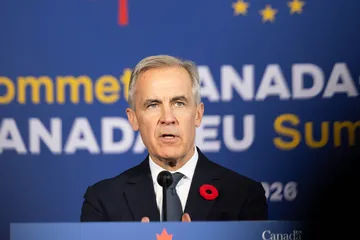
财政部长马克·卡尼再次强调其利用政府资产负债表推动加拿大投资热潮的计划,增加借款,并利用税收激增将数十亿投入扩大经济生产能力。
Minister Mark Carney doubled down on his plan to use the government’s balance sheet to spur an investment boom in Canada, increasing borrowing and using a surge of tax revenue to plow billions into expanding the productive capacity of the economy.
作为总理的第二份预算案,卡尼阐述了其“投资超级周期”的愿景。该文件概述了数十亿的工业支出,用于电网、核电站、采矿和林业,同时为部分企业家和中小型公司投资者提供资本利得税减免。
In his second budget as prime minister, Carney laid out his vision for an “investment supercycle.”The document outlined billions in industrial spending on the electricity grid, nuclear plants, mining and forestry, along with a capital-gains tax break for some entrepreneurs and investors in smaller companies.
计划新增支出中约三分之一用于可负担性措施和社会项目,包括提高低收入成年人的税收福利,并向住房建设及其他旨在减少无家可归现象的措施注入新资金。
About a third of the planned new spending is for affordability measures and social programs, including topping up a tax benefit for lower-income adults and putting new funds into housing construction and other measures aimed at reducing homelessness.
该文件由财政部长弗朗索瓦-菲利普·香槟于周四发布,证实部分由油价上涨推动的政府收入意外之财已大多被花掉。政府的关键企业税收政策,即所谓的“生产力超级扣除”用于资本投资,是最大的一笔开支,五年成本达360亿加元。该政策由卡尼于9月宣布。
The document, released by Finance Minister Francois Philippe-Champagne on Thursday, confirms that a government revenue windfall, driven in part by higher oil prices, has mostly been spent. The government’s key corporate tax policy, the so-called “productivity mega deduction” for capital investments, is the biggest ticket, carrying a C$36 billion price tag over five years. It was announced by Carney in September.
该税收抵扣、自四月以来宣布的其他政策以及新的预算措施,使五年净新增支出超过1500亿加元。联邦政府预计在当前财政年度出现623亿加元的财政赤字,约占该国国内生产总值的1.8%。
That tax-write off, other policies announced since April, and the new budget measures bring the net new spending to more than C$150 billion over the five years. The federal government is expected to run a C$62.3 billion deficit in the current fiscal year, or about 1.8% of the country’s gross domestic product.
卡尼的计划需要大量借款,既用于财政赤字,也用于其他资本支出需求,例如为新的主权财富基金注资。总体而言,该文件预测五年计划借款达7647亿加元。
Carney’s plans require significant borrowing, both for the budget deficit and for other capital spending requirements such as seeding the new sovereign wealth fund. In total, the document forecasts C$764.7 billion in planned borrowing over five years.
预算案前言由卡尼和香槟共同撰写,主张加拿大应充分利用其相对于七国集团盟友较低的债务水平。
The budget’s foreword, co-authored by Carney and Champagne, argues Canada should make full use of its lower level of debt compared with its Group of Seven allies.
“加拿大在七国集团中拥有最低的净债务占国内生产总值比率、最高的可能信用评级,以及远低于美国的借贷成本,”他们写道。“与其他先进经济体所见情况不同,加拿大人——而非债券市场——将决定我们的选择。”本财政年度净债务占国内生产总值比率为39.9%,低于春季更新预测的41.5%,原因是经济表现超出预期。该比率预计未来五年将维持在40%左右。政府表示,将在明年之前使运营支出与收入相平衡。
“Canada has the lowest net debt to GDP in the G7, the highest credit rating possible, and borrowing costs that are well below that of the United States,” they write. “Unlike what we are seeing in other advanced economies, Canadians -- not the bond market -- will determine our choices.”The net debt to gross domestic product ratio is 39.9% this fiscal year, lower than the 41.5% predicted in a spring update, because the economy has exceeded expectations. That ratio is expected to hold around 40% over the next five years. The government said it will balance operating expenses against revenues by next year.
“卡尼的雄心是通过投资优先的经济计划来转变加拿大经济,这一雄心得到该国商业界的共鸣,”加拿大商业协会高级副总统西奥·阿尔吉蒂斯表示。“今天我们对该计划的成本有了更清晰的认识。今后的重点应放在实施、执行以及政治纪律上,以确保这些投资带来丰厚回报。”然而,这种回报可能还要数年才能实现。成本也体现在利息支出的激增中,如果政府的计划不能推动增长,这种支出将更加痛苦。
“Carney’s ambition is to transform the Canada economy through an investment-first economic program, an ambition shared by the country’s business community,” said Theo Argitis, senior vice president at the Business Council of Canada. “Today we got a clearer picture of the cost of that program. The focus going forward needs to be on implementation, execution and political discipline in making sure these investments produce a big payoff.”That payoff, however, may be years away. The costs are also evident in the surge in interest charges that will prove more painful if the government’s plan doesn’t boost growth.
公共债务支出预计将从目前的约11%上升至大约五年后的收入的13.6%。在全球债券收益率飙升的背景下,这种借贷可能被视为对政府长期计划的风险,尤其是在需要紧急支出的经济冲击发生时。
Public debt charges are expected to rise to 13.6% of revenue in about five years, from about 11% currently. Amid a surge in global bond yields, that borrowing could be considered a risk to the government’s plans over the long run, especially in the event of an economic shock that would require emergency spending.
“我担心账面下存在一些创意会计做法,”德储银行副首席经济学家兰德尔·巴特利特表示。他指出,在预算预测的五年期间,收入将增加约1200亿加元。部分增长可由高油价解释,但即便如此,相对于增长前景,收入预测似乎“过于乐观”,他说。
“I worry there's some creative accounting going on under the hood,” said Randall Bartlett, deputy chief economist at Desjardins. He pointed to the roughly C$120 billion in higher revenues over the five years of budget projections. Some of that increase can be explained by elevated oil prices, but even so, the revenue forecasts appear “aspirational” relative to the growth outlook, he said.
2026-27财年的石油意外之财约为78亿加元,高于议会预算办公室此前的预期。
The oil windfall is about C$7.8 billion for 2026-27, higher than was expected by the parliamentary budget office.
巴特尔表示,关于更高的长期借贷成本将如何影响部分直接项目支出的现值,也存在一些慷慨的假设。他说,这在未来五年内带来了约600亿加元的成本削减。
Bartlett said there are also some generous assumptions being made about how higher longer-term borrowing costs will impact the present value of some direct program expenses. That contributes to a cost reduction of about C$60 billion over the next five years, he said.
财政部将2030年加拿大政府10年期国债收益率假设为约3.7%,与春季更新保持不变。“他们可能在为未来负债折现时使用的利率假设,与其更广泛的财政预测所用的不同,”巴特尔说。
The Department of Finance assumed 10-year Government of Canada bond yields at about 3.7% for 2030, which is unchanged from the spring update. “They may be using different interest rate assumptions for discounting future liabilities than they are for their broader fiscal forecasts,” Bartlett said.
预算还显示,卡尼正在增加联邦政府在加拿大经济中的份额。政府账面上的总资产预计将从目前的1.1万亿加元增至2031年的约1.6万亿加元。
The budget also shows Carney increasing the federal government’s stake in the Canadian economy. Total assets on the government’s books are expected to rise to about C$1.6 trillion by 2031 from C$1.1 trillion today.