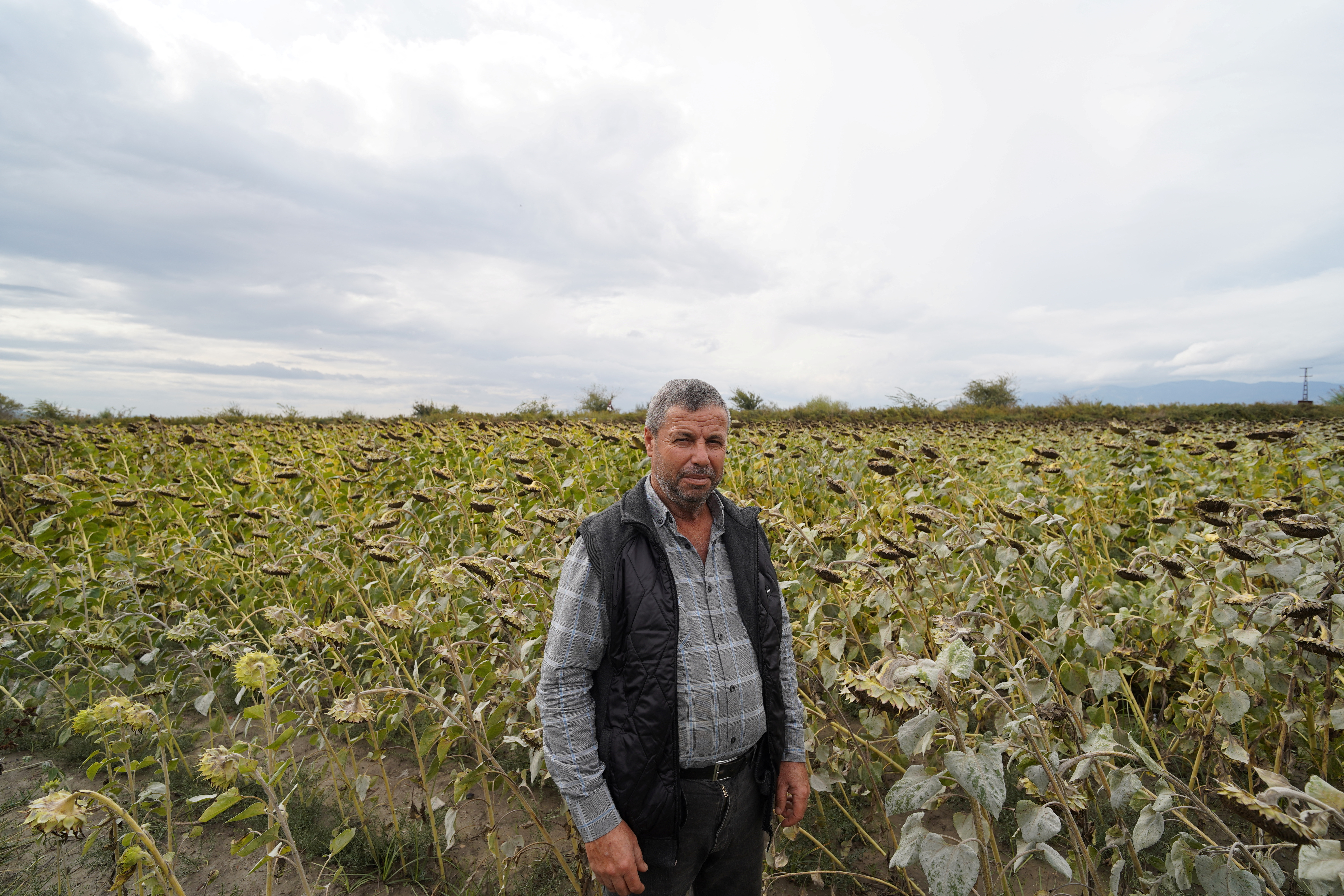
梅赫梅特·卡巴克在土耳其西部干旱多发的同一片土地上种植棉花已有数十年。今年他改种小麦和向日葵,部分原因是这两种作物需水量较少,种植成本更低。
Mehmet Kabak has grown cotton on the same land in drought-prone western Turkey for decades. This year he is planting wheat and sunflower instead, in part because they require less water, making them cheaper to grow.
卡巴克是全球众多农民之一,他们被迫自行寻找应对气候变化的办法,而不愿等待各国在年度气候谈判中就谁应为适应措施提供资金这一长期争论达成共识。
Kabak is one of many farmers worldwide forced to find their own way to cope with a changing climate rather than wait for countries to settle long-standing arguments at annual climate talks over who should finance adaptation.
农业约占土耳其经济产出的5%。政府表示,农业还消耗了该国79%的水资源,其中近一半因基础设施和灌溉效率低下而损失。
Agriculture accounts for around 5% of Turkey's economic output. It also consumes 79% of the country's water, almost half of which is lost because of inefficient infrastructure and irrigation, the government has said.
随着下一轮气候谈判于周一在安塔利亚的COP31(第31届联合国气候变化大会)拉开帷幕,地中海沿岸的这座城市距离索凯有数百公里,在那里耕种900公亩(约220英亩)土地的59岁农民卡巴克已无力继续承受亏损。
As the next round of climate talks begins on Monday at COP31 in Antalya on the Mediterranean coast, 59-year-old Kabak, who farms 900 decares (about 220 acres) in Soke, hundreds of kilometres to the west, cannot afford to keep making losses.
政府补贴未能跟上与灌溉及美以与伊朗战争相关的燃料和化肥成本上涨步伐。
Government support payments have not kept pace with rising fuel and fertiliser costs linked to irrigation and the US-Israeli war with Iran.
“尽管我们收成受损,灌溉成本却在上涨,”卡巴克说。“我们的投入成本持续上涨了40%、50%、60%。燃油价格没停过。”根据联合国粮农组织2023年数据,土耳其曾是世界第八大棉花生产国,但据土耳其统计局预测,其籽棉总产量预计将在2026年同比下降38%至120万公吨。
"We had increases in irrigation costs even though our harvest is damaged," Kabak said. "Our input costs increased by 40%, 50%, 60% continuously. Fuel prices did not stop." Turkey was the world's eighth-largest cotton producer, according to 2023 data from the UN's Food and Agriculture Organization, but its overall seed cotton output is expected to fall 38% year-on-year to 1.2 million metric tons in 2026, according to the Turkish statistics institute.
当地一个农业团体表示,干旱和成本上升导致索凯地区农民将棉花种植面积在2026年缩减约60%至约12万公亩。
Drought and increased costs have led farmers in the Soke region to shrink cotton acreage by around 60% to around 120,000 decares in 2026, a local farming group said.
接受路透社采访的30多名农民、贷款机构、企业和非营利组织表示,该行业需要更多技术支持和融资渠道帮助。
More than 30 farmers, lenders, companies and non-profit organisations told Reuters in interviews the sector needed more technical support and help gaining access to finance.
“适应不再是农民的可选项,但成本高昂,目前主要由他们自行承担,”联合国粮农组织驻土耳其代表阿伊谢居尔·塞利西克表示。对农业而言,水资源是最迫切的适应问题。
"Adaptation is no longer optional for farmers, but it is expensive, and today they largely pay for it themselves," said Aysegul Selisik, Turkey representative of the FAO. For agriculture, water is the most pressing adaptation issue.
去年,土耳其遭遇了50多年来最严重的干旱。降雨量较长期平均值低27%。政府数据显示,水库水位已有所回升,但分析人士称,这种缓解很可能只是暂时的。
Last year, Turkey suffered the worst drought in over 50 years. Rainfall was 27% below the long-term average. Dam levels have recovered to an extent, government data showed, but analysts say the reprieve is likely to be temporary.
路透社对世界自然基金会(WWF)和林肯土地政策研究所的数据分析显示,为维持健康的生态系统,土耳其产棉流域的用水量需削减25%至60%。
Reuters analysis of data from the WWF and Lincoln Institute of Land Policy showed water use in Turkey's cotton-producing basins needs to fall 25% to 60% to sustain healthy ecosystems.
现有基础设施效率低下。从水坝和河流引来的水往往未经过滤,在清洁设施建成前就堵塞了滴灌软管。但农民因多种原因不愿投资。
Existing infrastructure is inefficient. Water drawn from dams and rivers often arrives unfiltered, clogging drip hoses before infrastructure to clean it is built. But farmers are reluctant to invest for a variety of reasons.
业内人士表示,在某些情况下,改用新系统会导致产量初期下降,农民可能难以承受。此外,许多农民在租赁土地上耕作,因此不愿投资。
In some cases, switching to newer systems can lead to an initial drop in yield that farmers may struggle to absorb. In addition, many work on rented land, meaning they are reluctant to invest, industry representatives said.
土耳其在10月公布明年预算时表示,用于土地和水资源管理的拨款将增加40.5%,其中1740亿里拉(约合35亿美元)专门用于农业灌溉投资。
Turkey said in October, when it laid out next year's budget, the amount set aside for land and water resources management would rise 40.5%, with 174 billion lira ($3.5 billion) earmarked for agricultural irrigation investments.
农业部告诉路透社,还需要进一步的支持来补充这笔资金,包括来自私营部门的支持。
The Agriculture Ministry told Reuters further support would be needed to supplement that, including from the private sector.
土耳其最大私营银行伊希银行(İşbank)已开设56家专业农业网点,并提供滴灌和喷灌融资,还款与收获周期挂钩。
Turkey's largest private lender İşbank has opened 56 specialist agricultural branches and offers financing for drip and sprinkler irrigation with repayments tied to harvest cycles.
拥有支持农民历史的谢克尔银行(Şekerbank)表示,2026年前九个月,在其可持续融资框架下发放的贷款中,约四分之一用于农业水资源管理和气候适应。
Şekerbank, which has a history of supporting farmers, says around a quarter of loans made under its sustainable-finance framework in the first nine months of 2026 went to agricultural water management and climate adaptation.
然而,缺乏股权或抵押物,以及部分农民无力偿还贷款,限制了私营部门所能提供的帮助规模。许多农民还必须先垫付资金,待满足条件后再获得报销。
A lack of equity or collateral and the inability of some farmers to repay the loans, however, have limited the amount of help the private sector can deliver. Many farmers also have to pay upfront and get reimbursed later, if conditions are met.
“这让他们非常困难,”国际农业发展基金驻土耳其国家主任利亚姆·奇卡说。
"That makes it very difficult for them," said Liam Chicca, country director for Turkey at the International Fund for Agricultural Development.
自1982年以来,该基金已在土耳其投资8.5亿美元,估计土耳其有5%至10%的农民几乎完全没有能力自行为大额投资融资。
The fund, which has invested $850 million in Turkey since 1982, estimates between 5% and 10% of Turkish farmers have virtually no capacity to finance major investments themselves.
对于土耳其——以及其他政府而言,不采取适应措施的代价可能高于现在采取行动的代价。
For Turkey — and other governments — failure to adapt could cost more than acting now.
世界银行2022年的分析估计,供水减少10%可能使土耳其损失6%的GDP,即约500亿美元,原因是对农业的影响。
World Bank analysis in 2022 estimated a 10% reduction in water supply could cost Turkey 6% of GDP, or about $50 billion because of the impact on agriculture.
除计划增加预算外,土耳其政府表示,私营企业可通过采用水效认证和运用绿色金融工具为适应措施融资,从而提供更多帮助,政府希望在COP31上推进这种做法。
Apart from the planned budget increase, Turkey's government has said private companies could help more by adopting water-efficiency certification and using green-finance instruments to fund adaptation, an approach it hopes to advance at COP31.
监督进展的人士希望,无论提出什么方案,都不应只是各国政府在以往联合国会议上作出却未兑现具体变革的那种无约束力承诺。
Those monitoring progress are keen that whatever is proposed amounts to more than the kind of non-binding pledges that governments have made at previous UN conferences without delivering concrete change.
“安塔利亚会议的成败不应以承诺来衡量,而应看有多少资金真正到达农场和流域,”粮农组织的塞利西克说。
"Success in Antalya should be measured not by pledges, but by how much finance reaches the farm and the watershed," said FAO's Selisik.