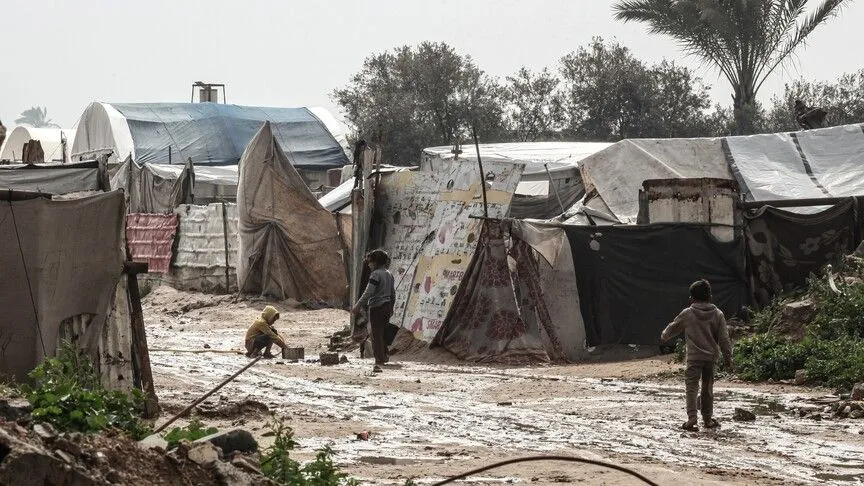
导致加沙地带数万顶帐篷被淹的这场风暴,除非允许物资进入以修复该地区已毁坏的排水网络,否则可能引发更多致命灾难,政府媒体办公室主任发出警告。
The storm that flooded tens of thousands of tents in Gaza could be followed by further deadly disasters unless supplies are allowed in to repair the territory’s shattered drainage networks, the director of its Government Media Office warned.
伊斯梅尔·阿尔-萨瓦夫塔在接受阿纳多卢通讯社采访时表示,关于灾难性冬季来临的数月警告正在变为现实,流离失所的家庭在几乎无法提供防护的庇护所中暴露在暴雨和洪水之中。
In an interview with Anadolu, Ismail al-Thawabta said months of warnings about a catastrophic winter were becoming reality, with displaced families exposed to heavy rain and flooding in shelters that offered little protection.
他说:“如果国际社会不干预,允许物资进入以重建基础设施,加沙地带今年冬天将再次遭遇洪水。”
“If the world does not intervene to allow in supplies to rebuild the infrastructure, Gaza will flood again this winter,” he said.
他敦促停火协议的调解方和担保方施压以色列开放过境点,允许人道主义援助和恢复基本服务所需物资进入。
He urged mediators and guarantors of the ceasefire agreement to press Israel to open crossings for humanitarian aid and the materials needed to restore essential services.
警告成真 政府媒体办公室称,这场于周五晚间袭来的风暴,在最初12小时内淹没了7万顶帐篷。数十堵墙体倒塌,有人员受伤,初步直接损失估计达300万美元。
Warnings become reality The storm, which struck Friday evening, flooded 70,000 tents in its first 12 hours, according to the Government Media Office. Dozens of walls collapsed, people were injured and initial direct losses were estimated at $3 million.
阿尔-萨瓦夫塔表示,降雨来临前的国际呼吁未能产生足够的回应。
Al-Thawabta said international appeals before the rains arrived had failed to produce an adequate response.
代尔拜拉赫发生的沙质堤坝倒塌压毁帐篷并造成人员死亡的事件,凸显了流离失所家庭面临的风险。他说,搜救队仍在搜寻失踪人员。
The deadly collapse of a sand embankment onto tents in Deir al-Balah illustrated the risks facing displaced families. Rescue teams were still searching for missing people, he said.
这场风暴加剧了现有的人道主义紧急状况,让本已因流离失所和物资短缺而挣扎的家庭,面临洪水和建筑物不稳定的进一步威胁。
The storm had compounded an existing humanitarian emergency, leaving families already struggling with displacement and shortages facing further threats from flooding and unstable buildings.
许多人别无选择,只能住在日益恶化的帐篷里,或是以色列轰炸受损的房屋中。
Many had no safer alternative to a deteriorating tent or a home damaged by Israeli bombardment.
网络毁坏令加沙暴露无遗 阿尔-萨瓦夫塔表示,以色列在其种族灭绝战争中摧毁了加沙地带93%以上的污水和雨水排水基础设施。
Destroyed networks leave Gaza exposed Al-Thawabta said Israel had destroyed more than 93% of Gaza’s sewage and rainwater drainage infrastructure during its genocidal war.
他警告说,若无材料重建这些网络,进一步的暴雨将带来新一轮洪水。
Without materials to rebuild those networks, he warned, further downpours would bring renewed flooding.
他呼吁紧急允许维修物资与食物、帐篷及其他必需品一同进入,强调必须解决导致危机的基础设施受损问题。
He called for repair supplies to be admitted urgently alongside food, tents and other necessities, stressing the need to address the infrastructure damage underlying the crisis.
风险远不止已被淹没的地点。联合国人道主义事务协调厅在10月警告称,约95万巴勒斯坦人居住在面临中度至高度洪水风险的流离失所点。据该办公室称,约29.4万个家庭需要冬季庇护援助。
The risks extend well beyond the sites already flooded. The UN Office for the Coordination of Humanitarian Affairs warned in October that around 950,000 Palestinians were living at displacement sites at moderate to high risk of flooding. Around 294,000 families needed winter shelter assistance, according to the office.
萨瓦夫塔表示,停火调解人和担保方必须施压以色列履行其在援助交付和准入方面的承诺。
Pressure to open the crossings Al-Thawabta said ceasefire mediators and guarantors must press Israel to honor its commitments on aid deliveries and access.
他说,协议规定每天允许600辆援助卡车进入加沙。然而,过境点会定期关闭,即便在允许交付的日子里,进入的车辆数量也不超过约定总数的30%。
The agreement provides for 600 aid trucks to enter Gaza daily, he said. Yet crossings were periodically closed, and on days when deliveries were permitted, the number entering did not exceed 30% of the agreed total.
他指责以色列制造饥荒并推行饥饿政策,称这些限制进一步加剧了本已精疲力竭民众的困境。
He accused Israel of engineering famine and pursuing a policy of starvation, saying the restrictions were further worsening the plight of an already exhausted population.
他说,加沙面临重叠的人道主义灾难,敦促国际社会采取行动保护居民,以免更多生命逝去。
Gaza faced overlapping humanitarian disasters, he said, urging international action to protect residents before more lives were lost.
以色列的种族灭绝战争使加沙大部分地区沦为废墟,迫使流离失所的家庭住进帐篷和受损建筑。尽管2025年10月生效的停火协议仍在生效,以色列对庇护所和维修物资的限制仍在阻碍恢复工作。
Israel’s genocidal war has left much of Gaza in ruins, forcing displaced families into tents and damaged buildings. Israeli restrictions on shelter and repair supplies continue to hamper recovery despite a ceasefire in effect since October 2025.