瑞典中央银行官员认为,未来几个月持续存在通胀压力上升的风险,并表示可能需要进一步提高借贷成本。
Officials at Sweden’s central bank see a persistent risk of higher inflationary pressure over the months ahead and said that a further increase in borrowing costs will likely be needed.
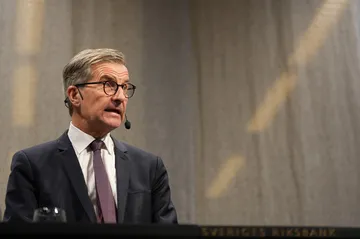
瑞典央行上周将基准利率上调至2%,在经济走强且能源价格保持高位之际,加入了全球收紧货币政策的浪潮。利率制定委员会表示,自9月以来的路径依然有效,并预计“在未来一年”会再次加息。行长埃里克·特德恩(Erik Thedéen)在周二公布的会议纪要中表示,他此前在9月为提高政策利率所提出的论据——更强劲的经济和高企的通胀风险——依然存在。
The Riksbank raised its benchmark interest rate to 2% last week, joining a global tightening push as the economy strengthens while energy prices remain elevated. The rate-setting board said the path from September still held and it projected a further hike “in the coming year.”In the minutes of the meeting published Tuesday, Governor Erik Thedéen said the arguments he had made for a higher policy rate in September — a stronger economy and elevated inflation risks — remained.
“我预计我们将在未来六个月左右的时间里,按照9月份的预测提高政策利率,”他说。瑞典央行在11月的会议上没有提供新的经济预测或利率路径。
“I expect that we will raise the policy rate in line with our September forecast over the coming six months or so,” he said. The Riksbank did not provide new economic forecasts or a rate path at its November meeting.
随着出口增加以及减税帮助了家庭消费,瑞典经济前景在近几个月有所好转。与此同时,中东地区未解的紧张局势意味着欧洲的能源供应依然受到限制,从而导致价格上涨。
The outlook for Sweden’s economy has brightened over recent months as exports have increased while tax cuts have helped household consumption. At the same time, unresolved tensions in the Middle East mean Europe’s energy supplies have remained restricted, leading to higher prices.
以瑞典央行目标利率CPIF衡量的瑞典通胀在近几个月较为温和,并在10月再次低于预测,但瑞典央行目前的预测是CPIF将在今年年底前突破2%的目标。
Swedish inflation, as measured by the Riksbank’s target rate CPIF, has been subdued over recent months and fell below forecasts again in October, but the Riksbank’s current projection is for CPIF to cross its 2% goal by the end of this year.
副行长安娜·塞姆(Anna Seim)在会议纪要中表示:“经济回升似乎强劲,其特点是工业板块强劲且企业乐观。劳动力市场预计将在未来走强,今年家庭消费的增长速度也快于正常水平。”副行长佩尔·扬松(Per Jansson)表示,令人担忧的是,不断上升的需求可能会与“经济供给侧的瓶颈”以及克朗汇率走弱相互作用,从而导致通胀“急剧上升”。
“The economic upturn appears to be robust and is characterized by a strong industrial sector and optimistic companies,” Deputy Governor Anna Seim said in the minutes. “The labor market is expected to strengthen going forward, and household consumption has grown faster than normal this year.”The concern is that rising demand could interact with “bottlenecks on the supply side of the economy” and a weakening of the krona exchange rate, and then inflation could “rise sharply,” Deputy Governor Per Jansson said.
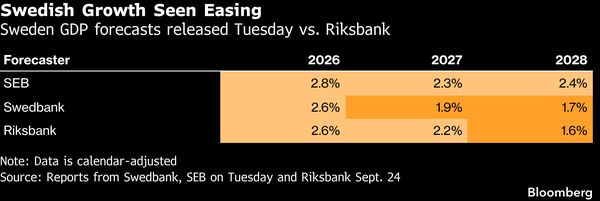
北欧联合银行(Nordea Bank Abp)分析师托尔比约恩·伊萨克森(Torbjörn Isaksson)表示,会议纪要显示瑞典央行正朝着进一步收紧政策的方向迈进。
Nordea Bank Abp analyst Torbjörn Isaksson said that the minutes show the Riksbank is moving toward further tightening.
伊萨克森在一份报告中指出,略微走强的克朗和低于预期的10月通胀巩固了这样一种观点,即利率将在12月的下次政策会议上保持不变。
A slightly stronger krona and lower than expected October inflation reinforce the view that rates will be held at the next policy meeting in December, Isaksson said in a note.
然而,鉴于瑞典央行有充分的理由预计通胀会上升,“有很多迹象表明瑞典央行将在2月再次加息,”他说。
However, with good reasons for the Riksbank to expect inflation to rise, “there is much to suggest that the Riksbank will raise rates again in February,” he said.
瑞典银行(Swedbank AB)分析师杰斯珀·汉森(Jesper Hansson)和格伦·尼尔森(Glenn Nielsen)表示,会议纪要中“没有意外”,并补充说所有董事会成员都同意9月的利率路径依然有效。瑞典银行坚持其关于2月再加息一次至2.25%的预测。
Swedbank AB analysts Jesper Hansson and Glenn Nielsen said there were “no surprises” in the minutes, adding that all board members agreed that the September rate path still holds. Swedbank sticks to a forecast of one more hike in February to 2.25%.