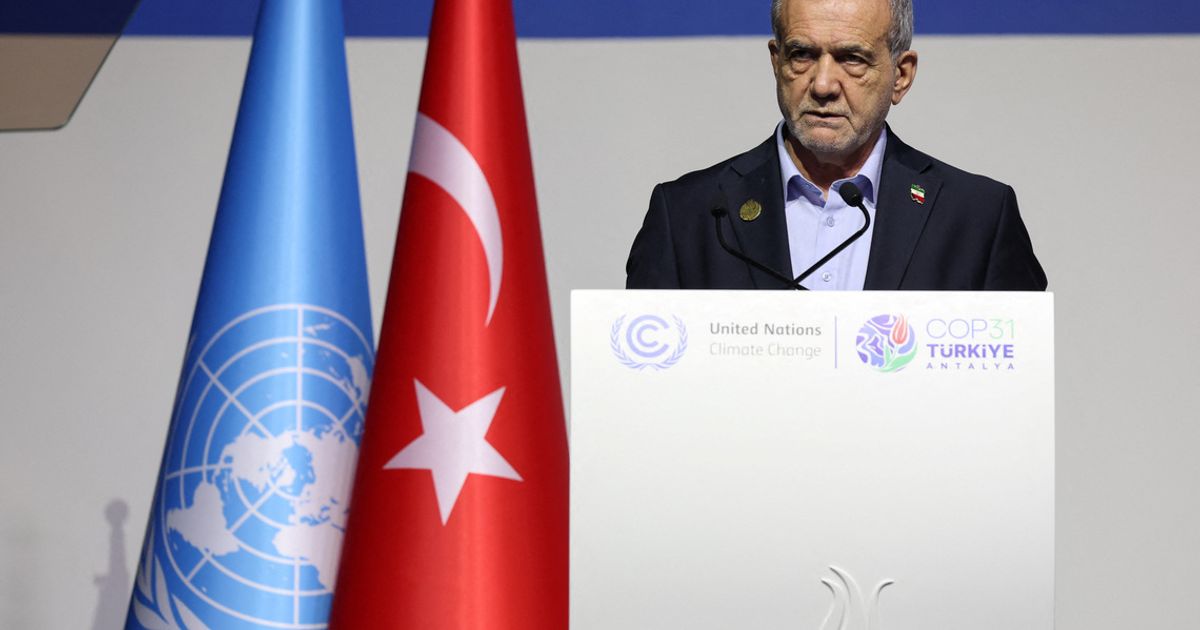
土耳其安塔利亚,11月11日——伊朗总统马苏德·佩泽希齐扬周三在COP31气候大会上表示,伊朗希望就美国和以色列打击造成的环境损害获得赔偿,并称这一问题关系到全球应对气候变化的努力。
ANTALYA, Turkey, Nov 11 - Iran's President Masoud Pezeshkian told the COP31 climate conference on Wednesday his country wanted compensation for environmental damage caused by US and Israeli strikes, saying the issue related to global efforts to fight climate change.
他说:“我们期待国际社会在和平时期的气候承诺与战争时期的责任之间建立真正而有意义的联系,记录和评估军事侵略造成的环境损害,并制定赔偿机制。”
"We expect the global community to establish a genuine and meaningful link between climate commitments in times of peace and responsibility in times of war, to document and assess the environmental damages caused by military aggressions and to develop compensation mechanisms," he said.
他的讲话是此次为期两周的会议在土耳其举行第三天、各国元首接连发言的一部分。
His comments were part of back-to-back speeches by heads of state on the third day of the two-week conference in Turkey.
国际气候协议目前包含富裕国家提供的数十亿美元资金,用于帮助发展中国家适应气候变化并支付其影响造成的费用,但没有涵盖军事打击所造成环境影响的条款。
International climate agreements currently include billions of dollars in wealthy-country finance to help developing countries adapt to climate change and pay for its impacts, but there is no provision covering environmental impacts of military strikes.
美国和以色列于2月下旬对伊朗发动军事行动。这场冲突蔓延至黎巴嫩和海湾地区,期间对伊朗及更广泛地区的能源基础设施多次发动打击,并对航运发动打击。伊朗则多次袭击航行于霍尔木兹海峡的油轮。这些袭击造成了环境损害,包括大量石油泄漏。
The US and Israel launched a military campaign against Iran in late February. The conflict, which spread to Lebanon and the Gulf, has involved repeated strikes on energy infrastructure in Iran and across the wider region, as well as strikes on shipping. Iran has repeatedly attacked oil tankers navigating the Strait of Hormuz. Those attacks have caused environmental damage, including substantial oil leaks.
伊朗战争还可能促使全球总体排放量下降。一个国际科学家联合体周二发布的一份报告称,今年全球化石燃料排放量预计将略有下降,部分原因是冲突之后燃料价格高企以及可再生能源使用扩大。
The Iran war may also have led to a reduction in overall global emissions. A report from a consortium of international scientists on Tuesday said global fossil fuel emissions are on track to fall slightly this year, in part due to high prices for fuel and expanded use of renewable energy in the wake of the conflict.