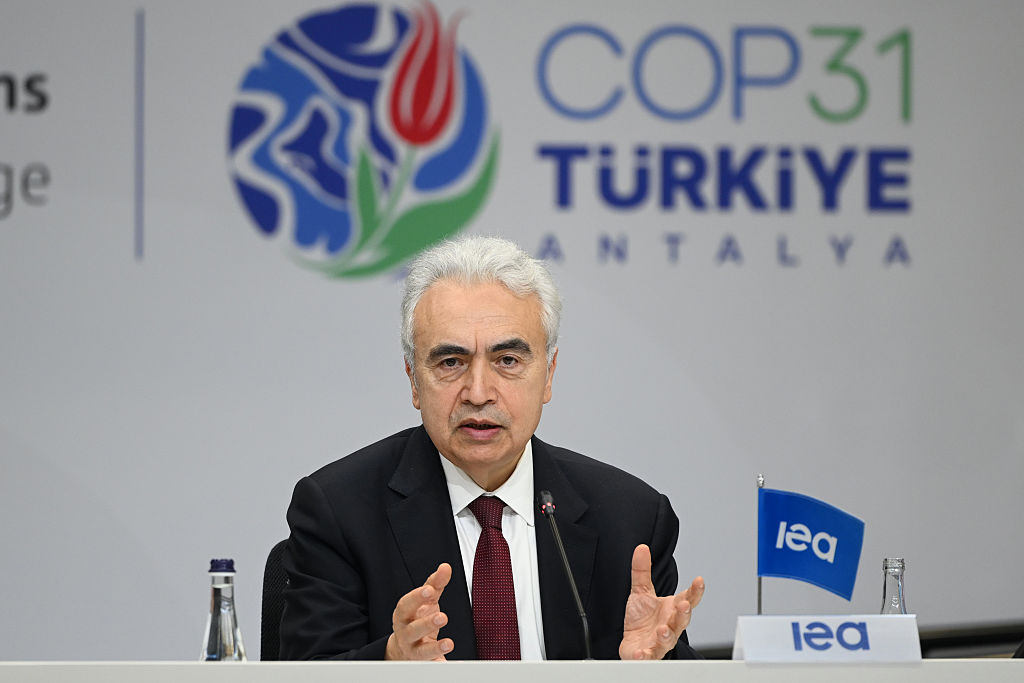
十多年来,法蒂赫·比罗尔一直是全球能源市场最具影响力的声音之一。作为国际能源署(IEA)署长,他向各国总统和能源部长提供建议;各大公司首席执行官也密切关注他的市场观点。
For more than a decade, Fatih Birol has been one of the world’s most influential voices in energy markets. As the head of the International Energy Agency (IEA), he advises presidents and energy ministers; CEOs follow his view of the market with careful attention.
在我们于正在土耳其安塔利亚举行的联合国气候变化大会(即第31届缔约方会议)上会面时,他给出了直截了当的分析:伊朗战争引发了结构性转变。“我看不到能源世界有任何可信的路径可以回到伊朗战争前的状态,”他在11月13日说。
When we caught up at the United Nations climate change conference, known as COP31, currently underway in Antalya, Turkey, he offered a blunt analysis: the war in Iran has unleashed a structural shift. "I don't see any credible pathway in which the world of energy is going back where it was before the Iran War," he said on Nov. 13.
简要分析或许可以用简单的表述概括这一转变。总体而言,对能源安全的关注将意味着更多可再生能源,因为它可以在本地生产。它还意味着采取效率措施,使各国使用更少的燃料,降低对冲击的脆弱性。事实上,IEA 的能源危机政策追踪器列出了今年各国为实现上述目标而制定的数十项政策——从印尼推动生物柴油,到孟加拉国为消费者安装太阳能和储能提供激励。
A quick analysis might boil this shift down to simple terms. In general, the focus on energy security will mean more renewable energy because it can be produced locally. It will mean efficiency measures so that countries use less fuel and are less vulnerable to shocks. Indeed, an energy crisis policy tracker from the IEA cites dozens of policies countries have laid out this year to do just that—from a push for biodiesel in Indonesia to incentives for consumers to install solar and storage in Bangladesh.
Future Proof Weekly 正在解读气候与能源经济。
Future Proof Weekly Making sense of the climate and energy economy.
但比罗尔表示,能源即将到来的结构性变化将产生更广泛的影响,塑造经济和地缘政治的结果。他提到石油出口国的经济多元化计划、新的贸易伙伴关系以及对下一代电池和核能等新技术的投资。所有这些都旨在防范能源供应中断,确保能源供应安全。“他们不再是进口能源,而是决定自行建设能源,”他对我说。
But Birol says the coming structural changes in energy will have even wider implications, shaping economic and geopolitical outcomes. He cites economic diversification plans from oil-exporting countries, new trade partnerships, and investments in new technologies like next-generation batteries and nuclear power. All of which comes with an eye toward safeguarding energy supply from supply disruptions. "Instead of importing energy, they are deciding to build energy,” he told me.
安塔利亚的一个关键主题——也是比罗尔心中的重点——是电气化。目前,最终能源消费中不足四分之一来自电力。其余部分主要来自燃料消耗,比如车辆的汽油、家庭的取暖油或炉灶的燃气。依赖电力,电力往往在离使用地相对近的地方生产,这能解决能源安全问题。当电力使用可再生能源而非进口化石燃料生产时,这一点更为明显。
A key theme in Antalya—and on Birol’s mind—is electrification. Right now less than a quarter of final energy consumption comes from electricity. The rest comes primarily from fuel consumption, think of petrol in vehicles, heating oil in homes, or gas in stoves. Relying on electricity, which tends to be produced relatively close to where it’s used, addresses energy security concerns. That’s even more the case when electricity is produced using renewables rather than imported fossil fuels.
COP31主席国正推动各国承诺,到2035年,最终能源消费中有35%依赖电力。世界电网仍在一定程度上依赖化石燃料,不同地区程度不一,但如今电力通常比大多数化石燃料更清洁。随着可再生能源部署的继续,电力将更加清洁。
The COP31 presidency is pushing countries to pledge to rely on electricity for 35% of their final energy consumption by 2035. The world’s electricity grid still relies on fossil fuels to some degree—more or less so depending on the area—but today it’s typically cleaner than most fossil fuels. It will be even cleaner as renewable deployment continues.
电气化还代表着一种结构性转变。它有望重塑贸易关系,因为各国要么需要建立清洁技术供应链,要么需要找到友好伙伴来建立相关贸易关系。它将推动电力部门的投资,推进大型电力基础设施项目,并创建建设创新电力技术的新公司。国际能源署9月发布的电气化特别报告称,在电气化真正兴起的情景下,到2035年,全球每年在发电、电池储能和电网方面的投资可能总计2.5万亿美元。
Electrification also represents a structural shift. It promises to reshape trade relationships as countries need to either build clean technology supply chains or identify friendly partners to build relevant trade relationships. It will spur investment in the power sector, advancing both big electric infrastructure projects and creating new companies that build innovative electricity technologies. In the IEA’s special report on electrification released in September, the agency says that annual global investment in electricity generation, battery storage, and grids could total $2.5 trillion by 2035 in a scenario where electrification really takes off.
这比去年增加了1万亿美元。电气化还承诺解除——或至少削弱——石油和天然气对地缘政治的掣肘,同时提升另一组资源(包括关键矿产)的重要性。
That’s a $1 trillion increase from last year. And electrification promises to unlock—or at least lessen—the stranglehold that oil and gas has on geopolitics while elevating the importance of another set of resources, including critical minerals.
“两年前,我说我们正进入电力时代,”比罗尔告诉我。“我今天可以告诉你,当我看今天的数据时,我们正处于电力时代。”
“Two years ago, I said we are entering the age of electricity,” Birol told me. “I can tell you today, when I look at today's numbers, we are in the age of electricity."