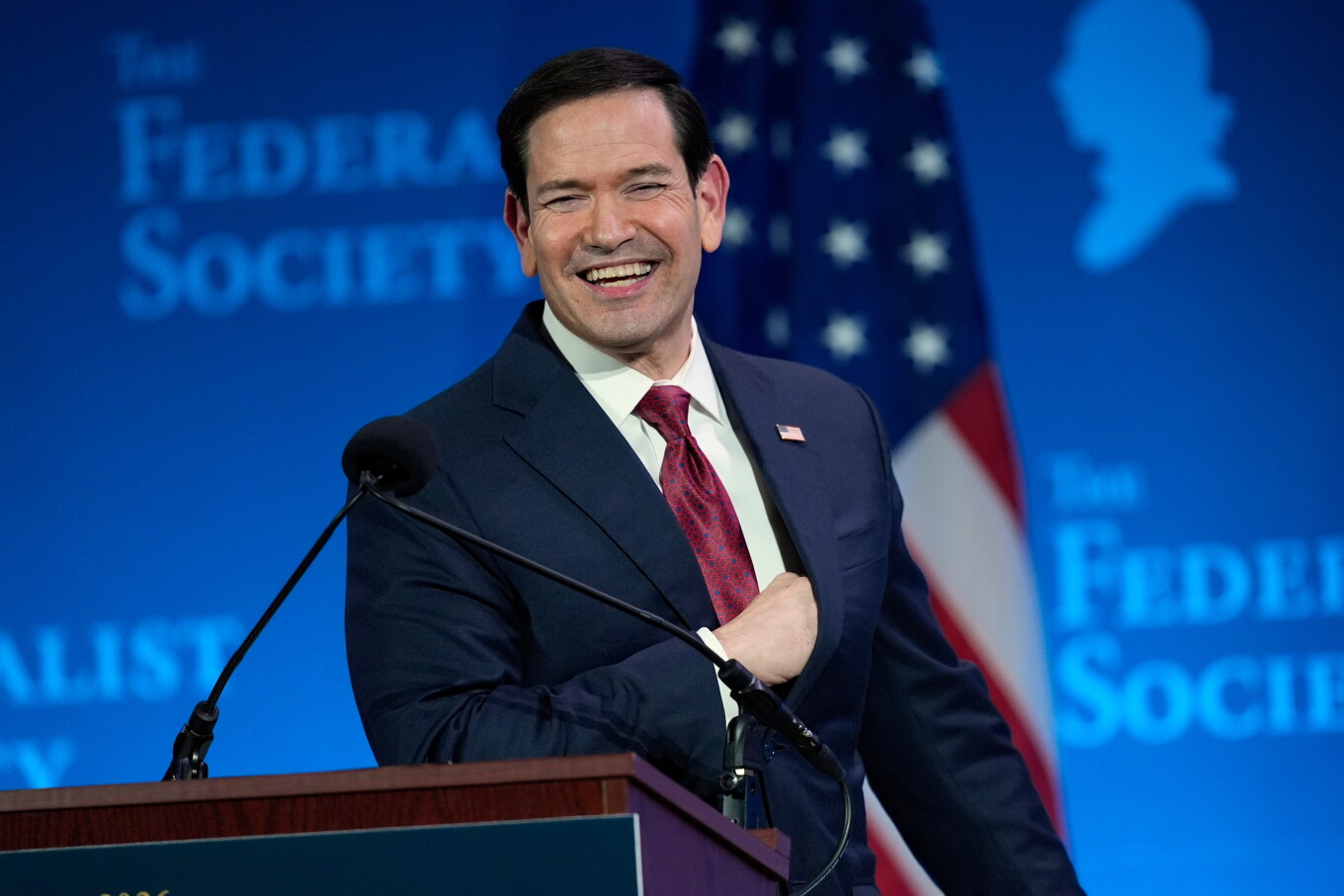
本·芬利 华盛顿——国务卿马尔科·鲁比奥周五晚间向同为保守派的人士发表了一场内容广泛的演讲,承认美国民众在当前经济中处境艰难,同时猛烈抨击他所谓的国际法“武器化”,称其束缚了美国为自身利益采取行动。
BEN FINLEY WASHINGTON — Secretary of State Marco Rubio gave a sweeping speech to fellow conservatives on Friday evening acknowledging that Americans are struggling in the current economy , while also railing against what he called the “weaponization” of international law to constrain the U.S. from acting in its own interests.
他在保守派组织联邦党人学会的讲话触及了中期选举的核心议题——经济痛苦,美国选民正是带着这一问题,让鲁比奥所在的共和党遭遇惨重失败。
His comments to the conservative Federalist Society touched on a core issue of the midterm elections — economic pain — that U.S. voters pointed to as they delivered massive losses to Rubio’s Republican Party.
“我认为我们必须承认,人们正在苦苦挣扎。这一点毫无疑问,”他说。“我们经济的健康状况与股市毫无关系。他们自身经济的健康状况,取决于他们是否有足够的钱买得起所需的东西。”唐纳德·特朗普总统常以股市作为经济表现良好的证据。但对高昂成本感到愤怒的选民把国会控制权交给了民主党,他们将此归咎于特朗普的关税、他在伊朗的战争,以及他两年前降低物价的竞选承诺未能兑现。
“I think we have to recognize that people are struggling. There’s no doubt about it,” he said. “The health of our economy has nothing to do with the stock market. The health of their economy is whether they have enough money to be able to afford the things they need.”President Donald Trump often points to the stock market as evidence that the economy is doing well. But voters angry over higher costs gave Democrats control of Congress after blaming Trump for his tariffs , his war in Iran and his unfulfilled campaign promise two years ago to bring down prices.
鲁比奥的讲话带有竞选演讲的意味,尽管这位前佛罗里达州参议员一直拒绝谈论他是否会在2028年竞选总统——那场选战可能让他与副总统JD·万斯对决。鲁比奥上个月在希腊发表了另一场内容广泛的演讲,聚焦西方价值观,似乎也反映出他在美国最高外交官职位之外的政治抱负。
Rubio’s remarks had the overtones of campaign speech, though the former Florida senator has consistently refused to discuss whether he would seek the presidency in 2028 in a race that could pit him against Vice President JD Vance . Rubio gave another wide-ranging speech last month in Greece that focused on Western values and also appeared to reflect his political aspirations beyond being America’s top diplomat.
鲁比奥周五为伊朗战争辩护,称有必要阻止这个伊斯兰共和国获得核武器的威胁。但他承认,这场不得人心的冲突推高了美国人的汽油价格及其他相关成本。
Rubio on Friday defended the Iran war , arguing that it was necessary to stop the threat of the Islamic Republic obtaining a nuclear weapon. But he acknowledged that the unpopular conflict has driven up gasoline prices for Americans and other connected costs.
“解决这些问题并不容易,因为解决它们并不受欢迎,”鲁比奥说。“这很难。而且往往会带来痛苦,你知道的,经济上的痛苦以及其他方面的痛苦。所以我们认识到这一点。”
“It’s not easy to address these things because it’s not popular to address them,” Rubio said. “It’s difficult. And oftentimes it inflicts, you know, pain, economic pain and otherwise. So we recognize that.”
他还指出,美国领导人需要延续一种传统,即确保下一代比上一代过得更好。他说,经济繁荣“不会自我延续”,而是一项需要数年乃至数十年才能完成的艰巨事业,无法“一个选举周期接一个选举周期”地实现。“这就是我们现在面临的挑战,因为我确实认为,有一种合理的担忧是,我们将成为第一代让下一代生活更糟的人,而这不能发生。那不是美国的方式,”他说。
He also pointed to the need for American leaders to continue a tradition of ensuring the next generation is better off than those before them. Economic prosperity is “not self-perpetuating,” he said, but an enormous undertaking that requires years and decades and is not accomplished “election cycle to election cycle.”“That’s the challenge before us now, because I do think there’s a legitimate fear that we will be the first generation to leave the next worse off, and that can’t happen. That’s un-American,” he said.
鲁比奥还猛烈回击了特朗普政府政策的批评者,这些政策包括在拉丁美洲对涉嫌贩毒的船只发动致命打击、1月抓捕时任委内瑞拉总统尼古拉斯·马杜罗以及严格的移民政策。
Rubio also hit back hard on critics of Trump administration policies such as deadly strikes on alleged drug-smuggling boats in Latin America, the January capture of then-Venezuelan President Nicolás Maduro and strict immigration policies.
他指责其他国家和国际组织试图通过指控特朗普政府违反国际法,来阻挠美国为自身最大利益行事。
He accused other countries and international organizations of trying to stymie the U.S. from acting in its own best interests by accusing the Trump administration of violations of international law.
“我们听到‘国际法’这一概念被援引来反对本届政府几乎每一项重大外交政策决定或行动,”他说,并将其描述为“国际法的武器化”。美联社驻华盛顿外交记者马修·李对此有贡献。
“We’ve heard the concept international law invoked against nearly every major foreign policy decision or action of this administration,” he said, describing it as “the weaponization of international law.”AP Diplomatic Writer Matthew Lee in Washington contributed.