2025年夏天,在就共和党的大规模税收与支出法案展开辩论时,众议院议长迈克·约翰逊向美国人保证,该法案将通过“消除欺诈、浪费和滥用”来“巩固和加强”社会安全网。到2027年,随着《唯一宏伟美丽法案》(简称OBBBA)中许多最严厉的削减措施开始生效,选民将能够自行做出判断。
DEBATING REPUBLICANS’ massive tax and spending bill in the summer of 2025, Mike Johnson, the House speaker, assured Americans that it would “secure and strengthen” the social safety-net “by eliminating fraud, waste and abuse”. In 2027, as many of the deepest cuts from the One Big Beautiful Bill Act (OBBBA) kick in, voters will be able to judge for themselves.
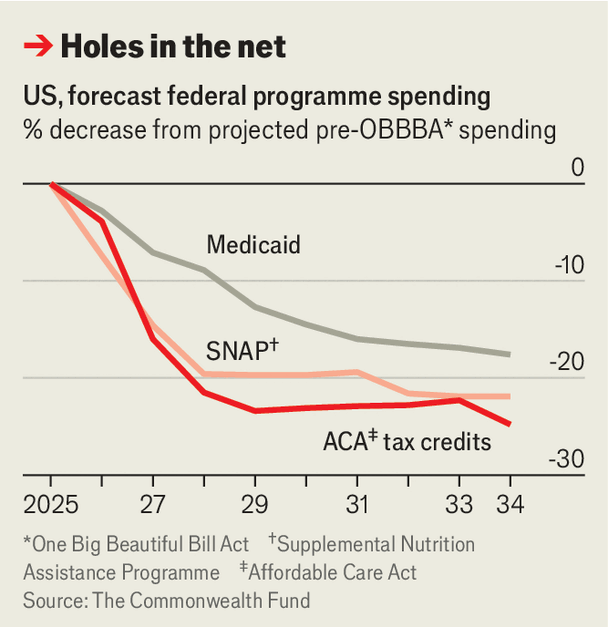
许多项目即将迎来变革。无党派预算审议机构国会预算办公室(CBO)表示,与原本的支出水平相比,该法案将在2027年把联邦对穷人医疗保障项目“医疗救助”(Medicaid)的支出削减约7%(见图表)。国会预算办公室计算得出,再加上《平价医疗法案》(即“奥巴马医改”)市场保险补贴的终止,没有医疗保险的美国人数将从2025年的2,660万上升到2027年的3,400万。
Changes are coming to numerous programmes. Compared with what would have been spent, the OBBBA will reduce federal spending on Medicaid, the health-care programme for the poor, by about 7% in 2027, according to the Congressional Budget Office (CBO), a non-partisan scorekeeper (see chart). In combination with the ending of subsidies for the Affordable Care Act (“Obamacare”) marketplace insurance, the number of Americans without health coverage will rise from 26.6m in 2025 to 34m in 2027, the CBO calculates.
与此同时,针对“补充营养援助计划”(SNAP,也称为食物券)的支出将减少近15%。这些削减加在一起,构成了几十年来对这些项目最重大的变动。
Meanwhile, almost 15% less will be spent on the Supplemental Nutrition Assistance Programme (SNAP), also known as food stamps. Together, the cuts amount to the most significant changes to these programmes in decades.
先来看医疗救助,该项目在2025年为五分之一的美国人提供了保险。从2027年1月1日起,某些受益人必须每月工作80小时才能领到福利。约翰逊为主张这种工作要求进行辩护,称其“对[受益人的]尊严有好处”。但在处于工作年龄且身体健全的医疗救助受益人中,只有8%的人是无故失业(例如在上大学)。
Start with Medicaid, which provided insurance for a fifth of Americans in 2025. From January 1st 2027, certain recipients will have to work 80 hours a month in order to receive the benefit. Mr Johnson defended such work requirements as “good for [recipients’] dignity”. But just 8% of working-age, able-bodied Medicaid recipients are unemployed without a reason (like being at university).
尽管对于照顾儿童或因病无法工作的人会有豁免,但实施这些要求将产生许多人无法跨越的官僚障碍。在唐纳德·特朗普的第一任期内,阿肯色州曾试图引入工作要求,当时失去保险的大多数人并不是在沉迷于白天看电视,而是无法跟上繁文缛节的手续。
Though there will be exemptions for those caring for children or too sick to work, implementing the requirements will create bureaucratic hurdles which many will fail to overcome. When Arkansas tried to bring in work requirements during Donald Trump’s first administration, most of the people who lost coverage were not bingeing daytime television, but rather could not keep up with the paperwork.
联邦政府并没有让推行工作变得更容易。该法律允许患有特定疾病(如癌症或成瘾)的人获得豁免,但管理者还曾要求他们证明这种疾病“严重损害”了他们的工作能力。这意味着必须在短短几个月内建立新标准并对医生进行培训。在由民主党领导的州提起诉讼后,法院阻止了这项规则,但法律上的反复拉锯使得建立新体制变得更加混乱。
The federal government has not made the roll-out any easier. The law allows people with certain conditions (such as cancer or addiction) to be exempted, but administrators had also required them to show that the condition “significantly impairs” their ability to work. This would have meant setting up a new standard, and training doctors on it, in just a few months. Courts blocked the rule after Democratic-led states sued, but the legal back-and-forth has made setting up the new regime all the messier.
医疗保健领域也将迎来其他变化。2027年10月,更严格的医疗救助联邦资助规则将生效,从而缩减对该项目的支持。通过奥巴马医改市场购买的计划的资金已经在减少:补贴在疫情期间有所增加,但已于2025年底到期。根据国会预算办公室的数据,2026年有500万人停止购买保险。2027年,还将有400万人放弃保险。没有保险的人更有可能得不到治疗(甚至是处方药或手术等至关重要的治疗),并面临财务风险。
Other changes are coming to health care, too. In October 2027, stricter federal funding rules for Medicaid will come into effect, scaling down support for the programme. Funding was already falling for plans bought through the Obamacare marketplaces: subsidies were boosted during the pandemic but expired at the end of 2025. In 2026, 5m stopped buying coverage, according to the CBO. In 2027, another 4m will drop off. People without insurance are more likely to go without care (even vital things like prescriptions or surgeries) and face financial risks.
*食物券的削减也将于2027年开始。过去,联邦政府一直承担该福利的全额费用,但从10月起,各州将开始承担最多15%的费用。他们需要支付的金额取决于他们前几年多付或少付的数额。这听起来很合理,但食物券的计算公式很挑剔,会根据工作时间或其他开支而变化。
Cuts to food stamps will also start in 2027. In the past the federal government has paid the full cost of the benefit, but from October states will start chipping in up to 15%. The amount they will pay is determined by the size of their over- or underpayments in previous years. This sounds reasonable, but the food-stamp formula is finicky and changes based on hours worked or other expenses.
各州一直在增加官僚作风并收紧准入以作预备。自2025年7月以来,全国范围内的登记人数减少了550万,其中包括至少150万儿童。智库布鲁金斯学会的劳伦·鲍尔表示:“这真的是非常非常糟糕的政策。我们看到登记人数急剧下降——远超预期。”
States have been adding bureaucracy and tightening access in anticipation. Nationwide, enrolment is down by 5.5m since July 2025, including at least 1.5m children. “It’s just really, really poor policy,” says Lauren Bauer of the Brookings Institution, a think-tank. “We are seeing dramatic declines in rolls—far greater than what should have been anticipated.”
各州可以介入填补削减留下的缺口。但与联邦政府不同,各州必须平衡预算,这意味着它们要么必须增税,要么必须削减它们在其他领域提供的服务。国会中的民主党人将试图扭转这些削减,但寻找资金将很棘手。哈佛大学的卫生经济学家本杰明·萨默斯认为,这些削减是刻意协调一致的。他叹息道,这是一场“由于政府甘愿让人们的生活变得复杂得多而带来的危机,还增加了大量的繁文缛节。” ■
States can step in to fill the gap left by cuts. But, unlike the federal government, states have to balance their budgets, which means they must either raise taxes or cut services they provide in other areas. Democrats in Congress will try to reverse the cuts, but finding the money will be tricky. Benjamin Sommers, a health economist at Harvard University, sees the cuts as deliberately aligned. They are a crisis “brought on by the willingness of the administration to make people’s lives much more complicated”, he sighs. “And to add a lot of red tape.” ■