当代表团于2027年11月抵达埃塞俄比亚首都亚的斯亚贝巴,出席第32届联合国气候变化大会(COP32)时,他们将受到东道主的热烈欢迎,后者渴望大展身手。好大喜功的总理阿比·艾哈迈德将重点介绍埃塞俄比亚大复兴大坝——非洲最大的水电来源,该大坝于2025年启用。他极有可能邀请与会领导人植树,作为其“绿色遗产”倡议的一部分,该倡议旨在扭转大规模森林砍伐。司机将乘坐电动汽车接送客人,自2024年埃塞俄比亚禁止进口燃油汽车以来,电动汽车日益普及。
When delegates arrive at the UN Climate Change Conference, COP32, in Addis Ababa, Ethiopia’s capital, in November 2027 they will be welcomed by hosts who are keen to put on a show. Abiy Ahmed, the bombastic prime minister, will highlight the Grand Ethiopian Renaissance Dam, Africa’s largest source of hydropower, which opened in 2025. There is a good chance he will ask visiting leaders to plant trees as part of his Green Legacy Initiative, an effort to reverse mass deforestation. Chauffeurs will transport guests in electric vehicles, increasingly prevalent since Ethiopia banned the import of petrol-powered cars in 2024.
然而,埃塞俄比亚也提醒人们,非洲大陆极易受气候变化影响。在非洲人口第二多的国家,60%的人从事农业。更温暖、更多变的天气使提高谷物产量的努力变得更加复杂。更频繁的干旱威胁着非洲最大畜牧业生产国饲养的数千万头牲畜。该国著名的咖啡植物面临着不稳定降雨和气温升高的风险。3月洪水造成100多人死亡,这可以被视为未来自然灾害将更频繁、更危险的前兆。
Yet Ethiopia is also a reminder of the continent’s vulnerability to climate change. In Africa’s second-most populous country, 60% of people work in agriculture. Warmer and more volatile weather has complicated efforts to improve cereal yields. More frequent droughts imperil the tens of millions of animals raised in Africa’s largest livestock producer. The country’s famous coffee plants are at risk from erratic rainfall and higher temperatures. Floods that killed over 100 people in March can be seen as harbingers of a future in which natural disasters are more common and more dangerous.
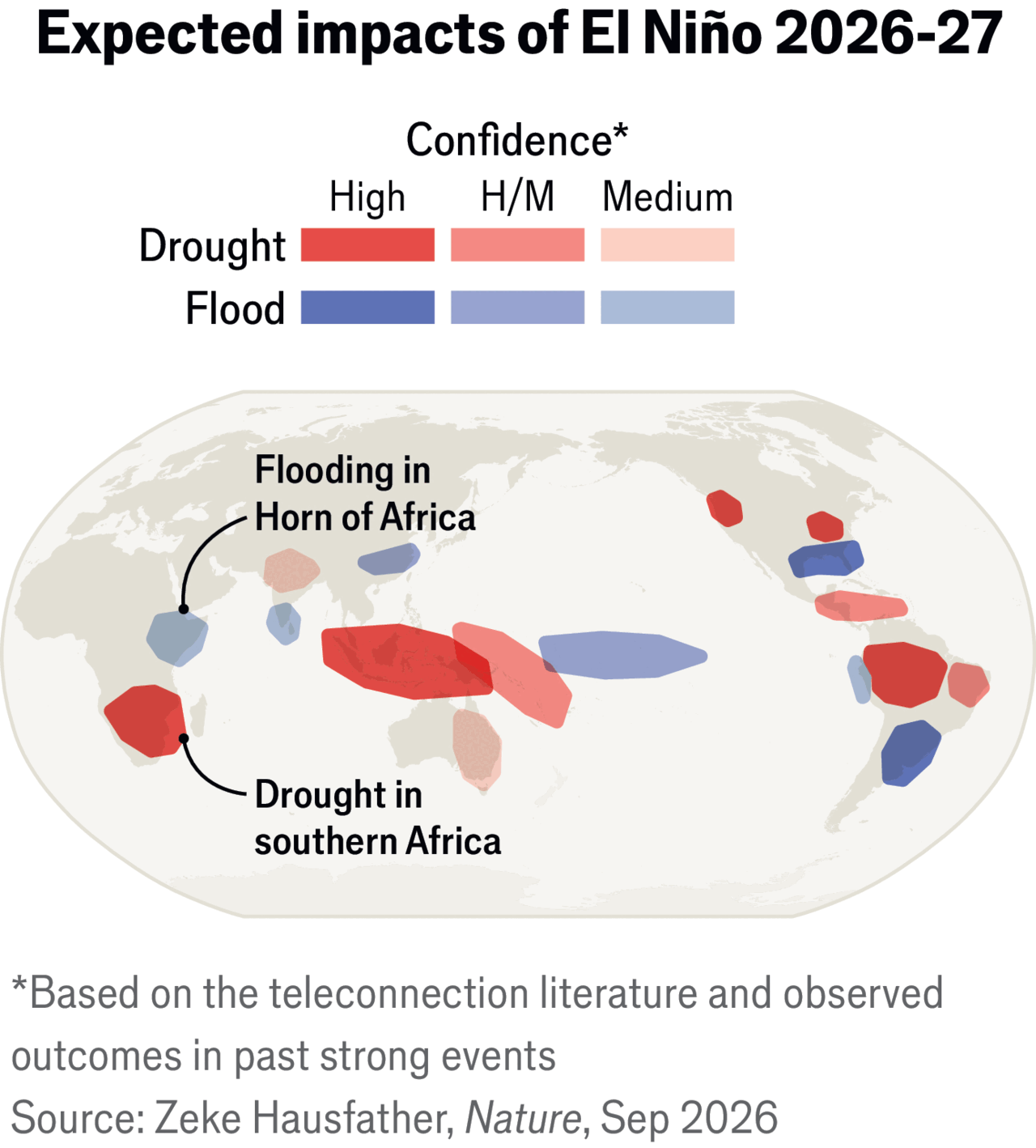
埃塞俄比亚的经历反映了这样一个现实:尽管努力应对气候变化,非洲仍任由外部冲击摆布。厄尔尼诺现象——一种加剧气候困境的天气模式——将在COP大会前凸显这种脆弱性。伊朗战争也是如此,它推高了农业投入品的成本。
Ethiopia’s experience reflects how, despite efforts to respond to climate change, Africa remains at the mercy of external shocks. El Niño, a weather pattern which adds to climate woes, will highlight that fragility ahead of COP. So, too, will the Iran war, which has raised the cost of agricultural inputs.
天气和战争对非洲的影响将因该大陆 54 个国家的情况而异。萨赫勒国家,如尼日尔和布基纳法索,可能因厄尔尼诺现象遭遇更干旱的条件,但它们使用的化肥相对较少。肯尼亚和坦桑尼亚使用的化肥较多,但预计降雨量将高于平均水平。南部非洲面临双重打击。更干旱的条件与较低的玉米收成相关。南非、马拉维和赞比亚都使用相对大量的化肥。
Quite how the weather and the war affect Africa will vary across the continent’s 54 countries. Sahelian countries, such as Niger and Burkina Faso, might suffer from drier conditions because of El Niño, but they use relatively little fertiliser. Kenya and Tanzania use more, but they are forecast to have above-average rainfall. Southern Africa faces a double whammy. Drier conditions are associated with lower maize harvests. South Africa, Malawi and Zambia all use relatively large amounts of fertiliser.
根据总部设在华盛顿的智库国际食物政策研究所的估计,在人口 2200 万的马拉维,重叠的冲击可能会让 50 万更多人陷入贫困,并使另外 460 万人营养不良。
In Malawi, a country of 22m, the overlapping shocks could push 500,000 more people into poverty and leave a further 4.6m under-nourished, according to estimates by the International Food Policy Research Institute, a think-tank based in Washington.
此类预测显示,气候变化使非洲国家更难缩小生产力差距。尽管撒哈拉以南非洲的谷物产量自 20 世纪 60 年代以来有所提高,但亚洲的增长更快。联合国机构粮农组织称,该地区农业生产力在 2020 年代已停滞不前。对易受气候变化影响国家的更高借贷成本将阻碍发展。
Such forecasts show how climate change makes it harder for African countries to close the productivity gap. Though cereal yields in sub-Saharan Africa have improved since the 1960s, Asia’s have grown faster. Agricultural productivity in the region has stagnated in the 2020s, according to the Food and Agricultural Organisation, a UN agency. Higher borrowing costs for countries vulnerable to climate change will stunt development.
在第三十二届缔约方大会上,非洲国家可以列举它们应对更热星球的例子。2025 年,可再生能源在非洲发电量中的占比首次超过煤炭。许多国家正在推广“绿色债券”和抗旱种子。
At COP32, African countries can cite examples of how they are dealing with a hotter planet. In 2025 renewable sources accounted for more of Africa’s generated electricity than coal for the first time. Many countries are promoting “green bonds” and drought-resistant seeds.
然而,非洲政策制定者有理由感到被世界其他国家辜负。2015 年在巴黎,他们签署承诺限制本国碳排放。作为交换,他们被承诺提供援助,即所谓的“气候融资”,以帮助他们发展并绿色转型经济。实际到手资金远低于承诺数额。开普敦大学的卡洛斯·洛佩斯说,非洲获得的气候融资不足其所需的四分之一。新一轮援助削减意味着本届缔约方大会上提供的资金可能甚至更少。
Yet African policymakers, with justification, feel let down by the rest of the world. In Paris in 2015 they signed up to pledges to limit their carbon emissions. In exchange they were promised aid, labelled as “climate finance”, that would help them grow and green their economies. The money received has fallen far below the pledges. Africa receives less than a quarter of the climate finance it needs, says Carlos Lopes of the University of Cape Town. The new era of aid cuts means there will probably be even less on offer at this COP.
非洲的韧性比外界预想的要强。但正如未来一年将发生的冲击所显示的那样,非洲大陆在不影响其潜力的情况下所能承受的打击是有限度的。 ■
Africa is more resilient than outsiders assume. But as the shocks experienced in the coming year will show, there is a limit to the blows the continent can withstand without them affecting its potential. ■