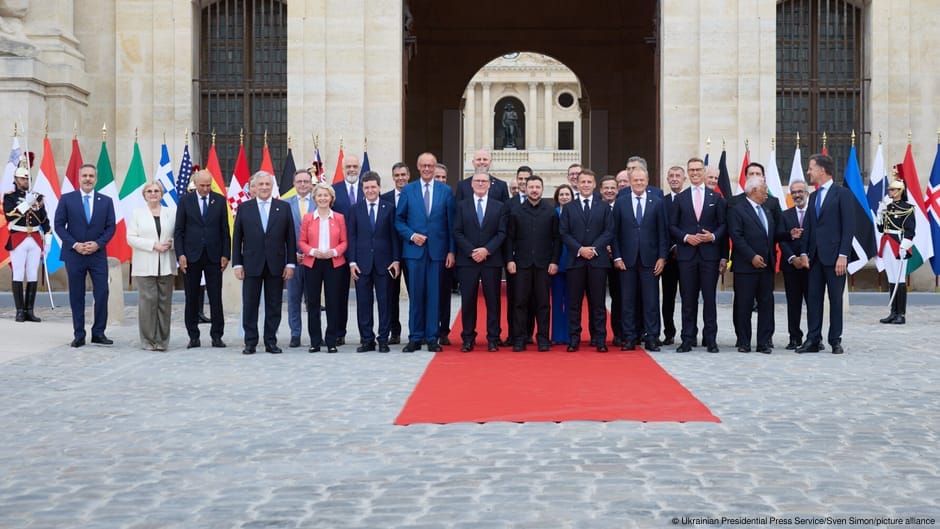
支持乌克兰的“自愿联盟”正在柏林集结。会议讨论的关键议题之一是,欧洲能否在有关乌克兰未来的谈判中发挥作用。
The "Coalition of the Willing" supporting Ukraine is gathering in Berlin. One of the key issues under discussion is whether Europe will be able to play a role in future negotiations over the country's future.
“自愿联盟”由欧洲国家以及欧盟和北约领导人组成。柏林再次铺开红毯,焦点也再次落在乌克兰身上:约20位国家元首和政府首脑将于周四(11月19日)齐聚德国首都,他们主要来自欧洲各国。他们将讨论这个东欧国家的未来。自2022年2月以来,该国一直遭受俄罗斯攻击,如今又面临一个严酷的冬天。
Prefer DW on Google The 'Coalition of the Willing' comprises European countries and EU and NATO leaders Once again, Berlin is rolling out the red carpet, and once again the focus is on Ukraine: around 20 heads of state and government, primarily from across Europe, are set to gather in the German capital on Thursday (November 19). They will discuss the future of the Eastern European country that has been under attack from Russia since February 2022 and is now facing yet another harsh winter.
柏林政府区已宣布将采取大规模安全措施,这表明将有高层人士出席。乌克兰总统弗拉基米尔·泽连斯基是否在其中,目前仍不清楚。但据多家媒体报道,可以确定的是,美国首席谈判代表史蒂夫·威特科夫和贾里德·库什纳将出席。
Extensive security measures have already been announced for Berlin's government district, pointing to the presence of high-ranking participants. It remains unclear whether Ukrainian President Volodymyr Zelenskyy will be among them. What does appear certain, however, is the attendance of chief US negotiators Steve Witkoff and Jared Kushner, according to several media outlets.
“自愿联盟”由36个国家组成,这些国家决心不被吓退,坚持支持这个遭受攻击的国家。与其他国际论坛不同,该联盟不仅关注当下如何在军事和财政上支持乌克兰。
The "Coalition of the Willing" is a group of 36 countries determined not to be deterred from supporting the nation under attack. Unlike other international forums, the group is focused not only on how to support Ukraine militarily and financially in the here and now.
德国总理弗里德里希·默茨接受DW采访 观看此视频,以及 在德国、法国和英国的领导下,该联盟原则上也准备在乌克兰境内协助监督可能的停火,并为该国届时所需的复杂安全保障作出贡献——如果出现这种局面的话。这项工作始于2025年3月,相关国家当时首次在伦敦会晤。如今他们齐聚柏林。
DW interview with German Chancellor Friedrich Merz To view this video , and Led by Germany, France, and the United Kingdom, the coalition is also prepared, in principle, to help monitor a possible ceasefire within Ukraine itself and to contribute to the complex security guarantees the country would then require, should such a scenario come to pass. The effort dates back to March 2025, when the countries involved first met in London. Now they are gathering in Berlin.
但这个联盟现实上能取得什么成果?德国外交关系委员会(DGAP)的斯特凡·迈斯特并不十分乐观。他在接受德国之声采访时说:“根本问题在于欧洲尚未提出一项方案。没有任何计划说明欧洲将提供什么样的安全保障、准备部署哪些部队、能够采取哪些措施来维护停火,或者愿意在哪些方面做出妥协。”默茨:“德国在谈判桌上有席位”尽管如此,此次会议召开之际,一些观察人士认为,结束战争或许终于出现了转机。
But what can the coalition realistically achieve? Stefan Meister of the German Council on Foreign Relations (DGAP) is not overly optimistic. In an interview with DW, he said: "The fundamental problem is that Europe has yet to put forward a proposal. There is no plan outlining what security guarantees Europe would offer, what troops it would be prepared to deploy, what measures it could provide to safeguard a ceasefire, or where it would be willing to make compromises." Merz: 'Germany has a seat at the table' Nevertheless, the meeting comes at a moment when some observers believe there may finally be movement toward ending the war.
几天前在阿联酋阿布扎比举行的会谈中,俄罗斯、乌克兰和美国仅就交换囚犯达成一致。这是向前迈出的一小步。
During talks in Abu Dhabi in the United Arab Emirates a few days ago, Russia, Ukraine, and the US managed to agree only on a prisoner exchange. It was a modest step forward.
更多会谈已在计划之中,而欧洲争取在未来乌克兰战争与和平决策中占有一席之地的前景,已经很久没有像现在这样有利了。
Further talks are planned, and it has been a long time since the prospects appeared as favorable as they do now for Europe to secure a role in future decisions on war and peace in Ukraine.
西方盟友加强乌克兰防御,却在深入打击问题上发生分歧 美国官员和俄罗斯当权者都一再声称,欧洲并非以一个声音说话。
Western allies boost Ukraine's defenses but clash over deep strikes It has repeatedly been argued, both by US officials and by those in power in Russia, that Europe does not speak with a single voice.
毫不意外,这在欧盟国家元首和政府首脑中引发了一场辩论:究竟由谁来代表欧洲参加此类会谈?会是德国总理、中右翼基督教民主联盟(CDU)成员弗里德里希·默茨吗?在周五于爱尔兰都柏林举行的欧盟峰会后,他说:“首次有望在未来几周举行实质性的和平会谈,且欧洲将有代表出席。德国在谈判桌前占有一席之地,这绝对清楚。”
Unsurprisingly, this has sparked a debate among EU heads of state and government over who, exactly, could represent Europe in such talks. Could it be German Chancellor Friedrich Merz of the center-right Christian Democratic Union (CDU)? After the EU summit in Dublin, Ireland, on Friday, he said: "For the first time, concrete peace talks are expected to take place in the coming weeks with Europe represented. Germany has a seat at the table, that is absolutely clear."
欧洲尚未用同一声音发声但这究竟意味着什么?意味着德国单独为全欧洲发声?几乎不可能。正如周一在柏林也明确的那样,欧洲将由“E3国家”代表,即德国、法国和非欧盟成员国英国,加上波兰和意大利。欧盟官方代表,包括欧洲理事会主席安东尼奥·科斯塔,也将参与。
Europe has yet to speak with one voice But what exactly did that mean? That Germany alone would speak for all of Europe? Hardly. As was also made clear in Berlin on Monday, Europe would be represented by the E3 countries, namely Germany, France, and the non-EU member United Kingdom, joined by Poland and Italy. Official EU representatives, including European Council President António Costa, would also take part.
德国对外关系协会(DGAP)的斯特凡·迈斯特认为,这场辩论充分说明了欧洲自身面临的压力:“欧洲的定位更多与国内政治考量有关,而非谈判进展。每个人都需要展示自己以某种方式参与了会谈。明年法国和波兰将举行大选,目前尚不清楚大选后法国对乌克兰的支持是否会以目前的形式持续下去。”
Stefan Meister of the DGAP believes the debate says a great deal about the pressures Europe itself is under: "Europe's positioning has more to do with domestic political considerations than with developments in the negotiations. Everyone needs to show that they are participating in the talks in some way. Elections will be held next year in France and Poland, and it is still unclear whether French support for Ukraine will continue in its current form after that."
与此同时,德国副政府发言人塞巴斯蒂安·希勒周一在联邦政府例行新闻发布会上试图淡化关于弗里德里希·默茨可能担任首席谈判代表的争论。他说:“这不是在讨论个人。重要的是普京最终明白,他必须来到谈判桌前,这样我们才有机会首先实现和平。”德国能让欧洲为乌克兰付出更多吗?德国政府发言人:欧洲现在需要耐力美国谈判代表、总统唐纳德·特朗普的女婿贾里德·库什纳上周在阿布扎比的讲话基调截然不同。
German Deputy Government Spokesperson Sebastian Hille, meanwhile, sought to downplay the debate on Monday over a possible role for Friedrich Merz as chief negotiator. At the federal government's regular press briefing, he said: "This is not about discussing individuals. What matters is that Putin finally understands that he must come to the negotiating table so that we have a chance of achieving peace in the first place." Can Germany make Europe pay more for Ukraine? German government spokesperson: Europe now needs stamina US negotiator Jared Kushner, the son-in-law of President Donald Trump struck a rather different tone last week.
他说:“如果欧洲能找出一个人来代表他们发声,那将比让俄罗斯把他们纳入谈判更是重大成就。”
Speaking in Abu Dhabi, he said: "If Europe could identify one person to speak on their behalf, that would be a bigger achievement than getting the Russians to include them in the negotiations."
政府发言人希勒周一回应:“欧洲的力量正体现在众多国家的团结与凝聚上。我们不应让自己被卷入他人想要围绕这一问题设定的辩论。”希勒强调,局势仍未改变:乌克兰的和平只能一步步实现。欧洲同样需要耐力、毅力以及开展艰苦工作以促成和平的意愿。德国民调显示对乌克兰的支持下降在德国,支持乌克兰的公众也面临压力,公众舆论正发生转变。虽然在2022年春季俄罗斯入侵后不久,绝大多数人赞同帮助乌克兰防御,但此后支持率已明显下降。
Government spokesperson Hille responded on Monday: "Europe's strength lies precisely in the unity and cohesion of many countries. We should not allow ourselves to be drawn into debates that others want to frame around this question." Hille emphasized that the situation remained unchanged: peace in Ukraine could only be achieved step by step. Europe, too, would need stamina, perseverance, and a willingness to undertake the painstaking work required to bring it about. Declining support for Ukraine in German polls European supporters of Ukraine are also under pressure as public opinion on the issue is shifting, including in Germany. While a broad majority favored helping defend the country in the immediate aftermath of Russia's invasion in the spring of 2022, support has since fallen markedly.
根据2026年9月进行的最新DeutschlandTrend调查,52%的合格选民仍支持向乌克兰提供武器,而42%认为此类支持已走得太远。这是自战争爆发以来记录的最高反对水平。
According to the latest DeutschlandTrend survey on the issue, conducted in September 2026, 52% of eligible voters still support weapons deliveries to Ukraine, while 42% believe such support has gone too far. That is the highest level of opposition recorded since the start of the war.
另一项为公共广播公司于2026年11月进行的研究发现,乌克兰问题在德国已比移民问题更具两极分化。调查显示,54%的受访者赞成继续支持乌克兰,而不足29%的人倾向于与俄罗斯和解,尽管俄罗斯对乌克兰发动了侵略战争。
A further study conducted for public broadcaster in November 2026 found that support for Ukraine has become a more polarizing issue in Germany than immigration. According to the survey, 54% of respondents favor continued support for Ukraine, while just under 29% would prefer a rapprochement with Russia, despite its war of aggression against Ukraine.