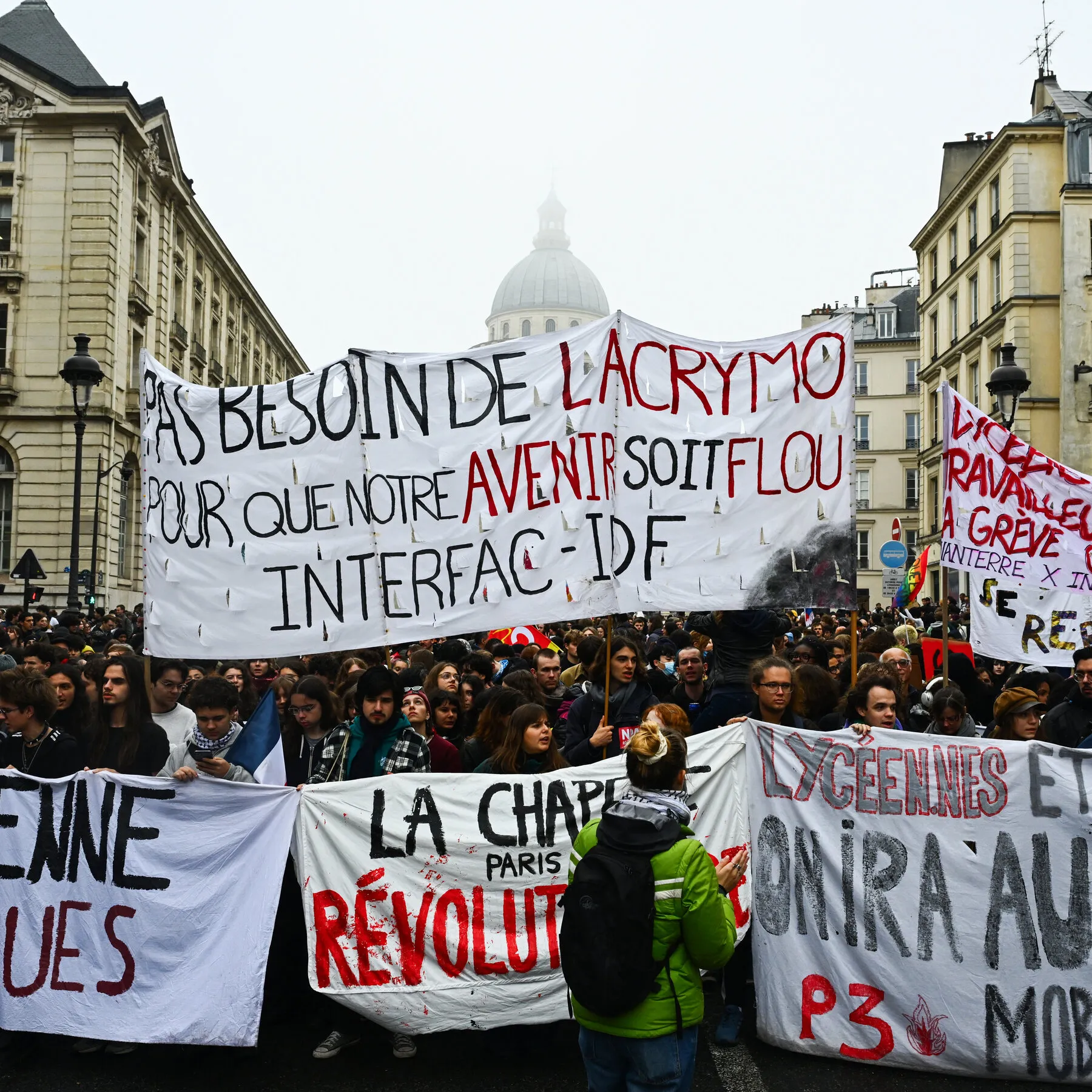
计划于周五在欧洲各地举行的抗议活动,是全球青年愤怒情绪引发示威和选举冷门结果的最新例证。
Protests planned across Europe on Friday are the latest example of global youth anger that has driven demonstrations and election upsets.
数千名学生准备于周五在多个欧洲国家同时举行协调一致的抗议,要求结束战争、停止削减社会福利开支,在某些情况下甚至要求终结资本主义本身。
Thousands of students are poised to hold simultaneous and coordinated protests in several European countries on Friday, demanding an end to war, to social-welfare spending cuts and, in some cases, to capitalism itself.
这是今年以来从法国蔓延至印度的全球青年起义的最新表现,并助推了近期欧洲和美洲多地的选举冷门。
It is the latest iteration of the global youth uprisings that have spilled through streets from France to India this year, and helped to power recent election upsets across Europe and the Americas.
民调显示,沮丧的年轻人在投票淘汰匈牙利和塞尔维亚的民族主义领导人、选出重建时期以来密西西比州首位黑人参议员、以及使德国极右翼政党有望自二战以来首次执政一个德国州的过程中,发挥了不成比例的巨大作用。他们在即将到来的法国和西班牙大选中也可能起到关键作用。
Polling shows that frustrated young people played a disproportionately large role in voting out nationalist leaders in Hungary and Serbia, in electing the first Black senator from Mississippi since Reconstruction, and in putting a German far-right party on track to govern a German state for the first time since World War II. They could prove crucial in upcoming elections in France and Spain.
“我们这一代人面临的各种问题越来越难以不联系在一起看待,”英国“社会主义学生”组织全国主席、27岁的亚当·鲍威尔-戴维斯说,该组织是周五抗议活动的主办方之一。“不仅是在特定国家,而是在全球范围内。”受益于这种青年愤怒的政治力量在意识形态上呈分散状。它们包括中间派——以及极左和极右的挑战者型政治家,后者为动荡的全球秩序所带来的弊病提供了鲜明且适合社交媒体传播的解决方案。
“It’s becoming harder and harder to not connect all of the different issues facing our generation,” said Adam Powell-Davies, 27, the national chair in Britain of the Socialist Students, one of the groups organizing Friday’s protests. “Not just in specific countries, but globally.”The beneficiaries of this youth anger are ideologically diffuse. They include centrists — as well as insurgent politicians on the far left and on the far right who offer stark and social-media-friendly solutions to the ailments of an unsettled global order.
组织者和专家表示,这些青年愤怒爆发的连接纽带,是对既有政治权力结构的不满,无论其意识形态倾向如何——以及一种认知,即经济机会正在从年轻人手中溜走。
Organizers and experts say the connective tissue between these spasms of youth anger is a frustration with established political power structures, whatever their ideological bent — and a perception that economic opportunity is slipping away from young people.
十年来,大流行、战争、气温升高以及富裕经济体面临的一代人定义的财政清算交织在一起,加剧了人们的担忧:年轻一代可能永远无法享受到父辈和祖辈所拥有的和平、繁荣与自由。法国等国正因政府债务高企而举步维艰,面临如何维持慷慨社会福利制度承诺的艰难抉择。
A decade of pandemic, war, warming temperatures and a generation-defining fiscal reckoning in wealthy economies have combined to fuel fears that young people may never enjoy the peace, prosperity and freedoms of their parents and grandparents. Countries like France are struggling with high government debt and face difficult choices for how to maintain the promises of generous social welfare systems.
“我们没有未来,”27岁的西班牙毕尔巴鄂信息技术专业学生劳拉·斯皮里在接受采访时说。她周五专程前往英国参加抗议活动。
“There’s no future for us,” Laura Spearey, a 27-year-old information technology student from Bilbao, Spain, who traveled to Britain to join the Friday protests, said in an interview.
她提到在获得住房、医疗保健及其他成年生活必需品方面面临的困难:“你完全没有机会拥有自己的生活,去构建你的人生规划。”这些焦虑已持续多年:它们也推动了2008年金融危机后爆发的“占领”抗议活动。但调查数据显示,这些焦虑正变得更加迫切,甚至在德国等青年失业率仍较低——且政府债务也低于英国和法国——的国家也是如此。
She cited difficulties in securing housing, health care and other necessities of adulthood: “You have no chance whatsoever to have your own life, to build your life project.”Those anxieties have persisted for years: They also drove the “Occupy” protests that followed the 2008 financial crisis. But survey data suggests they are growing more urgent, even in countries, like Germany, where youth unemployment rates are still lower — and there is less government debt — than in Britain and France.
根据学术研究“德国的青年”,在过去十年里,德国年轻人的经济担忧与日俱增。该研究历时九年,每年调查2000多名年轻人。
In Germany, young people’s economic concerns have grown in the past decade, according to “Youth in Germany,” an academic study that has surveyed more than 2,000 young people per year over nine years.
“关键问题不仅仅在于当今年轻人在客观上是否比前几代人更糟糕,”柏林赫蒂学院公共卫生与教育学教授、德国青年研究联合作者克劳斯·胡雷尔曼说。“重要的是,他们中许多人开始相信,我们社会的传统承诺不再适用于他们。”在欧洲大部分地区,这种信念因各国政府承诺在未来几年不断增加国防开支而进一步加剧,既是为了弥补美国对欧洲军事支持的下降,也是为了应对来自俄罗斯的威胁。年轻抗议者呼吁扭转这种军备扩张,称其挤占了教育、医疗和其他社会服务所需的资金。
“The crucial question is not simply whether today’s young people are objectively worse off than previous generations,” said Klaus Hurrelmann, a professor of public health and education at Berlin’s Hertie School and a co-author of the “Youth in Germany” study. “What matters is that many of them are beginning to believe that the traditional promises of our society no longer apply to them.”Across much of Europe, that belief has been further fueled by governments’ promises to spend more and more on national defense in the years to come, both to compensate for declining American military support for the continent and to counter threats from Russia. Younger protesters have called for a reversal of that buildup, saying it drains needed money for education, health care and other social services.
在德国,许多抗议团体表示,他们因政府鼓励年轻人报名参军以增强战斗力的举措而受到激励,许多年轻人担心这将导致征兵制恢复。
In Germany, many protests groups say they have been galvanized by government efforts to encourage young people to sign up for military service in an effort to bolster fighting forces, a move that many young people worry will lead to a military draft.
在周五抗议活动前发布的一份诉求清单中,组织活动的德国团体之一“Gen Z Regelt”(大意“Z世代搞定事儿”)呼吁总理弗里德里希·默茨辞职,后者主导了德国军费的大幅增加。清单还要求“一个人不给,一分钱不给,给德国联邦国防军”。该团体的诉求与其他周五活动组织者一样,明显偏左。他们批判资本主义制度。值得注意的是,他们没有将矛头指向从购房、获得丰厚养老金等他们担心错失的机会中获益的老一代人,而是将冲突定性为工人与富人及权势阶层的对立。
In a list of demands published ahead of Friday’s protests, one of the German groups organizing the events, “Gen Z Regelt” — roughly translated, “Gen Z Gets Things Done” — called for the resignation of Chancellor Friedrich Merz, who has taken the lead in ramping up German military spending. It also says “not one person, not one cent, for the German armed forces.”The group’s demands, like the others behind Friday’s events, skew sharply to the left. They critique the capitalist system. They notably refrain from taking aim at older generations that have benefited from opportunities that they fear they are missing out on, like buying homes and securing generous pensions. Instead, they frame the conflict as workers versus the rich and powerful.
“这不是年轻人与老年人的对立,”利物浦大学社会主义学生社团成员汉娜·庞廷(Hannah Ponting,20岁)说,她正在帮助协调那里的抗议活动。“这两个群体都没有控制这笔钱的去向。”在柏林,9月份类似的情绪——以及年仅16岁的年轻人投票激增——帮助极左翼政党“左翼党”在城市选举中取得意外胜利。
“It’s not a battle of the young versus the old,” said Hannah Ponting, 20, a member of the Socialist Students at Liverpool University, who is helping to coordinate protests there. “Neither of those groups are controlling where this money’s going.”In Berlin in September, similar sentiments — and a surge of voting from people as young as 16 — helped the far-left party Die Linke score an upset victory in the city election.
不过,在欧洲其他地区和世界其他地方,这种焦虑也驱使年轻选民转向极右翼和极左翼。
In other parts of Europe and the world, though, the anxiety has driven young voters to the far right as well as the left.
根据法国最近的民意调查,大约五分之一的25岁以下选民表示将在明年的选举中投票给主要极右翼政党,而在2024年法国立法选举中,投票给极右翼的比例甚至更高。
According to recent polling in France, roughly one in five of voters aged under 25 says they will vote for the main far-right party in next year’s election, and an even higher proportion voted far-right in French legislative elections in 2024.
在德国萨克森-安哈尔特州,出口民调显示,极右翼政党“德国另类选择党”(AfD)在9月的州选举中赢得了超过40%最年轻选民的支持——是其他任何政党得票率的两倍多。该党的主要候选人乌尔里希·齐格蒙德(Ulrich Siegmund)是一位极具镜头感的TikTok网红,他承诺通过驱逐部分移民、为年轻父母提供新福利以及终止德国对乌克兰的支持,为该州恢复机会。
In the German state of Saxony-Anhalt, exit polls showed the far-right Alternative for Germany party, or AfD, won more than 40 percent of the youngest voters in a state election in September — more than double the share for any other party. The AfD’s main candidate, Ulrich Siegmund, is a telegenic TikTok star who promised to restore opportunity for the state, by deporting some immigrants, providing new benefits to young parents and ending German support for Ukraine.
赫蒂学院的胡雷尔曼先生表示,AfD和“左翼党”在德国的成功说明,年轻选民多么快就会背弃那些承诺迅速变革却未能兑现的政党。就在五年前,年轻德国人在全国大选中还蜂拥至中间派政党。
The success of the AfD and Die Linke in Germany illustrates how quickly young voters are willing to turn on political parties that promised rapid change but failed to deliver, said Mr. Hurrelmann of the Hertie School. Just five years ago, young Germans flocked to centrist parties in a national election.
中间派如今败给了AfD和“左翼党”,后两者承诺通过摒弃长期主导德国政治生活的妥协驱动治理模式,实现激进变革。
The centrists have now lost out to the AfD and Die Linke, which have promised radical change by shunning the compromise-driven model of governance that has long dominated German life.
“他们完全可以承诺一切,”胡雷尔曼说,“因为他们目前没有能力兑现。”牛津大学教授蒂姆·夫兰达斯研究人口老龄化的政治后果,他说,主流政党几乎没有动力满足年轻人的诉求,因为这样做会疏远构成其选民联盟大多数的年长选民。
“They are completely free to promise everything,” Mr. Hurrelmann said, “because they are not now in a position to deliver.”Mainstream parties have few incentives to meet young people’s demands, because doing so risks alienating the older voters who make up the majority of their coalitions, said Tim Vlandas, a professor at Oxford University who studies the political consequences of aging populations.
他补充说,如果极左或极右上台,他们可能面临类似的压力——因为他们也需要迎合老一代选民以维持执政地位。
If the far left or far right were to take power, he added, they would likely face similar pressures — because they would also have to appeal to older generations to stay in government.
他说,这种循环只会增加年轻人走上街头的压力。“当你无法影响政治时,你可以抗议。你可以变得疏离并停止投票,”他说。或者,他补充道,“你可以变得激进。”吉姆·坦克利是《纽约时报》柏林分社社长,负责德国、奥地利和瑞士的报道。
Such a cycle, he said, would just increase pressure on young people to take to the streets. “When you don’t influence politics, you can protest. You can become alienated and stop voting,” he said. Or, he added, “you can radicalize.”Jim Tankersley is the Berlin bureau chief for The Times, leading coverage of Germany, Austria and Switzerland.
阿曼达·塔布撰写“解读者”专栏和通讯,对世界事件进行解释性报道。她常驻伦敦。
Amanda Taub writes the Interpreter, an explanatory column and newsletter about world events. She is based in London.