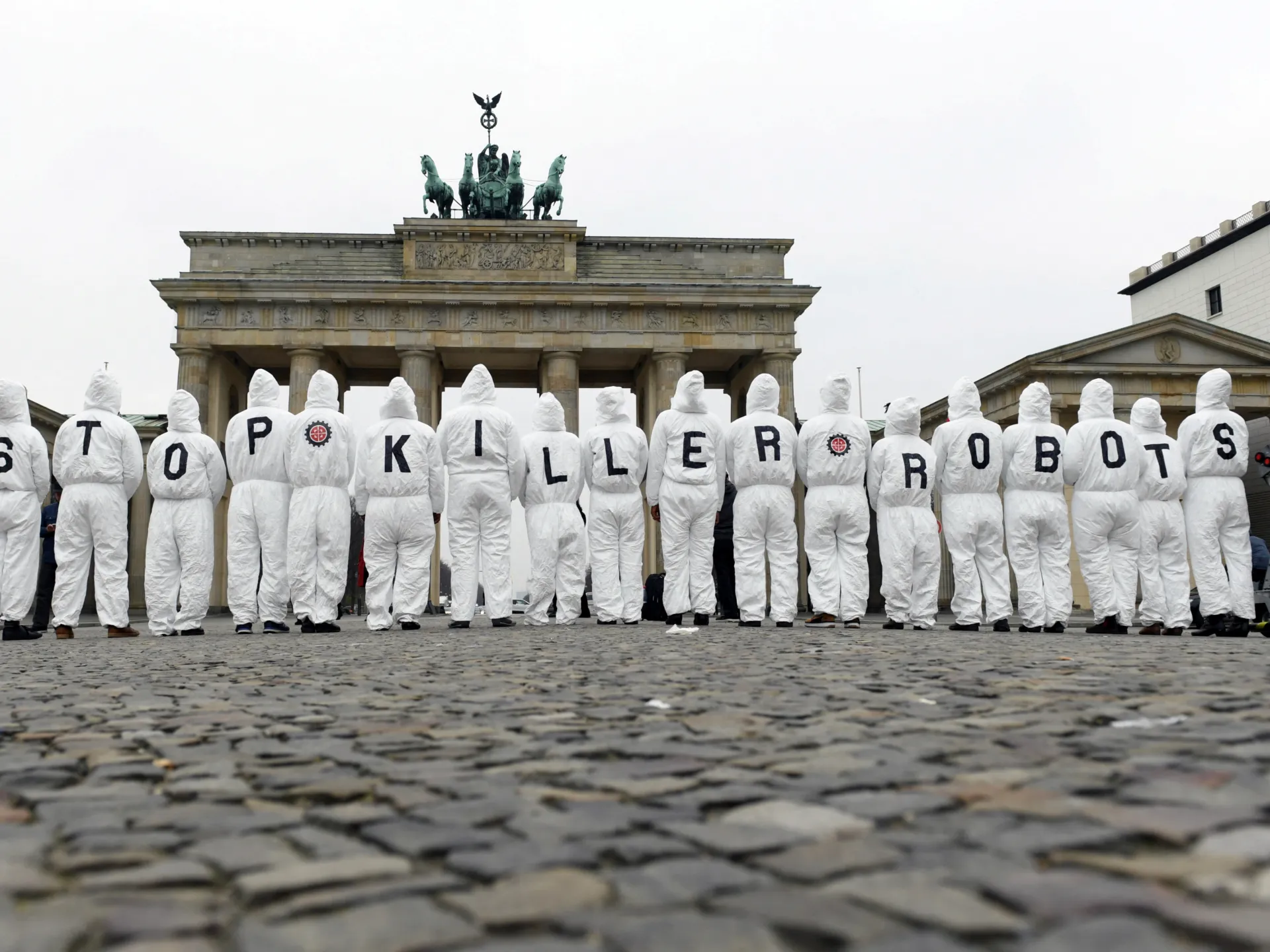
《特定常规武器公约》(CCW)成员国本周在瑞士举行会议,讨论制定一项新条约,以规范此类系统的使用,此举源于人们对人工智能(AI)驱动战争以及缺乏透明度和问责制的日益担忧。
on the swift adoption of legally binding rules to regulate autonomous weapon systems known as “killer robots”. The member states of the Convention on Certain Conventional Weapons (CCW) met in Switzerland this week to discuss developing a new treaty which would regulate how the systems are used amid growing alarm over artificial intelligence (AI)-driven warfare and the lack of transparency and accountability.
但周六,与会方未能获得谈判具有法律约束力的禁令的授权,而是同意到2028年就一项可能规范此类武器系统的协议进行“详细阐述”。人权团体和非政府组织称这一进展“令人失望”。您需要了解的内容:什么是“杀手机器人”?
But on Saturday, participants fell short of securing a mandate to negotiate a legally binding ban, agreeing instead to “elaborate” on a potential accord regulating such weapon systems by 2028. Rights groups and NGOs called the development “disappointing”. Here’s what you should know: What are ‘killer robots’?
根据联合国的定义,致命自主武器系统是“一种或多种武器和技术组件的组合,它们协同运作,能够以一种导致生命丧失的方式识别、选择和攻击目标,且无需操作系统的人类进行干预”。
According to the UN, lethal autonomous weapons systems are “a combination of one or more weapons and technological components operating together, that is capable of identifying, selecting, and engaging a target in a way that results in loss of life, without intervention by a human being operating the system”.
简单来说,它们是无需人类干预即可识别、选择和攻击目标的系统。它们通常被称为“杀手机器人”,但这并非一个既定的技术或法律称呼。
In simpler terms, they are systems that can identify, select and engage a target without human intervention. They are commonly referred to as “killer robots”, but this is not an established technical or legal designation.
这些系统在部署前会被编程设定特定的“目标画像”,利用面部识别等传感器数据搜寻并击杀匹配的目标。
The systems are programmed with a specific “target profile” before deployment, using sensor data such as facial recognition and other technologies to search for and kill matching targets.
自主武器组织解释说:“当武器遇到算法认为与其目标画像匹配的人或物时,它就会开火并击杀。”
“When the weapon encounters someone or something the algorithm perceives to match its target profile, it fires and kills,” the Autonomous Weapons Organisation explains.
根据联合国的说法,并非所有自主武器系统都使用AI。同时,AI并非自主武器系统运作所必需,也不能决定一个系统是否具有自主性。
According to the UN, not all autonomous weapon systems use AI. At the same time, AI is not necessary for autonomous weapon systems to function, nor does it determine whether a system is autonomous.
联合国警告称:“然而,当人工智能被用于识别、选择和攻击目标时,可能会放大与自主武器系统相关的严重法律、伦理、人道主义和安全担忧。”
“However, when AI is used to identify, select and engage targets, it can amplify the serious legal, ethical, humanitarian and security concerns associated with autonomous weapon systems,” the UN warns.
尽管存在这些担忧,人工智能辅助武器已在乌克兰和苏丹的战争以及中东冲突中得到使用。以色列在其针对加沙地带巴勒斯坦人的种族灭绝战争中,使用了监视工具和人工智能驱动的目标定位系统。什么是《特定常规武器公约》?
Despite the concerns, AI-assisted weapons have already been used in the wars in Ukraine and Sudan and conflicts in the Middle East. Israel has used surveillance tools and AI-powered targeting systems in its genocidal war against Palestinians in the Gaza Strip. What is the CCW?
《特定常规武器公约》于1980年通过,确立为一项关键的国际人道法文书。
Adopted in 1980, the CCW was established as a key international humanitarian law instrument.
联合国表示:“其目的是禁止或限制使用被认为会给战斗人员造成不必要或无正当理由的痛苦,或会无差别地影响平民的特定类型武器。”
“Its purpose is to ban or restrict the use of specific types of weapons that are considered to cause unnecessary or unjustifiable suffering to combatants or to affect civilians indiscriminately,” the UN says.
目前,《特定常规武器公约》框架下尚无专门管控自主武器系统的具有法律约束力的文书。本周发生了什么?
There is currently no legally binding instrument under the CCW that specifically regulates autonomous weapon systems. What happened this week?
《特定常规武器公约》的128个缔约国在瑞士城市日内瓦举行会议,讨论是否授权就限制和潜在禁令展开谈判。
The 128 countries that are party to the CCW met in the Swiss city of Geneva to discuss whether to authorise negotiations on curbs and a potential ban on such systems.
主持日内瓦会议的瑞士外交官朱利安·托埃尼表示,这一进程应确定哪些武器可依据国际人道法予以禁止,哪些武器可被允许但需受到管控。
Julien Thoeni, the Swiss diplomat who chaired the Geneva conference, said the process should determine which weapons can be banned under international humanitarian law and which can be permitted but regulated.
为期一周的会议是在近100个国家上月同意迅速通过具有法律约束力的规则、管控能够在无人做出最终开火决定的情况下实施杀戮的武器之后召开的。
The week-long conference came after nearly 100 countries agreed last month that it was important to swiftly adopt legally binding rules on the weapons capable of killing without a human making the final decision to fire.
但周六,包括美国、俄罗斯和以色列在内的主要产武国反对这一推动。公约项下的决策需要所有成员国达成一致。
But on Saturday, key arms-producing nations, including the United States, Russia and Israel, opposed the push. Decisions under the convention require the agreement of all member states.
外交官们向路透社表示,因俄罗斯对议事规则提出异议导致部分正式会议取消,关于条约最终措辞的谈判通宵继续进行。
Diplomats told the Reuters news agency that negotiations over the final wording of the treaty had continued all night after Russian objections to rules of procedure forced the cancellation of some formal meetings.
两名欧盟外交官向媒体《政治新闻网》(Politico)表示,美国、英国、韩国、日本、土耳其和以色列也是抵制达成具有约束力的监管协议的国家。《卫报》援引外交官的话报道称,支持新公约的包括欧盟和北约成员国,以及乌克兰、中国和伊朗。
Two EU diplomats told media outlet Politico that the US, the UK, South Korea, Japan, Turkiye and Israel were also countries that resisted an effort to agree on a binding regulation. Others supporting a new convention included the European Union and NATO member states, as well as Ukraine, China and Iran, diplomats cited by The Guardian newspaper said.
最终,所有国家同意了一份被弱化的公约,旨在到2028年制定新规则来监管此类武器。
In the end, all countries agreed on a watered-down convention which aims to develop new rules to regulate such weapons by 2028.
一名参与谈判、来自支持新法律国家的外交官告诉路透社,结果“令人失望,但本可能糟糕得多”。为何一些国家抵制监管“杀人机器人”?
A diplomat involved in the talks from a country supporting the new laws told Reuters that the outcome was “disappointing but could have been much worse”. Why did some resist regulating ‘killer robots’?
虽然大多数国家支持达成一项监管“杀人机器人”的协定,但主要军事强国反对该协定,称与这些武器相关的人道法已足够。
While most countries support a pact to regulate “killer robots”, major military powers are opposing it, saying that humanitarian law linked to those weapons is sufficient.
随着对人工智能战争和自主系统的投资增长,这些国家也抵制可能限制其在现代战场上开发、测试或使用先进武器能力的限制。因此,它们倾向于灵活的、无约束力的框架,或更长的讨论时间表,而不是承担严格的法律义务。
As investment in AI warfare and autonomous systems grows, those countries also resist restrictions that could curb their ability to develop, test or use advanced weapons on modern battlefields. So rather than committing to strict legal obligations, they favour flexible, non-binding frameworks or longer timelines for discussions.
瑞士外交官托伊尼在会议结束后告诉记者,一些国家拒绝使用“谈判”一词。商定的文本改为提及法律文书的“制定”。权利团体如何反应?
Swiss diplomat Thoeni told reporters after the meeting ended that some countries had rejected the word “negotiate”. The agreed text refers instead to the “elaboration” of an instrument. How have rights groups reacted?
由约300个反对开发和使用自主武器的组织组成的联盟“停止杀人机器人”称该授权“被弱化”,并表示它未提供通往具有法律约束力规则的明确路径。
Stop Killer Robots, a coalition of some 300 organisations opposed to the development and use of autonomous weapons, called the mandate “watered down” and said it offered no clear route to legally binding rules.
该联盟执行主任妮可·范·鲁伊延表示,自主武器正在实战中部署,包括利用人工智能选择目标的系统。
Its executive director, Nicole van Rooijen, said autonomous weapons were being deployed in combat, including systems that use artificial intelligence to choose targets.
她对法新社表示:“推迟制定具有法律约束力的文书,将使平民和人类面临风险。”
“Delaying the creation of a legally binding instrument puts civilians and humanity at risk,” she told AFP news agency.
批评人士还警告称,如果没有具有约束力的条约,武器会将人客体化,并通过将人类生命简化为传感器数据和算法目标来损害人的尊严。
Critics also warned that without a binding treaty, the weapons objectify people and undermine their dignity by reducing human lives to sensor data and algorithmic targets.
国际红十字委员会法律顾问乔治娅·欣兹表示:“让本质上属于生死抉择的决定由编程、由算法来决定,这存在一个根本性的伦理担忧。”
Georgia Hinds, legal adviser at the International Committee of the Red Cross, said that “there is a fundamental ethical concern with having what are essentially these life-and-death decisions determined by programming, determined by an algorithm”.
欣兹补充道:“这不是用更好的技术就能解决的问题。这是一条我们不能跨越的道德红线。”
“That’s not something that you can fix with better technology. That is a moral red line that we cannot cross,” Hinds added.