2019年初,我当时在人权观察工作。几个月前,联合国关于缅甸的调查团得出结论,针对罗兴亚人的暴行证据要求调查并起诉缅甸军方领导人犯有种族灭绝罪、危害人类罪和战争罪。
In early 2019, I was working for Human Rights Watch. A few months earlier, a UN fact-finding mission on Myanmar had concluded that the evidence of atrocities against the Rohingya called for investigating and prosecuting Myanmar military leaders for genocide, crimes against humanity, and war crimes.
当时,这感觉遥不可及。我在纽约接触外交官,在各国首都接触官员,提出了一个想法:如果一个《防止及惩治灭绝种族罪公约》缔约国请求国际法院根据该条约追究缅甸本身的责任,会怎样?法律专家们很感兴趣。政治参赞们翻了白眼。没人愿意用十英尺长的竿子去碰这个主意。
At the time, it felt impossibly distant. I approached diplomats in New York and officials in national capitals with an idea: What if a country which is party to the Genocide Convention asked the ICJ to hold Myanmar itself responsible under the treaty? The legal experts were intrigued. The political attachés rolled their eyes. Nobody wanted to touch the idea with a 10-foot pole.
但当时的冈比亚司法部长阿布巴卡尔·坦巴杜找到了他自己采取行动的充分理由。在访问孟加拉国的一个难民营期间,罗兴亚幸存者令人心碎的证词深深打动了他,这些证词让他想起了自己作为卢旺达问题国际刑事法庭检察官时遇到的暴行。他根据所听到的采取行动的决心,帮助启动了冈比亚向国际法院提起的诉讼。
But Abubacarr Tambadou, the Attorney General of Gambia at the time, had found his own compelling reason to act. During a visit to a refugee camp in Bangladesh, he was deeply moved by harrowing testimonies of Rohingya survivors, whose accounts reminded him of atrocities he had encountered as a prosecutor before the International Criminal Tribunal for Rwanda. His determination to act on what he heard helped set in motion Gambia’s case before the ICJ.
我和人权观察的同事们在案件提起前后,与冈比亚官员、罗兴亚活动人士和其他民间社会团体密切合作,推动这项工作。后来又有十一个国家介入诉讼程序,主张应如何解释《防止及惩治灭绝种族罪公约》。
My colleagues and I at Human Rights Watch worked closely with Gambian officials, Rohingya activists, and other civil society groups to advance the effort, both before and after the case was filed. Eleven other countries later intervened in the proceedings to argue how the Genocide Convention should be interpreted.
周四,国际法院裁定缅甸对2017年在若开邦北部对罗兴亚少数民族犯下的种族灭绝罪行负有责任。这项具有里程碑意义的裁决,是法院首次认定一个国家直接违反1948年《防止及惩治灭绝种族罪公约》,预计将对国际法和法院审理的其他种族灭绝案件产生重大影响。
On Thursday, the International Court of Justice held Myanmar responsible for committing genocide against the Rohingya minority in northern Rakhine state in 2017. The landmark ruling, in a case brought by Gambia, is the first time the Court has found a state directly responsible for violating the 1948 Genocide Convention, and is expected to have significant ramifications for international law and other cases of genocide litigated in the court.
罗兴亚人简史 罗兴亚人是来自缅甸若开邦的以穆斯林为主的少数民族,长期以来受教育、医疗和行动自由受到限制。缅甸将他们定性为“非法移民”,在1970年代和1990年代发动军事行动,将数十万罗兴亚人驱赶至孟加拉国。1982年,缅甸通过公民法,将罗兴亚人排除在政府正式承认的民族名单之外,实际上剥夺了他们的公民身份。
A brief history of Rohingya The Rohingya, a predominantly Muslim ethnic minority from Myanmar’s Rakhine State, had long lived with limited access to education, healthcare, and freedom of movement. Myanmar labeled them as “illegal immigrants,” carrying out military attacks in the 1970s and 1990s to drive hundreds of thousands of Rohingya into Bangladesh. In 1982, Myanmar passed a citizenship law excluding the Rohingya from a list of ethnic groups formally recognized by the government and effectively denying them citizenship.
2010年代初,若开邦爆发数轮种族紧张局势和暴力冲突,根据人权观察2013年的一份报告,这些冲突演变为“强行迁移或清除该邦穆斯林的协同行动”。2012年的袭击引发了一段加强镇压和迫害罗兴亚人的时期,为2016年和2017年更残酷的军事行动奠定了基础。
In the early 2010s, several bouts of ethnic tensions and violence erupted in Rakhine State and morphed into a “coordinated campaign to forcibly relocate or remove the state’s Muslims,” according to a 2013 Human Rights Watch report. The 2012 attacks brought about a period of increased repression and persecution of Rohingya that laid the groundwork for more brutal military campaigns in 2016 and 2017.
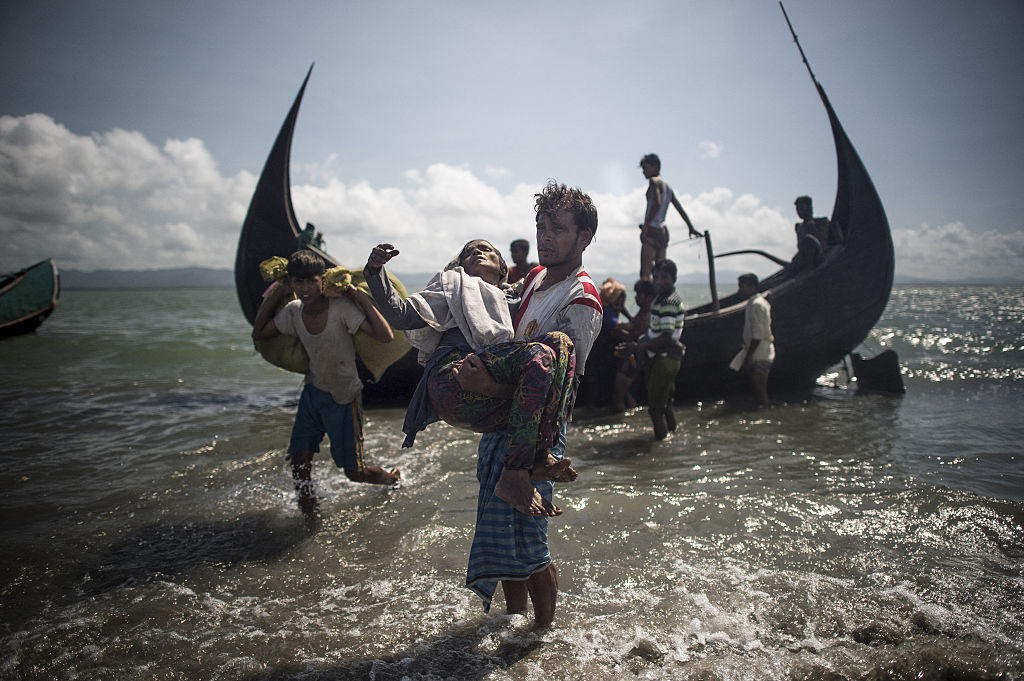
2017年8月和9月,缅甸安全部队在若开邦杀害数千名罗兴亚男女老少,摧毁数百个罗兴亚村庄,并迫使70多万罗兴亚人逃往邻国孟加拉国。
In August and September 2017, Myanmar’s security forces killed thousands of Rohingya men, women, and children in Rakhine State, destroyed hundreds of Rohingya villages, and forced more than 700,000 Rohingya to flee to neighboring Bangladesh.
2017年9月2日,在军事行动最激烈之际,缅甸军方总司令敏昂莱大将将罗兴亚人描述为长期存在的“问题”和“未完成的任务”。他的士兵公开称他们为动物,并呼吁对他们实施暴力。军方的肉体毁灭行动伴随着持续剥夺罗兴亚人身份乃至人性的努力。什么是种族灭绝?
On Sep. 2, 2017, at the height of the military campaign, Senior General Min Aung Hlaing, the Myanmar army chief, described the Rohingya as a longstanding “problem” and an “unfinished job.”His soldiers openly referred to them as animals and called for violence against them. The military’s campaign of physical destruction was accompanied by a sustained effort to strip the Rohingya of their identity and their very humanity. What is genocide?
证明种族灭绝罪的法律门槛极高。2019年11月11日,冈比亚在海牙国际法院提起诉讼,指控缅甸未履行《防止及惩治灭绝种族罪公约》下关于若开邦罗兴亚人的义务。
The legal bar to proving the crime of genocide is exceptionally high. On Nov. 11, 2019, Gambia filed a case at the ICJ in The Hague alleging that Myanmar had failed to fulfill its obligations under the Genocide Convention regarding the Rohingya in Rakhine State.
此案的核心在于意图这一单一问题,而意图对于定义种族灭绝至关重要:缅甸安全部队是否以“全部或部分消灭某一民族、种族、种族或宗教群体,作为该群体”这一意图,对罗兴亚人实施了集体暴力行为。在以往案件中,法院曾裁定,即使是大规模杀戮和强迫流离失所,也不一定构成种族灭绝。要从行为模式中确立种族灭绝意图,该意图必须是证据所支持的唯一合理结论。
The case hinged on the singular question of intention, which is crucial to defining genocide: Did Myanmar’s security forces commit acts of collective violence against the Rohingya with “intent to destroy, in whole or in part, a national, ethnical, racial or religious group, as such.”In previous cases, the court had ruled that even widespread killings and forced displacement did not necessarily constitute genocide. To establish genocidal intent from a pattern of conduct, it must be the only reasonable conclusion supported by the evidence.
冈比亚主张,缅甸的暴行不仅仅是反叛乱行动的过激行为,而是旨在消灭罗兴亚人这一群体的蓄意努力。其诉讼依据包括联合国调查、幸存者证词、前缅甸士兵的陈述,以及记录大规模杀戮(包括幼童和婴儿)、性暴力、以及数百个罗兴亚村庄被毁的卫星图像。
Gambia argued that Myanmar’s atrocities were not simply the excesses of a counterinsurgency campaign, but part of a deliberate effort to destroy the Rohingya as a group. Its case drew on UN investigations, survivor testimony, accounts from former Myanmar soldiers, and satellite imagery documenting mass killings including young children and infants, sexual violence, and the destruction of hundreds of Rohingya villages.
为确立种族灭绝意图,冈比亚指出了蓄意针对罗兴亚平民、袭击的协调性和极端残暴性、性暴力的使用、数十年的歧视性政策、军方领导人的仇恨言论,以及未能追究责任人的问责。冈比亚辩称,这些并非孤立的暴行,而是针对罗兴亚人的持续运动的一部分,且综合证据排除了除蓄意消灭他们(至少部分消灭)以外的任何合理解释。
To establish genocidal intent, Gambia pointed to the deliberate targeting of Rohingya civilians, the coordinated nature and extreme brutality of the attacks, the use of sexual violence, decades of discriminatory policies, hate speech by military leaders, and its failure to hold those responsible to account. It argued that these were not isolated atrocities, but part of a sustained campaign against the Rohingya, and that the evidence, taken together, left no reasonable explanation other than an intent to destroy them, at least in part.
缅甸否认对其暴行负责,将其“种族清洗”运动描述为反恐行动,并坚称暴力行为并未确立消灭罗兴亚人的意图。缅甸方面的律师甚至辩称,如果缅甸安全部队有消灭罗兴亚人的意图,他们本有机会“杀害更多”罗兴亚人。
Myanmar denied responsibility for its atrocities, portrayed its campaign of “ethnic cleansing” as a counterterrorism operation, and insisted that the violence did not establish an intent to destroy the Rohingya. Lawyers for Myanmar even argued that its security forces had the opportunity to “kill a larger number” of Rohingya if that had been their intent.
周四,国际法院以九票对六票裁定,缅甸在若开邦北部对罗兴亚人犯下了种族灭绝罪。法院断然驳回了缅甸的辩解,即仅靠反叛乱行动就能解释其军队和其他安全部队的行为,并确认了罗兴亚幸存者多年来坚持的主张。这一判决标志着幸存者取得了一场重大胜利,他们为伸张正义和安全返乡的斗争仍在继续。
On Thursday, the ICJ ruled by nine votes to six that Myanmar had committed genocide against the Rohingya in northern Rakhine state. The court decisively rejected Myanmar’s argument that counterinsurgency alone could explain the conduct of its military and other security forces and affirmed what Rohingya survivors have maintained for years. Its judgment marks a monumental victory for the survivors, whose struggle for justice and a safe return home continues.
判决重申,当从行为模式推断种族灭绝意图时,该意图必须是根据整体证据得出的唯一合理推断。判决还阐明,一个国家可以追求军事或安全目标,同时仍怀有种族灭绝意图。法院评估了来自多方的证据,从联合国调查员和专家的调查结果到证人陈述和直接证词,以确定是否发生了种族灭绝。
The judgment reaffirmed that when genocidal intent is inferred from a pattern of conduct, that intent must be the only reasonable inference from the evidence as a whole. It also clarified that a state can pursue military or security objectives and still act with genocidal intent. The court evaluated evidence from multiple sources, from the findings of UN investigators and experts to witness statements and direct testimonies, to determine whether genocide had occurred.
国际法的胜利 当强国日益抵制对其自身行为或其盟友行为的审查之际,国际法院的这一判决显得尤为重要。一些政府正威胁维护国际法的机构,并撤回其政治和财政支持。强权政治和选择性执法一向在削弱这些机构,但进一步削弱它们将使那些权力最小的人更加脆弱。
A victory for international law The ICJ judgment is particularly important now, as powerful governments increasingly resist scrutiny of their conduct or that of their allies. Some governments are threatening institutions charged with upholding international law and withdrawing their political and financial support. Power politics and selective enforcement have always undermined these institutions, but weakening them further would leave those with the least power even more vulnerable.
捍卫这些机构意味着加强愿按原则行事的政府与为正义而战的社群之间的联系。国际法使得西非小国冈比亚能够站在数千英里外一个受迫害社群一边,并让另一个国家承担责任。即使是地缘政治力量微乎其微的——无论是小国还是边缘化社群——都能帮助塑造国际法的执行方式。暴行往往逍遥法外,但这一裁决表明,有罪不罚并非不可避免。
Defending these institutions means strengthening ties between governments willing to act on principle and communities fighting for justice. International law made it possible for Gambia, a small West African country, to stand with a persecuted community thousands of miles away and hold another state accountable. Even those with little geopolitical power—small states and marginalized communities alike—can help shape how international law is enforced. Atrocities go unpunished too often, but this ruling shows that impunity is not inevitable.
此案还依赖于罗兴亚族幸存者的勇气,他们向调查人员讲述了自己的经历,并帮助记录了军方的暴行。其中一些人后来在法庭上作证。民间社会活动家花费数年时间推动国际社会承认罗兴亚族的苦难并要求伸张正义。许多有原则的外交官和政府官员将关切转化为集体行动。通过他们的共同努力,报告、决议和法律承诺成为了问责的有力工具。
The case also depended on the courage of Rohingya survivors who shared their experiences with investigators and helped document the military’s atrocities. Some later testified before the court. Civil society activists spent years pressing for international recognition of the Rohingya’s suffering and demanding justice. Many principled diplomats and government officials turned concern into collective action. Through their combined efforts, reports, resolutions, and legal commitments became powerful tools for accountability.
近120万罗兴亚族人仍在孟加拉国作为难民生活,数十万人在该地区寻求庇护时面临歧视和拒收,而被困在缅甸境内的人继续遭受迫害和暴力。国际法院已裁定缅甸对种族灭绝负有责任,并命令其允许并协助因其行为而流离失所的罗兴亚族人安全、自愿且有尊严地返回。
Nearly 1.2 million Rohingya still live as refugees in Bangladesh, hundreds of thousands face discrimination and pushbacks while seeking refuge across the region, and those trapped in Myanmar continue to face persecution and violence. The ICJ has held Myanmar responsible for genocide and ordered it to allow and facilitate the safe, voluntary, and dignified return of the Rohingya displaced by its actions.
确保其遵守裁决将需要罗兴亚族幸存者、民间社会团体和各国政府在推动此案过程中所展现的同样毅力、勇气和团结。
Securing its compliance will require the same grit, courage, and solidarity that Rohingya survivors, civil society groups, and governments brought to this case.