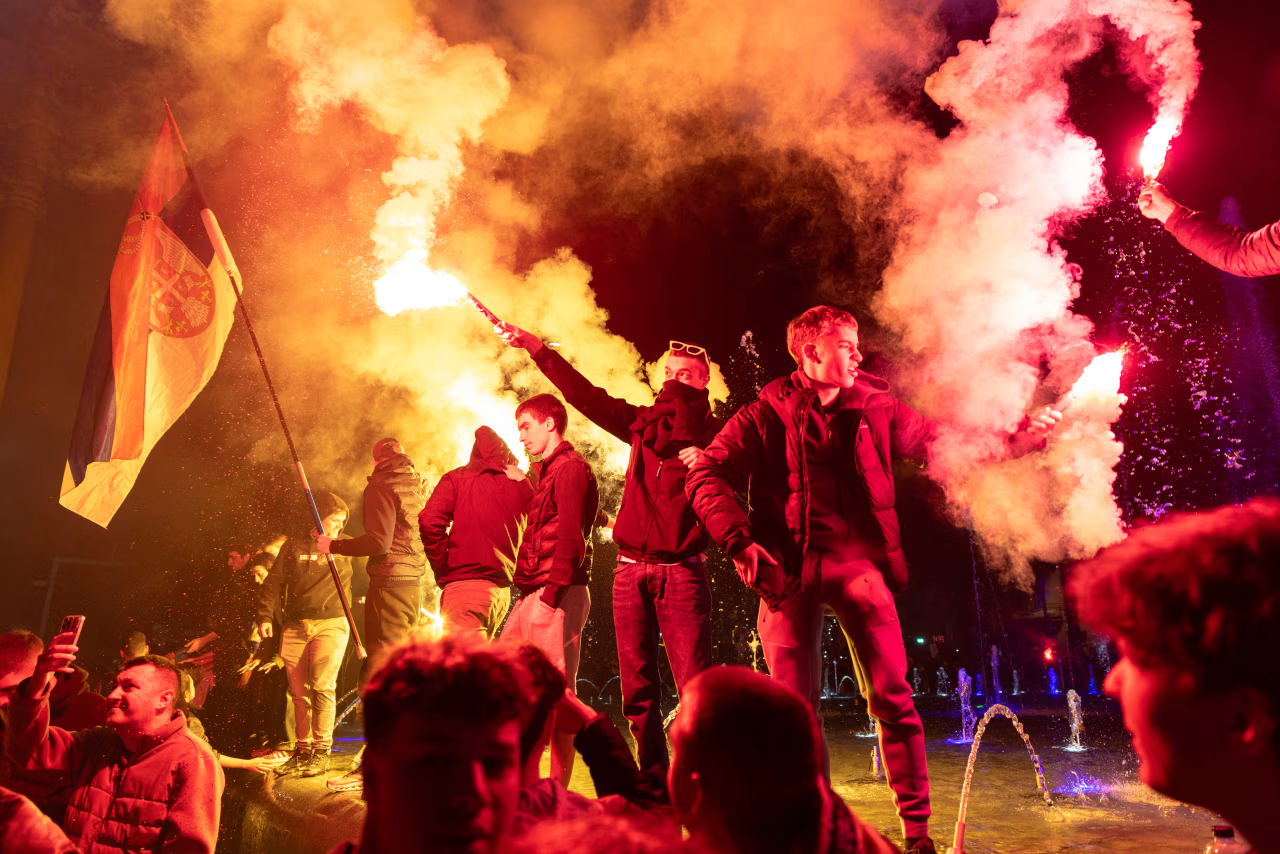
贝尔格莱德,塞尔维亚——塞尔维亚的Z世代学生运动在14年里做到了该国反对党未能做到的事:推翻了欧洲最根深蒂固的民粹主义和威权主义领导人之一。
BELGRADE, Serbia—Serbia’s Gen Z student movement pulled off what the country’s opposition parties couldn’t in 14 years: ousting one of Europe’s most entrenched populist and authoritarian leaders.
但在上个月的议会选举中以约53%的得票率大获全胜、终结了亚历山大·武契奇对权力的掌控后,真正的难题来了。一个为抵抗权力而建立的运动,能否治理国家?
But after sweeping last month’s parliamentary election, with around 53% of the vote, and ending Aleksandar Vučić’s grip on power, now comes the hard part. Can a movement built to resist power govern?
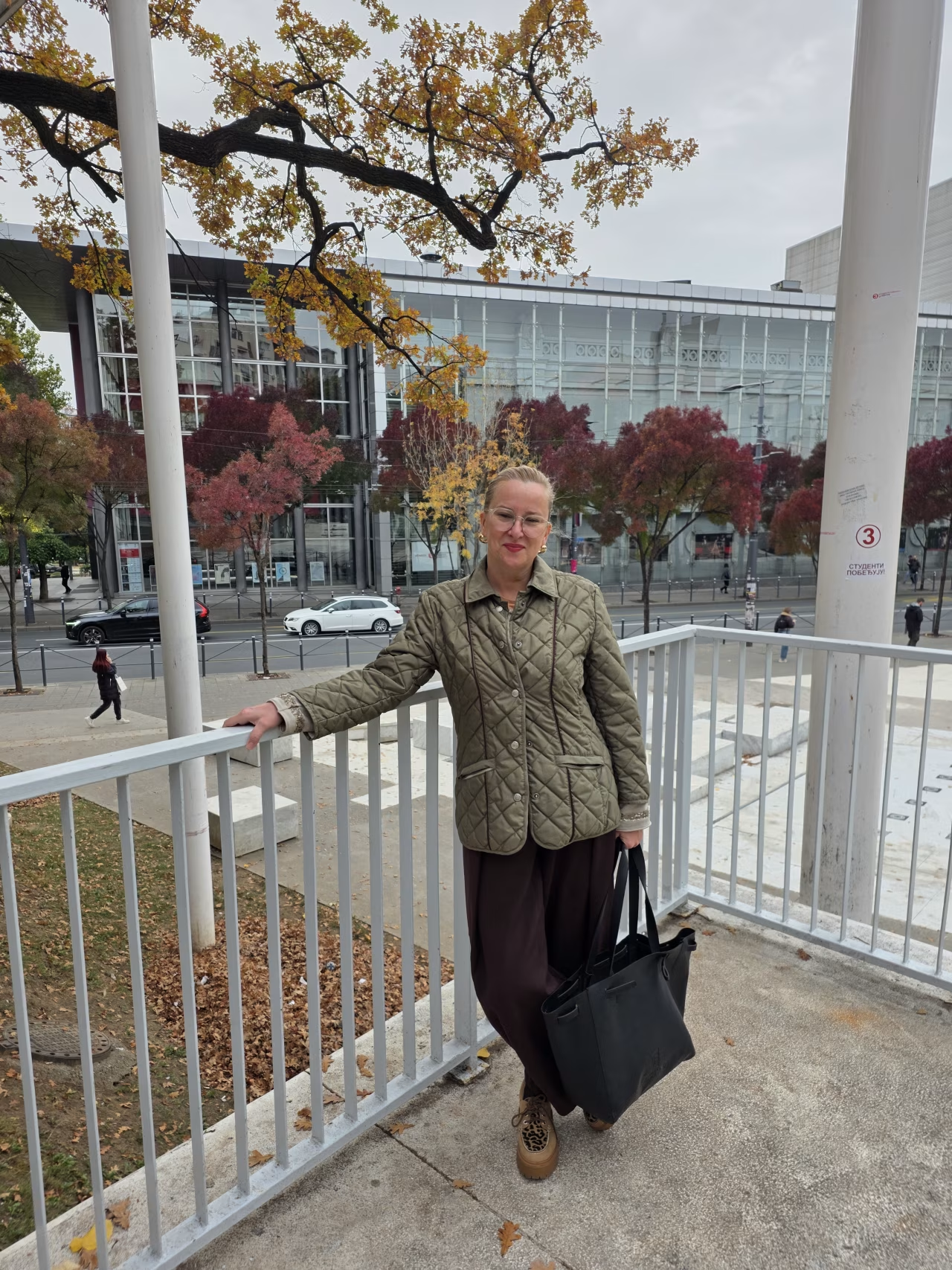
“解决一个问题,又会冒出三个新问题,”文化研究研究生塔拉·布拉戈耶维奇走过贝尔格莱德的斯拉维亚广场时说道,该广场曾是抗议武契奇的焦点。“我们解决了一个问题。现在我们面临其他问题。”学生们不会在议会中占据任何一个席位。相反,他们精心挑选了一群意想不到的、多为政治局外人来代表他们,其中包括一名心脏病专家、一名前央行行长、一位篮球传奇人物和一位歌剧演唱家。
“When you solve a problem, another three show up,” said cultural-studies graduate student Tara Blagojević walking across Belgrade’s Slavija Square, a focal point of protests against Vučić. “We solved one problem. Now we have other problems.”The students won’t take a single seat in parliament. Instead, they have handpicked an unlikely cast of mostly political outsiders to represent them, including a cardiologist, a former central-bank governor, a basketball legend and an opera singer.
加入他们的还有数十名习惯了讲堂而非权力走廊的学者。大多数人从未担任过政治职务。
Joining them are dozens of academics more accustomed to lecture halls than the corridors of power. Most have never held political office.
该学生运动至今尚未选定总理,更不用说组建内阁,甚至尚未决定如何影响其推上台的立法者。它还必须找到办法,维持其政治立场多元的联盟团结一致,该联盟包含民族主义者、自由主义者和左翼人士。
The student movement has yet to choose a prime minister, much less assemble a cabinet or even decide how it can influence the lawmakers it propelled into office. It must also find a way to keep united its politically diverse bloc, which includes nationalists, liberals and leftists.
“我们缺乏经验,将以正直弥补,”当选为学生名单议员的高中英语教师卡塔里娜·什切帕诺维奇表示。“我们在摸索中前行。”塞尔维亚这场由Z世代主导的政治剧变,其意义远超巴尔干半岛。它考验着青年运动能否将抗议转化为选举胜利,进而建立起行之有效的政府。
“What we lack in experience, we will make up for in integrity,” said Katarina Šćepanović, a high-school English teacher elected on the student slate. “We are figuring things out as we go along.”Serbia’s Gen Z-led political upheaval matters far beyond the Balkans. It tests whether youth movements can turn protest into electoral victory and then build governments that work.
整个欧洲,成千上万的人于周六在德国参加了Z世代主导的抗议活动,而法国的学生示威已发展成一场涉及教育和生活成本的更广泛运动。
Across Europe, tens of thousands joined Gen Z-led protests in Germany on Saturday, while student demonstrations in France have grown into a broader movement over education and living costs.
在其他地方,近年来由年轻人主导的起义动摇了政治体制,其背后是对腐败的愤怒、对政治精英的深度不信任以及社交媒体的组织力量。在孟加拉国,学生帮助推翻了一位总理,但随后的大选却由一个老牌政党获胜。在尼泊尔,Z世代抗议后,一个较新的政党掌权。在马达加斯加,军队在一场起义后接管了政权。
Elsewhere, youth-led uprisings in recent years have shaken political establishments, fueled by anger over corruption, deep distrust of political elites and the organizing power of social media. In Bangladesh, students helped topple a prime minister, only for an established party to win the subsequent election. In Nepal, a newer party swept to power after Gen Z protests. In Madagascar, the military took over following a revolt.
前欧盟和英国驻塞尔维亚大使迈克尔·达文波特表示,塞尔维亚学生运动能为该国带来积极变化,但“将面临巨大挑战,包括满足选民期望、维持运动凝聚力、组建政府,同时尽可能保持其集体性的方式。他们将在各个方面接受考验。”这场动荡为这个拥有约650万人口、长期在欧盟与俄罗斯之间摇摆的巴尔干国家提供了一个重建民主制度、重振停滞已久的入欧雄心的机会。
The Serbian student movement can bring positive change for the country but “will face enormous challenges, including meeting their electorate’s expectations, maintaining the movement’s cohesion and forming a government while maintaining their collective approach as far as possible,” said Michael Davenport, former European Union and U.K. ambassador to Serbia. “They will be tested on all fronts.”The upheaval offers Serbia, a Balkan nation of some 6.5 million long pulled between the EU and Russia, a chance to rebuild its democratic institutions and revive its stalled ambitions to join the EU.
但这场胜利不一定预示着地缘政治的重组。学生们反对制裁莫斯科,理由是塞尔维亚依赖俄罗斯天然气,且记忆犹新的是1990年代针对本国的制裁。该运动还坚持认为,2008年单方面宣布独立的科索沃仍属于塞尔维亚。
But the victory doesn’t necessarily herald a geopolitical realignment. The students have opposed sanctions against Moscow, citing Serbia’s dependence on Russian gas and memories of sanctions against their own country in the 1990s. The movement also maintains that Kosovo, which declared independence in 2008, remains part of Serbia.
学生支持的候选人提议最终就塞尔维亚加入欧盟举行公投,尽管这不在该运动的正式竞选纲领中。布拉戈耶维奇表示,新政府将把欧盟民主标准付诸实践。
Student-backed candidates have proposed an eventual referendum on Serbia’s EU membership, though it isn’t part of the movement’s formal election platform. Blagojević said the new government would put EU democratic standards into practice.
学生们最初并未打算夺取政权。他们想要的是关于一起悲剧事件的答案。
The students hadn’t initially set out to take power. They wanted answers about a tragic incident.
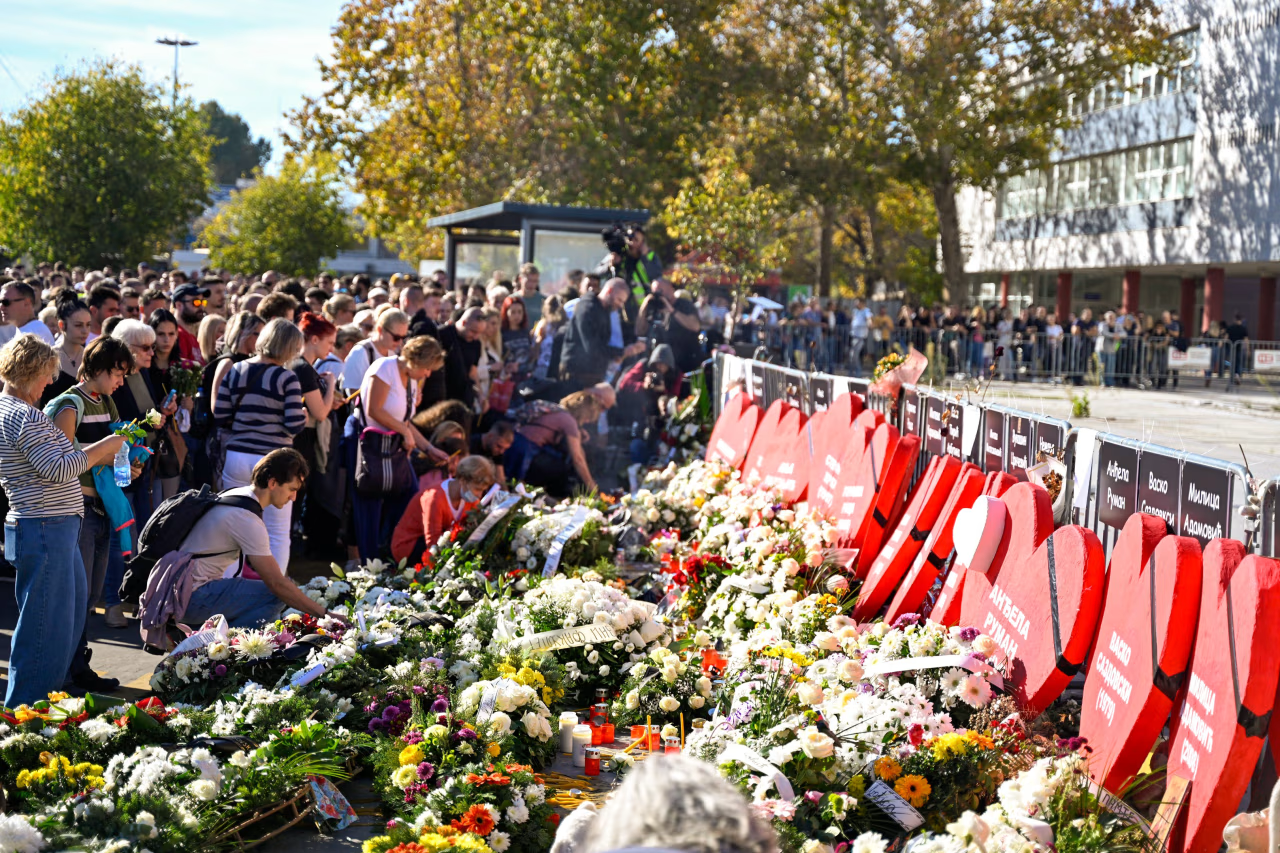
2024年11月1日,塞尔维亚第二大城市诺维萨德新翻修的火车站站台顶棚坍塌,造成16人死亡。对许多塞尔维亚人来说,这成为了涉嫌腐败和国家未能保护公民的象征。
On Nov. 1, 2024, a canopy collapsed at the newly renovated train station in Serbia’s second city of Novi Sad, killing 16 people. For many Serbians, it became a symbol of alleged corruption and a state that had failed to protect its citizens.
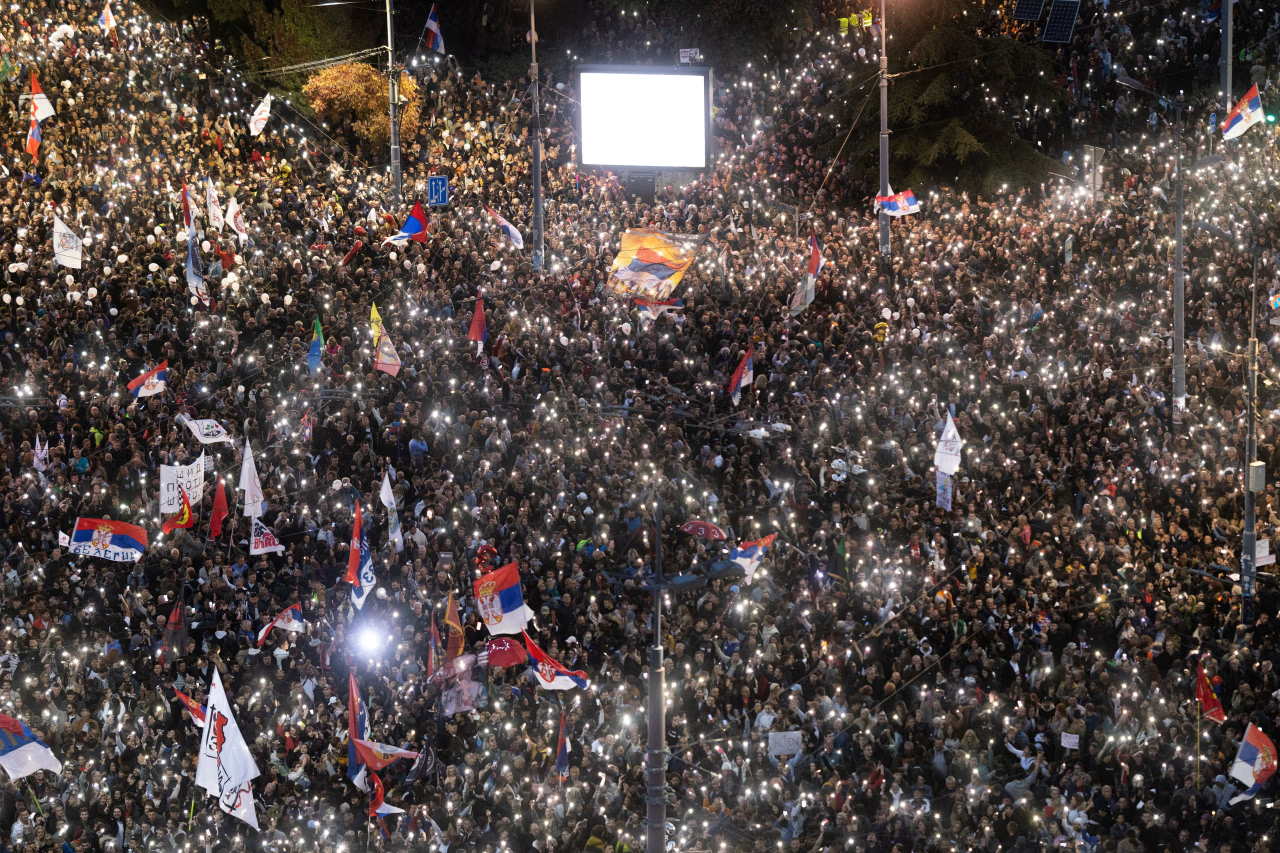
学生要求调查和问责,占领大学并在全国各地组织静默守夜。2025年3月,一场以贝尔格莱德斯拉维亚广场为中心的大规模集会吸引了数十万人参加,成为现代塞尔维亚历史上规模最大的抗议活动之一。
Students demanded investigations and accountability, occupied universities and organized silent vigils across the country. A mass rally centered on Belgrade’s Slavija Square in March 2025 drew hundreds of thousands in one of the largest protests in modern Serbian history.
愤怒的根源远不止火车站事故。武契奇领导的塞尔维亚进步党自2012年起执政,他先后担任总理和总统,长期主导政治局势。批评者指责其政府施压司法机构并控制大部分媒体。政府否认这些指控,将抗议活动描绘为对稳定的威胁。该党代表未回应本文的置评请求。
The anger ran deeper than the train station incident. Vučić’s Serbian Progressive Party had governed since 2012, while he dominated politics as prime minister and then president. Critics have accused his administration of pressuring the judiciary and controlling much of the media. His government has denied the accusations, portraying the protests as a threat to stability. Representatives of his party didn’t respond to a request for comment for this article.
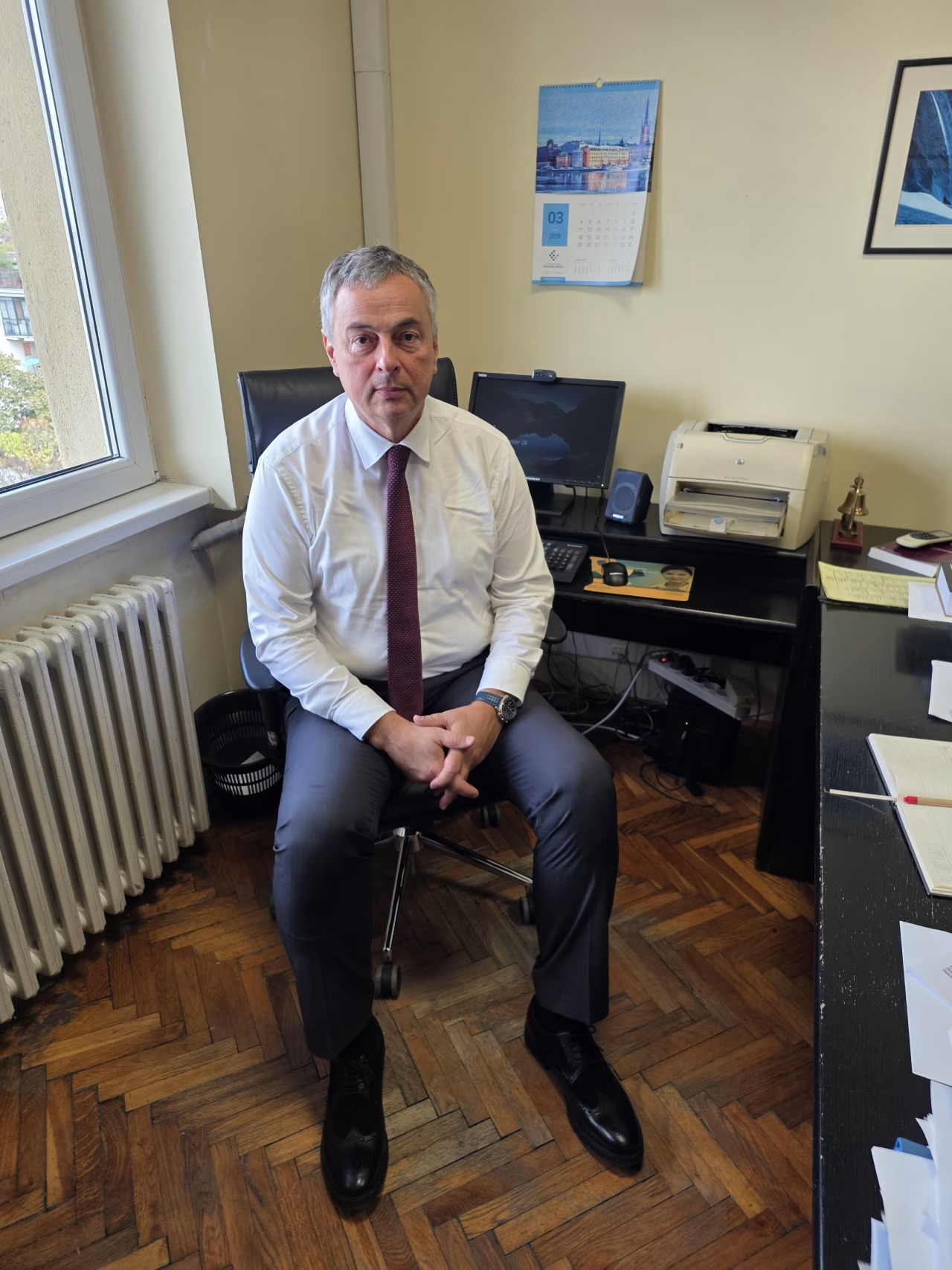
前央行行长德扬·绍什基奇入选学生支持的名单,他因批评经济政策而遭亲政府媒体诋毁。他表示,抗议旨在让制度重新运转,而非仅仅更换一批政客。
Dejan Šoškić, a former central-bank governor on the student-backed slate, described being vilified by pro-government media for criticizing economic policy. He said the protests were about making institutions work again, not simply replacing one set of politicians with another.
“现在不是搞传统政治的时候,”他在贝尔格莱德大学经济学院说道,当时学生们正涌过走廊赶去上早课。“传统政治要等到国家恢复正常、正常运作之后才轮得到。”对布拉戈耶维奇而言,政治抗议是家庭传统。她回忆,祖母1968年作为牙科学生参加过抗议,姑姑作为建筑学学生曾参与1990年代的示威活动。
“This is not the time for classical politics,” he said at the University of Belgrade’s economics faculty as students streamed through the halls toward morning lectures. “Classical politics comes once you re-establish the normal and proper functioning of the country.”For Blagojević, political protest runs in the family. She recalled that her grandmother protested as a dentistry student in 1968 and her aunt, an architecture student, took part in demonstrations in the 1990s.
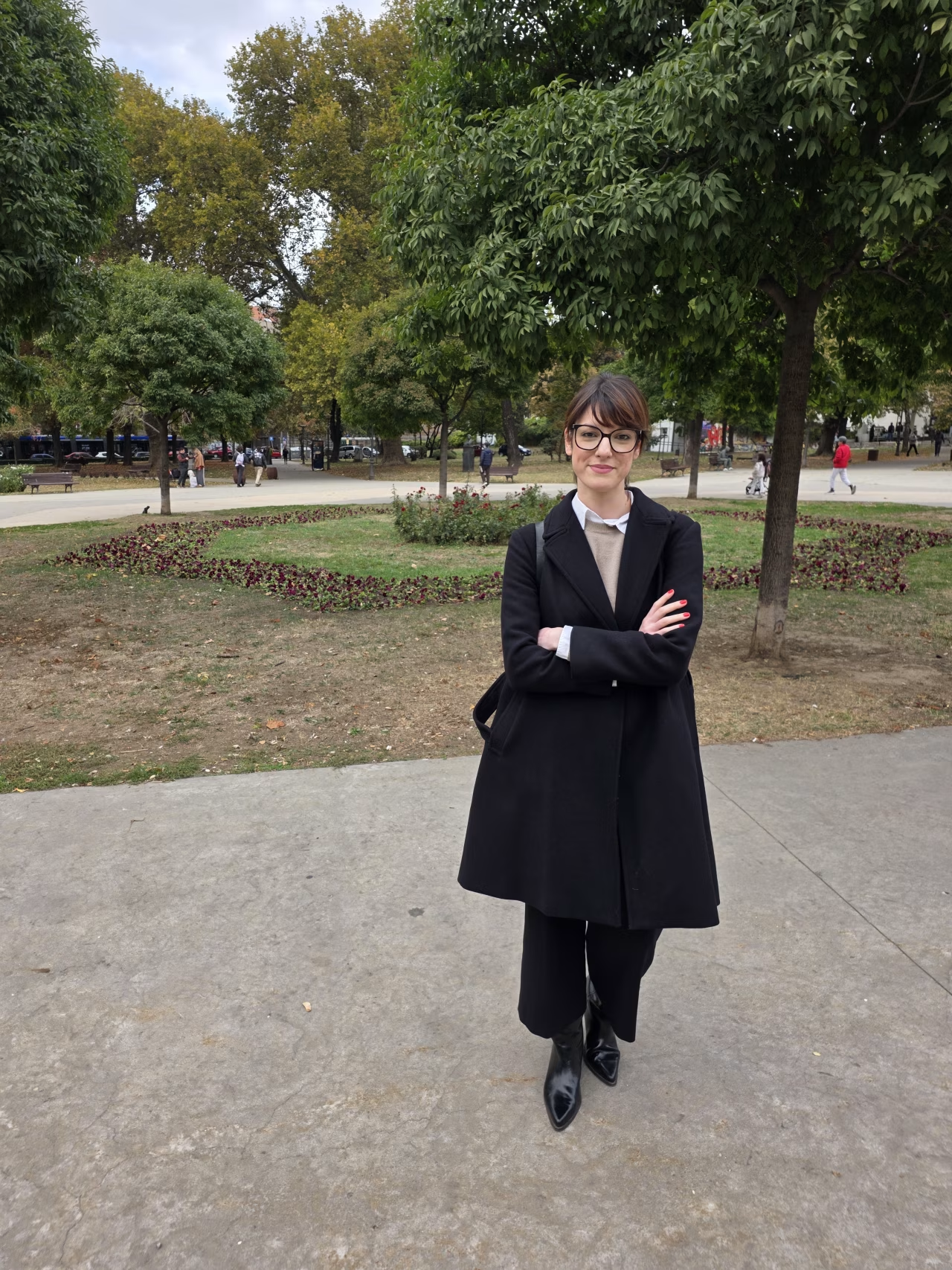
布拉戈耶维奇加入了通过全体会议组织的学生行列,这些会议在各大学院系举行,与会者进行辩论并投票。由这些会议选出的代表通过工作小组以及Telegram和Signal聊天群,协调抗议活动、媒体策略,最终推进竞选活动。
Blagojević joined students organizing through plenums, open assemblies at university faculties where participants debated and voted. Representatives chosen by those assemblies coordinated protests, media strategy and eventually the election campaign through working groups and Telegram and Signal chats.
贝尔格莱德大学组织科学学院23岁的学生卢卡·马克西奇(Luka Maksić)在一位朋友的劝说下,于2024年12月参加了一场校园封锁行动。约800名同校学生聚集在场。他说,那一幕在他心中点燃了“熊熊烈火”。
Luka Maksić, a 23-year-old student at the University of Belgrade’s Faculty of Organizational Sciences, joined a campus blockade in December 2024 at a friend’s urging. Some 800 fellow students had gathered. The sight lit “a flame in me,” he said.
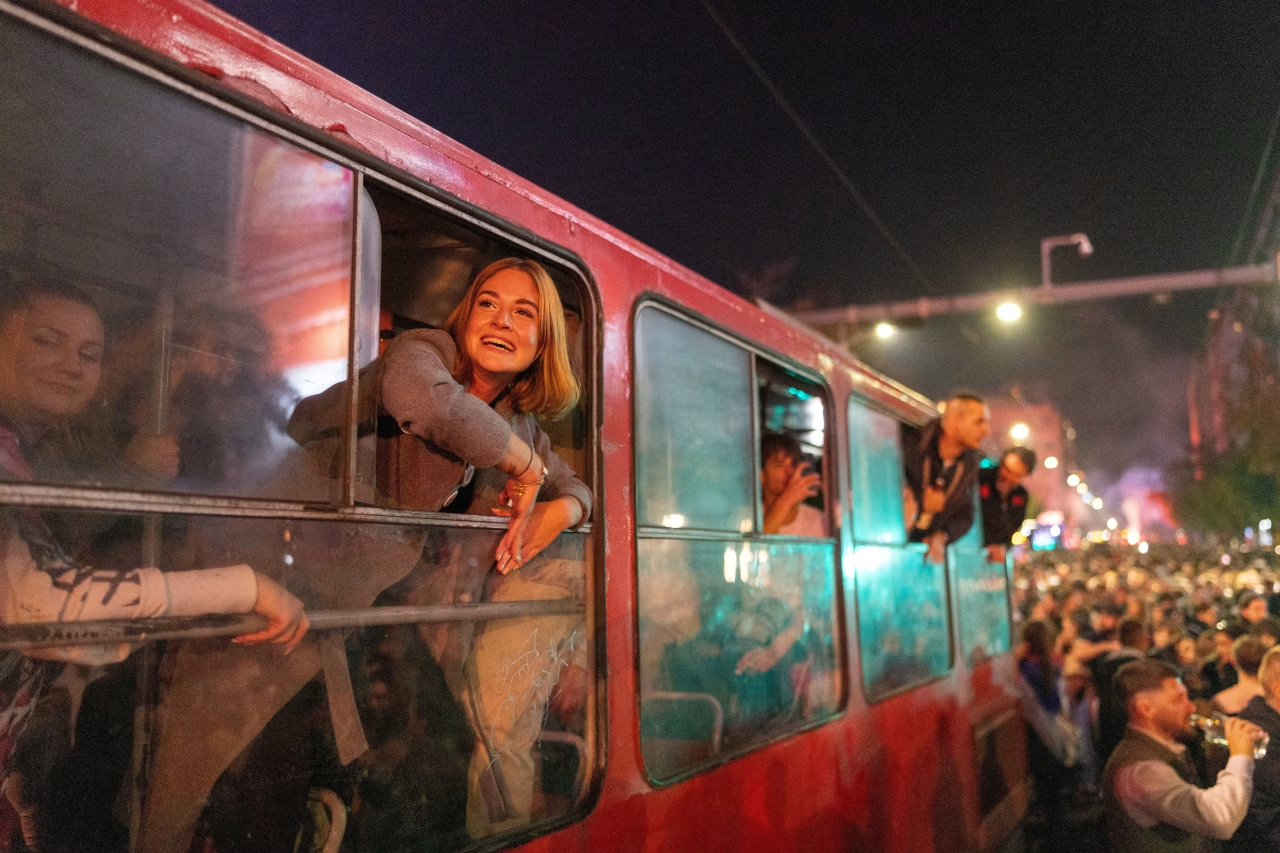
两个月后,他参加了一场为期两天、前往诺维萨德的学生游行。当游行队伍进入城市时,公寓窗户里传出歌声,烟花照亮街道,人群欢呼雀跃。“这个政府垮台只是时间问题,”马克西奇回忆起当时的想法。
Two months later, he joined a two-day student march to Novi Sad. As the marchers entered the city, songs blared from apartment windows, fireworks lit the streets and crowds cheered. “It was a matter of time before this government went down,” Maksić recalled thinking.
2025年5月,学生们确信仅靠街头施压无法带来变革,于是要求举行提前选举。他们深入城镇乡村,收集签名,招募投票站监督员。他们去中心化的集会形式,让政府难以锁定单一领袖或通过达成交易来终止这场运动。但这种结构如今也带来了两难困境。
In May 2025, convinced street pressure alone wouldn’t deliver change, the students demanded snap elections. They fanned out across towns and villages, gathered signatures and recruited polling-station monitors. Their decentralized assemblies made it difficult for the government to target a single leader or cut a deal to stop the campaign. But that same structure now presents a dilemma.
马克西奇表示,让学生登上选票,可能会让他们彼此对立,导致这个无领袖建立起来的运动分裂。“学生进入议会的机会,会在他们之间制造一种大乱斗,”他说。还有一个更务实的考量:赢得选票。
Maksić said putting students on the ballot risked pitting them against one another and splintering a movement built without leaders. “The opportunity for students to go into parliament would create a sort of battle royal between them,” he said. There was also a more pragmatic consideration: winning votes.
贝尔格莱德政治分析师阿列克桑达尔·伊夫科维奇(Aleksandar Ivković)说:“支持在街头抗议、横跨塞尔维亚游行的学生,与真正投票让一群18至22岁的年轻人来治理国家,是完全两码事。”
“It is one thing to support students who are protesting in the streets and marching across Serbia, and quite another to actually vote for a group of 18- to 22-year-olds to govern the country,” said Aleksandar Ivković, a Belgrade-based political analyst.
因此,学生们挑选了250名候选人——主要是他们信任、具备专业知识的教师、学者和其他专业人士。不过,一旦当选,这些新议员将对选民和宪法负责,而非对学生集会负责。
So the students selected 250 candidates—largely teachers, academics and other professionals with expertise they trusted. Once elected, however, the new lawmakers answer to voters and the constitution, not to student assemblies.
“我们无法直接影响他们每天的决定,”布拉戈耶维奇说。“但我们绝对不会消失。”
“We cannot directly influence their decisions daily,” said Blagojević. “But we are definitely not going to disappear.”
学生们的竞选纲领承诺设立独立检察官、让公共合同更透明、使国家机构去政治化以及让媒体更自由。选举后,塞尔维亚国家公共广播电台台长辞职,一家地区公共电台的主持人在直播中为多年来单方面的报道道歉。“我们视而不见,”这位主持人对观众说。“该问的尖锐问题没有被问出。”但改革司法、检察机关和监管机构可能更难。
The students’ election platform promises independent prosecutors, more-transparent public contracts, depoliticized state agencies and freer media. Following the election, the head of Serbia’s national public broadcaster resigned, while a presenter at a regional public station apologized on air for years of one-sided coverage. “We turned a blind eye,” the presenter told viewers. “The right questions were not asked.”But reforming the judiciary, prosecution service and regulatory agencies might prove harder.
政治风险咨询公司Teneo指出,许多机构由由武契奇阵营任命的人员组成的机构监管。英语教师什切帕诺维奇预计将遭遇来自官僚体系“内部”的激烈阻挠。据预测,武契奇的联盟将保持约100个席位。
Many are overseen by bodies populated with Vučić-aligned appointees, according to political-risk consulting firm Teneo. Šćepanović, the English teacher, expects fierce obstruction “from inside” the bureaucracy. Vučić’s alliance is projected to hold about 100 seats.
最终,新联盟将不仅因其改革的制度而受到评判,也将因其为将其推上台的年轻塞尔维亚人创造的机会而受到评判。根据官方统计,第二季度青年失业率为22%,而总体失业率为7.2%。
Ultimately, the new coalition will be judged not just by the institutions it reforms, but also by the opportunities it creates for the young Serbians who brought it to power. Youth unemployment stood at 22% in the second quarter, compared with an overall rate of 7.2%, according to official statistics.
在贝尔格莱德他最爱的一家餐馆,马克西奇一边吃着古尔曼斯卡普列斯卡维察——一种混合了奶酪和香料的塞尔维亚传统烤肉饼——一边提出了一个更简单的胜利衡量标准,对于一个帮助推翻强人者而言。
Over gurmanska pljeskavica—a traditional Serbian grilled patty mixed with cheese and spices—at his favorite Belgrade spot, Maksić offered a simpler measure of victory for someone who helped bring down a strongman.
“我想生活在塞尔维亚,”他说。“我想让许多像我这样的人留在这里。”
“I want to live in Serbia,” he said. “I want many people like me to stay here.”