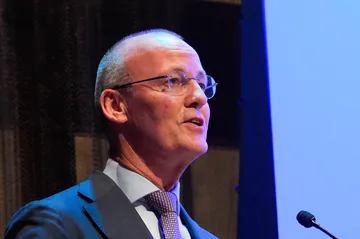
欧洲央行用于稳定主权债务市场的工具无法取代对公共财政的负责任管理,据竞逐该机构下一任行长的克拉斯·诺特表示。
The European Central Bank’s tools to stabilize sovereign debt markets can’t replace responsible management of public finances, according to Klaas Knot, who’s in the running to become the institution’s next president.
记者 奇亚拉·阿尔巴内塞“在某些情况下,这是不可避免的,”他在周日接受意大利报纸《晚邮报》采访时表示。“欧洲央行可以在市场动态混乱的情况下提供保护伞,但不能替代稳健的财政政策。”诺特曾任荷兰央行行长,正与西班牙人巴勃罗·埃尔南德斯·德科斯竞争,以接替克里斯蒂娜·拉加德出任欧洲央行行长。拉加德上月宣布将于2月7日离任——比其八年任期正式结束早近九个月。
By Chiara Albanese“There are situations where it is inevitable,” he told Italian newspaper Corriere della Sera on Sunday. “The ECB can provide a shield in situations of disorderly market dynamics, but it cannot substitute for sound fiscal policy.”Knot, a former Dutch central bank chief, is competing with Spaniard Pablo Hernandez de Cos to succeed Christine Lagarde as ECB president, after she announced last month she’d be leaving on Feb. 7 — almost nine months before the official end of her eight-year term.
随着法国的债务困境重燃对欧元区危机的记忆,行长之争的胜负可能取决于哪位候选人被认为最能驾驭金融动荡并应对债券市场的“守夜人”。
With France’s debt woes reviving memories of the euro-zone crisis, the race for the presidency may hinge on which candidate is judged best able to navigate financial turbulence and take on the bond vigilantes.
“也许,在一个理想的世界里,欧洲央行可以少做一些这种繁重的工作,”诺特说。“货币政策和财政政策保持一致很重要,而在欧元区有21个不同政府独立制定财政政策的体制下,这更难做到。拥有坚实的财政可持续性防线也很重要。”诺特还表示:关于增长:“国内需求表现非常强劲。稳固的劳动力市场、高就业率和健康的私营部门资产负债表也发挥了作用。此外,国防开支也带来了一些财政刺激。再者,主要来自美国的人工智能投资热潮创造的全球需求,也对我们产生了积极的溢出效应。”
“Perhaps, in an ideal world, the ECB could do a little less of this heavy lifting,” Knot said. “It is important to have aligned monetary and fiscal policies, and in a system with 21 different governments setting fiscal policy independently within the euro zone, that is harder. It is also important to have solid defenses for fiscal sustainability.”Knot also said: On growth: “Domestic demand held up very well. A solid labor market, high employment, and healthy private balance sheets also made a difference. There is also a bit of fiscal stimulus coming from defense spending. Furthermore, the global demand created by the artificial intelligence investment boom, coming primarily from the US, is having positive spillover effects on us as well.”
关于通胀:“我们必须保持警惕,而非杞人忧天。在2026年初,通胀率符合目标,利率处于中性水平。然而,伊朗战争推高了能源价格和短期通胀。问题在于,这究竟将主要维持为一场能源冲击,还是会开始传导至工资和更广泛的价格。”
On inflation: “We must be vigilant, not alarmist. At the beginning of 2026, inflation was in line with the target, with neutral interest rates. However, the war in Iran pushed energy prices and short-term inflation upward. The question is whether this will remain primarily an energy shock or if it will begin to pass through to wages and broader prices.”
“到目前为止,通胀预期依然保持得十分稳定,更广泛的第二轮效应的证据也很有限。欧洲央行的审慎方法发挥了作用。鉴于负面供给侧冲击也对经济活动造成了压力,中央银行采取了必要的措施,同时避免了过度收紧。展望未来,明智的做法是保持开放的心态,根据不断涌现的证据对中期通胀前景作出回应。中东的事态发展将具有决定性作用。”
“So far, inflation expectations have remained well-anchored, and evidence of broader second-round effects is limited. The ECB’s measured approach has worked. The central bank did what was necessary while avoiding tightening too much, given that the negative supply-side shock is also weighing on economic activity. Looking ahead, the sensible approach is to keep an open mind and respond to medium-term inflation prospects as evidence comes in. Developments in the Middle East will be decisive.”
关于南欧和北欧在量化宽松和货币政策问题上可能存在的紧张关系:“在结构性低通胀的世界中,十五年前的一些分歧重新显现。那是全球化和紧缩性财政政策的时代,催生了通货紧缩的环境。对于货币政策在将刚刚超过1%的通胀率推高至略低于但接近2%的水平方面能有多大效力,各方存在不同的看法。最近,我反思了自己当时持有的立场,以及我今天可能会有哪些略有不同的看法。”
On potential tensions between southern and northern Europe over quantitative easing and monetary policy: “Some of the rifts from fifteen years ago opened up in a world of structurally low inflation. That was the era of globalization and restrictive fiscal policies, which generated a deflationary environment. There were differing views on how effective monetary policy could be in bringing inflation from just over 1% to a level below, yet closer to, 2%. Recently, I have reflected on the positions I held back then and on what I might see slightly differently today.”