
在每年一度的联合国气候谈判展厅里,印度很难寻觅踪迹,但在谈判室里却难以被忽视。
India is hard to spot in exhibition halls at the annual United Nations climate talks, but difficult to avoid in its negotiating rooms.
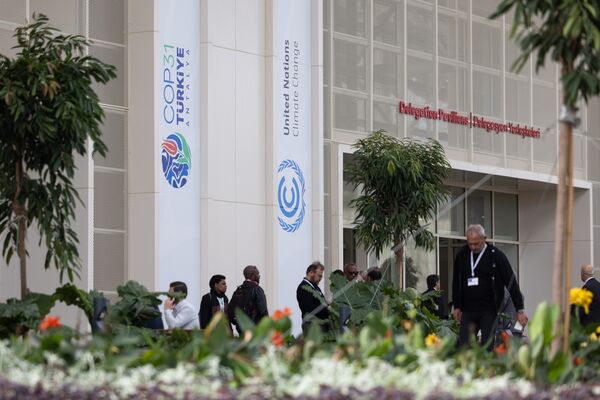
与数十个拥有炫目宣传展馆的国家不同,印度在土耳其安塔利亚举行的峰会上没有专门展位,约152名注册出席的官方代表团规模甚至小于孟加拉国、巴基斯坦或尼泊尔。
Unlike dozens of other nations with flashy promotional pavilions, the country has no dedicated booth at the summit in Antalya, Turkey, and an official delegation of about 152 registered attendees is smaller than those of Bangladesh, Pakistan or Nepal.
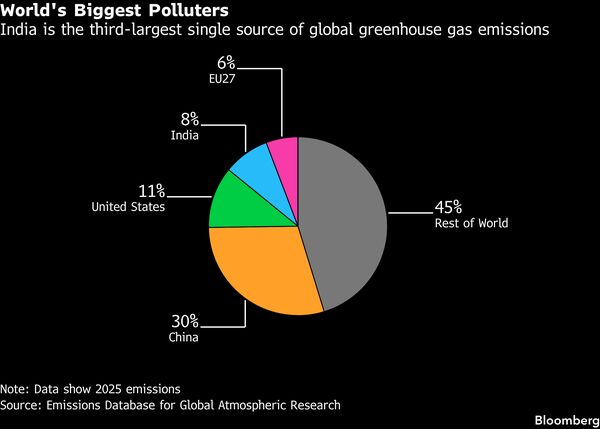
印度总理纳伦德拉·莫迪政府于4月决定撤回2028年主办联合国气候谈判的申请,且其修订后的减排战略被视为缺乏雄心,这导致一些倡导者得出结论:作为全球第三大温室气体排放源,印度正迅速从气候外交的前沿阵地退守。
A decision by Prime Minister Narendra Modi’s government in April to withdraw its offer to host the UN talks in 2028 and a revised emissions-cutting strategy seen as lacking in ambition have led some advocates to conclude that India, the world’s third-largest source of greenhouse gas pollution, is quickly retreating from a frontline position on climate diplomacy.
然而,该国在闭门磋商中仍是一支重要声音,并坚持为发展中国家争取更多气候资金,要求工业化国家在减排方面迈出更大、更快的步伐。
Yet, the nation remains an important voice in closed-door deliberations and a persistent advocate for the developing world’s demands for more climate finance and for industrialized nations to go faster and further in reducing emissions.
在国内,创纪录的风能和太阳能装机量正在改变这个约3.9万亿美元经济体以煤电为主导的电网结构,据彭博新能源财经数据,非化石能源占该国发电量的比例已达约30%。
And at home, record additions of wind and solar are transforming the roughly $3.9 trillion economy’s coal-dominated power grid, with non-fossil fuel sources accounting for about 30% of the nation’s electricity generation, according to BloombergNEF.
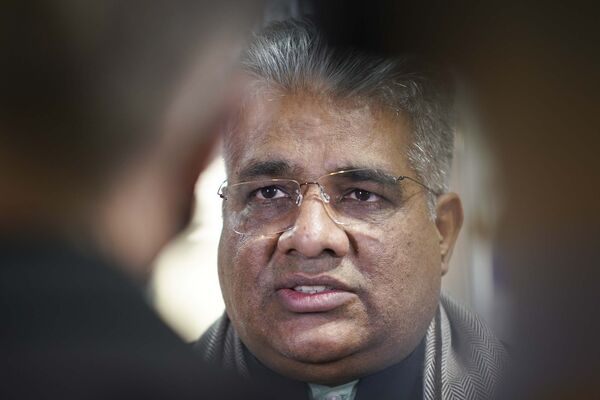
“发展中国家不能被要求在气候行动与发展的合法权利、体面生活水平、医疗和教育之间做选择,”环境部长布彭德·亚达夫周三在COP31会议发言中表示,“公平获取剩余且日益枯竭的碳预算不容商榷。” 尽管印度在土耳其的公开曝光度较低,但该国正利用其在谈判中的影响力,抵制那些会给发展中国家增加义务、却不要求富裕经济体承诺提供额外资金或技术的新气候目标或时间表。
“Developing countries cannot be asked to choose between climate action and the legitimate right to development, to decent living standards, health and education,” Environment Minister Bhupender Yadav told the COP31 talks in a speech Wednesday. “Equitable access to the remaining depleted carbon budget is non-negotiable.”Despite India’s low public profile in Turkey, the nation is using its influence in negotiations to resist new targets or timetables for climate action that would add obligations on developing nations without offering commitments from richer economies to deliver additional finance or technology.
印度也是本次会谈两大核心争议的焦点——一是关于下一轮全球气候科学评估的时间安排,二是关于一项旨在加速电气化的拟议目标。
India is also at the center of two major disputes at the talks — on the timing of the next major global climate-science assessments, and over a proposed goal to accelerate electrification.
气候智库E3G的高级政策顾问纳库尔·夏尔马表示,印度的做法“不应被误解为脱离气候外交”。“印度在发展中国家联盟中仍是一支有影响力的声音。”连同俄罗斯和沙特阿拉伯,印度正在抵制一项时间表,该时间表要求政府间气候变化专门委员会(IPCC)在2028年前完成并发布三份关键科学报告。该计划的支持者坚持认为,这些文件应当可供使用,以便为《巴黎协定》目标的下一次全球进展重大审查提供依据,而反对者则辩称,截止日期没有提供足够的时间纳入发展中国家的贡献。
The country’s approach “should not be confused with disengagement from climate diplomacy,” said Nakul Sharma, a senior policy adviser at E3G, a climate think tank. “India remains an influential voice in developing country coalitions.”Along with Russia and Saudi Arabia, India is resisting a timetable to complete and publish three key science reports from the Intergovernmental Panel on Climate Change by 2028. Advocates of the plan insist the documents should be available to inform the next major review of global progress toward the targets of the Paris Agreement, while opponents argue the deadlines don’t offer enough time to include contributions from developing nations.
此外,包括印度和中国在内的志同道合发展中国家集团已明确表示,不会支持自上而下的目标,即寻求到2035年将电力在全球最终能源消费中的占比提高到35%。
Separately, the Like-Minded Developing Countries bloc, which includes India and China, has made clear it won’t support top-down targets seeking to raise electricity’s share of global final energy demand to 35% by 2035.
总部位于柏林的非营利组织“气候分析”首席执行官比尔·黑尔表示,随着国内能源转型加速,印度没有寻求推动更具雄心的议程,这令气候倡导者感到失望。
With an accelerating domestic energy transition, it’s a disappointment to climate advocates that India isn’t seeking to push a more ambitious agenda, said Bill Hare, chief executive officer of Berlin-based Climate Analytics, a nonprofit.
印度已提前数年实现了将非化石能源发电装机容量占比提高到50%的目标,但到2035年达到60%的新目标被认为容易得多,远远落后于该国可再生能源繁荣的步伐。
India hit a target to raise its share of electricity generation capacity from non-fossil fuel sources to 50% years ahead of schedule though a new goal to reach 60% by 2035 is seen as far too easy to achieve, and lagging well behind the pace of the nation’s renewables boom.
“这里拥有巨大的潜力,在清洁能源、清洁钢铁、清洁化肥以及由此带来的经济机遇方面都有巨大的容量,”哈雷说。“从印度的角度来看,我认为我们真的应该在这里发挥更大的作用。” 亚达夫在第三十一届缔约方大会(COP31)上与日本和瑞典宣布了倡议,并与“基本四国”集团的同行举行了会谈,该集团包括巴西、南非和中国。他还与德国环境部长卡斯滕·施耐德共同主导了关于减缓工作计划未来的磋商——该计划旨在推动各国更快地削减排放。
“It’s got massive potential and it’s got so much capacity for clean energy, for clean steel, for clean fertilizer, and for the economic opportunities that come from that,” Hare said. “From an Indian perspective, I would think, we really should be bigger here.”Yadav has announced initiatives at COP31 with Japan and Sweden, and held talks with counterparts from the BASIC bloc, which includes Brazil, South Africa and China. Together with Germany’s environment minister Carsten Schneider, he’s also steered consultations on the future of the mitigation work program — an initiative that’s aimed at pressing countries to cut emissions faster.
“印度现在有机会利用这种影响力,不仅阐述关切,还帮助围绕切实可行的解决方案建立共识,”E3G的夏尔马说。
“India now has the opportunity to use that influence not only to articulate concerns, but also to help build consensus around practical solutions,” said E3G’s Sharma.