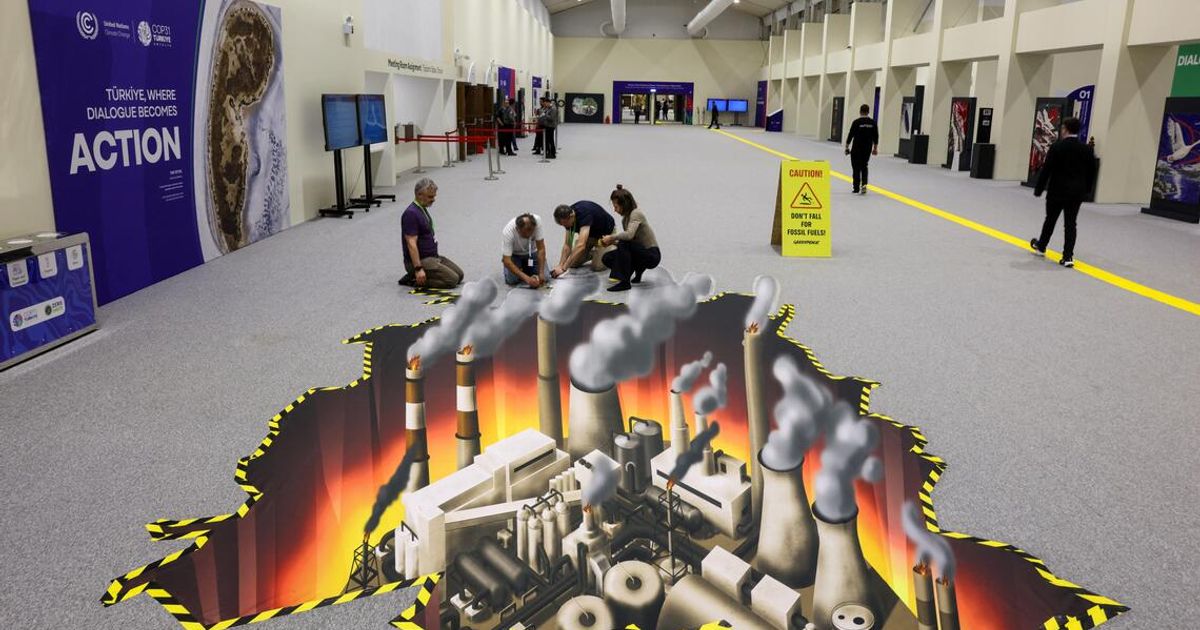
土耳其安塔利亚——联合国气候变化大会COP31原定于11月20日闭幕,但来自近200个国家的谈判代表仍在就几个关键问题展开拉锯战。
ANTALYA, Turkey – The UN climate conference COP31 is slated to end on Nov 20, but negotiators from almost 200 countries remain locked in discussions over several key issues.
阻碍达成共识的一个领域包括关于电气化的讨论,电气化是指对依赖化石燃料的工业流程进行调整,使其转而靠电力运行。
One area blocking consensus includes the discussions on electrification, which refers to tweaks to fossil fuel-dependent processes so they run on electricity instead.
气候资金这一历来棘手的问题继续沿着发展中国家与发达国家之间根深蒂固的分裂鸿沟使各国产生分歧。逐步淘汰化石燃料的呼吁同样是联合国气候峰会上的一个老生常谈的主题,再次遭到能够生产化石燃料的国家的阻挠。
The perennial thorny issue of climate finance continues to divide countries along the persistent faultline of developing vs developed nations. Calls to phase out fossil fuels, also a recurring theme at the UN summits, are again being stymied by countries that can produce them.
然而,COP31被冠以“落实之COP”的称号,旨在将承诺转化为具体的行动。本次会议在土耳其城市安塔利亚举行,澳大利亚则主导谈判。《海峡时报》梳理了部分尚未解决的问题。
Yet, COP31 has been dubbed an “implementation COP”, which aims to translate pledges to concrete actions. The conference is being held in the Turkish city of Antalya, while Australia is leading the negotiations. The Straits Times highlights some of the outstanding issues.
电气化——其定义:COP31土耳其主席国设定了一项目标,即到2035年将电力在全球能源需求中的占比从目前的20%提高到35%。
Electrification What it is: The Turkish presidency of COP31 has set an electrification target to increase the share of electricity in global energy demand from 20% currently to 35% by 2035.
当依赖化石燃料的工业流程经过调整、转而依靠低碳来源产生的电力时,电气化有助于减少碳排放。例如,从内燃机汽车转向电动汽车可以减少石油消耗。
Electrification can help to reduce carbon emissions, when processes relying on fossil fuels are tweaked so they can rely on electricity generated from low-carbon sources instead. For instance, switching from internal combustion engine vehicles to electric cars can reduce consumption of petroleum.
截至11月18日,据报道共有75个国家承诺加入该誓言,预计还会有更多国家加入。欧盟是最新正式背书该誓言的实体之一,此前已承诺的国家包括韩国、加拿大、吉尔吉斯斯坦和菲律宾。《海峡时报》已向新加坡政府询问其是否已签署。争议焦点是什么?电力的生产方式是各国无法达成一致的一个领域。
As at Nov 18, a total of 75 countries reportedly committed to the pledge with more expected to join. The European Union is among the latest to formally endorse it, while other countries that have pledged include South Korea, Canada, Kyrgyzstan and the Philippines. The Straits Times has asked the Singapore government if it has signed. What are the points of contention? How electricity is generated is one area that countries cannot agree on.
为了让电气化对气候产生积极影响,电力必须由可再生能源或其他低碳来源(例如氢能)产生。
For electrification to have a positive impact on the climate, the electricity must be generated by renewable energy or other low-carbon sources, such as hydrogen.
世界资源研究所波斯基全球能源转型中心全球主任尼克·韦思表示,一些国家(如英国)坚持要求大会最终成果文件中的措辞——作为一种政治承诺信号——反映出电力必须来自清洁能源。
Some countries, like the United Kingdom, are insisting that the wording in the final outcome from the conference – which serves as a political signal of commitment – reflect that electricity must be from clean sources, said Nick Wayth, global director of the World Resources Institute’s Polsky Center for the Global Energy Transition.
非营利气候科学与政策研究所“气候分析”的气候政策分析师奥利维亚·沃特斯顿表示,但其他国家,特别是那些经济建立在化石燃料出口基础上的国家,对此表示反对。
But other countries, especially those whose economies are built on fossil fuel exports, are objecting to this, said climate policy analyst Olivia Waterston from non-profit climate science and policy institute Climate Analytics.
她说,在不扩大可再生能源发电能力的情况下实现电气化目标,有可能导致人们进一步依赖化石燃料。
Meeting the electrification target without expanding renewable energy capacity threatens further reliance on fossil fuels, she said.
另一个障碍是资金。电气化需要对电网进行投资,但这通常难以吸引投资。
Another hurdle is financing. Electrification requires investment in power grids, but this usually struggles to attract investment.
韦思对《海峡时报》表示,为了实现电气化目标,各国需要制定详细计划,将交通、供暖和工业转向电力。这也需要它们明确电力分配所需的投资。
Wayth told ST that in order to meet the electrification target, countries will need to develop detailed plans for shifting transport, heating and industry toward electricity. It will also require them to identify the investments required for the distribution of electricity.
他说:“在历史上最大的能源危机之一期间,这需要许多国家平衡近期财政预算与长期投资。”
“This requires many countries to balance near-term fiscal budgets with long-term investments during one of the largest energy crises in history,” he said.
一些专家还表示,全球目标应当结合各国的具体情况来设定,而不是对所有国家适用一个整齐划一的目标。这是因为各国在能源需求和电力获取等方面存在差异。
Some experts also said that the global target should be contextualised by country, instead of applying a flat target to all. This is because countries differ in energy demand and electricity access, among others.
伦敦大学学院能源与交通政策高级研究员多拉·奥卢泰耶指出,例如,非洲部分地区仍然在向民众提供基本电力获取方面面临困难。
For example, parts of Africa still struggle with providing basic electricity access to its people, noted University College London’s senior fellow for energy and transport policy Dola Oluteye.
气候融资是什么:气候融资是指发达国家向发展中国家流动的资金,这是《巴黎协定》所规定的。此类出资可以帮助发展中国家实现该气候协议的目标,该协议旨在将全球变暖幅度限制在比工业化前水平高1.5摄氏度的范围内。
Climate finance What it is: Climate finance refers to the flow of funds from developed countries to developing countries, which is mandated under the Paris Agreement. Such contributions can help developing nations achieve the goals of the climate pact, which aims to limit global warming to 1.5 deg C above pre-industrial levels.
例如,资金贡献可以帮助它们摆脱化石燃料能源,转向可再生能源等更清洁的选择。较贫穷国家还可以利用这些资金进行气候适应,例如投资早期预警系统,以适应气候变化的影响。先前的联合国气候变化大会已经设定了气候融资目标。
For example, financial contributions can help them shift away from fossil fuel energy sources towards cleaner options like renewable energy. Poorer nations can also tap the funds for climate adaptation, such as investing in early warning systems, to adapt to the impacts of climate change. Earlier COPs have already set targets for climate finance.
例如,在2024年于阿塞拜疆举行的《联合国气候变化框架公约》第二十九次缔约方大会(COP29)上,发达国家同意每年向发展中国家提供3000亿美元(约合3840亿新加坡元)的年度气候融资。最终目标是通过各种形式的融资,到2035年为有需要的国家每年筹集1.3万亿美元。
For instance, at COP29 in Azerbaijan in 2024, developed countries agreed to provide US$300 billion (S$384 billion) a year in annual climate finance to developing countries. The ultimate aim is to raise US$1.3 trillion annually by 2035 for countries in need, through various forms of finance.
在2025年于巴西举行的COP30上,各国的呼吁是努力到2035年将发展中国家的适应融资至少增加两倍。这相当于将现有资金提高到每年约120亿美元。
At COP30 in Brazil in 2025, countries called for efforts to at least triple adaptation finance for developing countries by 2035. This amounts to raising existing funds to roughly US$120 billion annually.
然而,该会议并未说明适应融资应增加两倍的基准,也没有提供任何不引发债务的资金保证。
However, it did not state a baseline from which adaptation finance should triple nor provide any guarantee of finance that did not induce debt.
发展中国家正呼吁就先前各届缔约方大会上商定的资金流向和数量作出具体承诺并提供更大的透明度。气候融资的质量是指资金的发放方式,例如是通过贷款还是赠款。
Developing countries are calling for concrete commitments and greater clarity on the flow and quantity of funds agreed on at earlier COPs. Quality of climate finance refers to how funds are disbursed, such as if it comes via loans or grants.
国际气候行动网络(Climate Action Network International)的适应负责人普贾·戴夫(Pooja Dave)表示,发展中国家希望资金以赠款和优惠融资的形式提供,以避免加重其债务负担。
Developing nations want the money to come in the form of grants and concessional funding to avoid adding to their debt burdens, said Climate Action Network International’s adaptation lead Pooja Dave.
她说:“处于一线的社区正在为一场并非它们造成的危机买单。它们现在就需要能够落地的可预测公共赠款,同时还需要一份落实承诺增资的可信计划。”
“Frontline communities are already paying for a crisis they did not cause. They need predictable public grants reaching them now, alongside a credible plan to deliver the promised increase,” she said.
戴夫补充说,各发达国家将提供多少资金、以什么基准进行衡量以及哪些里程碑能够表明它们走在正轨上,这些问题尚未达成一致。观察人士表示,欧盟等发达国并不愿意讨论这些问题。另一个症结在于发达国家究竟将自掏腰包提供多少资金。
Dave added that how much funding will be provided by the various developed countries, what baseline to measure it against and what milestones would show whether they are on track have yet to be agreed on. Observers said developed countries, like those in the European Union, were not willing to discuss these issues. Another sticking point is how much financing developed countries will actually provide from their own pockets.
发达国家通常也将他们在气候融资报告中调动起来的资金数额计算在内。调动资金是指由政府最初出资而引入的私营部门等第三方的投资。
Developed countries usually also count the amount of funding they mobilise in their climate finance reporting. Mobilised finance refer to the investments from third parties such as the private sector, brought in because of initial governmental contributions.
发展中国家希望富裕国家明确说明它们将从自身公共预算中提供多少气候融资。
Developing countries want the richer nations to state clearly how much climate finance they will provide from their own public budgets.
绿色和平国际的全球金融专家科艾莱·莫纳亨表示,发达国家希望谈判涵盖更广泛的资金来源,包括私人投资。他表示,这可能会使发达国家更难履行《巴黎协定》规定的义务。
Greenpeace International’s global finance expert Koaile Monaheng said developed countries want the talks to cover a wider pool of funding, including private investment. This could make it harder to hold developed countries to their obligations under the Paris Agreement, he said.
他补充说:“私人投资可以提供帮助,但它不能取代发达国家根据《巴黎协定》所欠下的资金。”另一个问题是发展中国家获取资金的难易程度。
“Private investment can help, but it can’t take the place of the finance developed countries owe under the Paris Agreement,” he added. Another problem is how easily developing countries can access the funds.
莫纳亨表示,小岛屿发展中国家和最不发达国家需要更简单的申请程序、更快的拨款速度以及通过其自身机构获得更多的直接渠道。
Monaheng said that small island developing states and least developed countries need simpler applications, faster disbursement and greater direct access through their own institutions.
他表示:“如果各国在需要时无法获得国际承诺的资金,那么这些资金就毫无意义,特别是考虑到随着气候危机加深,资金需求的规模和频率正在加速增长。”应优先向谁发放损失和损害赔偿?
“Money promised internationally means little if countries cannot access it when they need it, especially given the scale and frequency of need is accelerating as the climate crisis deepens,” he said. Who to prioritise for loss and damage payouts?
损失和损害是一项特定的气候融资机制,是指向发展中国家支付的资金,用于补偿它们因发达国家污染而面临的无法避免的气候影响。
Loss and damage is a specific climate finance mechanism which refers to funds paid out to developing countries to compensate them for the unavoidable climate impacts that they face due to the pollution from developed countries.
这笔资金可用于修复受气候相关灾害破坏的房产,或重新安置面临海平面上升威胁的民众。
The money pot can be used to repair devastated properties affected by climate-linked disasters or relocate people threatened by rising seas.
然而,对该基金(被称为联合国的“损失和损害基金”)的赔付请求一直呈压倒性态势。
However, requests for payouts from the fund – known as UN’s Fund for Responding to Loss and Damage – have been overwhelming.
截至2026年7月,119个国家已提出176项申请,总额约为28亿美元。这超过了截至3月份该基金承诺认捐的8.22亿美元的三倍。迄今为止,尚未有资金发放。
As of July 2026, 176 requests have been made by 119 countries for about US$2.8 billion. This is more than three times the $822 million pledged to the fund as of March. No funds have been paid out to date.
预计在第31届联合国气候变化大会(COP31)结束前,会有更多认捐资金陆续到位。
More pledges are expected to trickle in before the end of COP31.
随着气候变化继续打击各国,对损失和损害融资的需求预计将不断增长。
As climate change continues to pummel countries, demand for loss and damage financing is expected to grow.
发达国家正极力将资金限制在最脆弱的国家——包括最不发达国家和小岛屿发展中国家谈判集团内的国家。这些集团中的国家包括斐济、柬埔寨、尼泊尔和埃塞俄比亚。
Developed countries are pushing to limit funding to the most vulnerable countries – including those in the Least Developed Countries and Small Island Developing States negotiation groupings. Nations in these groups include Fiji, Cambodia, Nepal and Ethiopia.
在联合国气候峰会上,有相似关切的国家往往会联合起来,以集团形式进行谈判。但发展中国家表示,所有发展中国家都应有权获得该基金。
At the UN climate summits, countries with similar concerns tend to band together and negotiate in blocs. But developing countries said that all of them should have access to the fund.
气候倡导组织“萨塔特·桑帕达气候基金会”(Satat Sampada Climate Foundation)的创始主任哈尔吉特·辛格(Harjeet Singh)表示,该基金已经有一项指导方针,即把至少50%的资源分配给这两个发展中国家集团。
Climate advocacy group Satat Sampada Climate Foundation’s founding director Harjeet Singh said that the fund already has a guideline to allocate at least 50% of resources to the two developing country blocs.
但他表示,这种限额稀缺——即根据规则以受控份额分配稀缺资源的状况——使得在灾难性的气候影响中进行优先排序极具挑战性。他补充说,目前尚未确定明确的筛选流程。
But the rationed scarcity – a situation where scarce resources are being distributed in controlled portions by rules – makes prioritising among devastating climate impacts challenging, he said. He added that a clear selection process has yet to be decided.
他说:“归根结底,核心瓶颈不是方法论,而是桌上资金的严重匮乏。当资源如此不足时,任何分配公式都会显得繁琐且具有排他性。”
“Ultimately, the core bottleneck is not the methodology, it is the sheer lack of money on the table. When resources are this inadequate, any allocation formula will feel cumbersome and exclusionary,” he said.
化石燃料 概念:化石燃料——其燃烧是气候变化的最大驱动力——一直是历届年度会议上最具争议的议题之一。
Fossil fuels What it is: Fossil fuels — the burning of which is the largest driver of climate change – have been one of the most contentious issues at the annual conferences.
各国历时近30年,终于在2023年的COP28上首次承诺逐步摆脱导致地球变暖的能源。
It took almost 30 years for countries to finally commit, for the first time, to transitioning away from the planet-warming power sources at COP28 in 2023.
次年,在经济依赖化石燃料的阿塞拜疆举行的COP29,其成果并未重申这一呼吁。
The following year, the COP29 outcome in Azerbaijan, whose economy is dependent on fossil fuels, did not repeat that call.
在COP30上,巴西作为东道主曾提出一份路线图,详述各国为逐步淘汰经济中化石燃料使用所需采取的各项步骤。
At COP30, the Brazilian host had proposed a roadmap detailing the various steps that countries need to take in order to phase out the use of fossil fuels in their economies.
但这极具争议,由于以印度、俄罗斯、沙特阿拉伯和阿拉伯联合酋长国为首的一组依赖化石燃料的经济体提出反对,各国未在该峰会上达成一致。
But this was deeply contentious and countries did not agree to this at that summit, due to the objection led by a group of fossil-fuel dependent economies, which includes India, Russia, Saudi Arabia and the United Arab Emirates.
在COP31召开前,巴西启动了一份全球路线图,概述各国减少对化石燃料依赖的措施。该路线图不具法律约束力,且未设定硬性截止日期或目标。步骤包括取消化石燃料补贴和大幅提升可再生能源发电量。
Ahead of COP31, Brazil launched a global roadmap outlining measures for countries to reduce dependence on fossil fuels. It is not legally binding and did not set hard deadlines or targets. The steps included the removal of fossil fuel subsidies and ramping up renewable energy generation.
国际气候政治中心主任卡特·阿布雷乌表示,此类路线图有助于各国将雄心转化为具体的计划和法规。
Such roadmaps can help countries turn their ambition into concrete plans and regulations, said International Climate Politics Hub’s director Cat Abreu.
包括丹麦和太平洋岛国在内的多个国家和地区已制定自己的路线图,以摆脱化石燃料。作为今年谈判主导方的澳大利亚,面临着言行一致、制定自己的摆脱化石燃料计划的压力。
A number of countries and regions have come up with their own road maps to transition away from fossil fuels, including Denmark and the Pacific nations. Pressure is building on Australia, who is leading the negotiations this year, to walk the talk and develop its own plan to wean off fossil fuels.
绿色和平组织澳太分部COP31负责人西蒙·布拉德肖表示:“责任在于澳大利亚,要延续这一势头……并确保此次COP在逐步摆脱化石燃料方面取得实质性进展。”他补充说,推动电气化应与从化石燃料向可再生能源的转型齐头并进。
Greenpeace Australia Pacific’s COP31 lead Simon Bradshaw said: “The onus is on Australia to carry forward that momentum… and ensure that this COP leads to concrete progress in transitioning away from fossil fuels.”He added that the push for electrification should go hand in hand with a shift from fossil fuels to renewable power.
据报道,沙特阿拉伯和俄罗斯等主要化石燃料生产国抵制在摆脱石油和天然气方面使用更强硬的措辞,而委内瑞拉在COP31上捍卫其发展石油工业的权利。
Major fossil fuel producers including Saudi Arabia and Russia have reportedly resisted stronger language on the transition away from oil and gas, while Venezuela defended its right to develop its oil industry at COP31.
非营利研究组织“石油变革国际”的全球政策负责人罗曼·尤阿拉伦表示,逐步摆脱化石燃料的前景可能会引发关于产油国对出口收入依赖的棘手问题。但观察人士表示,这正是国家路线图可以发挥作用的地方。
The prospect of transitioning away from fossil fuels could raise hard questions about their dependence on export revenues, said Romain Ioualalen, Global Policy lead at non-profit research organisation Oil Change International. But this is where country roadmaps can help, observers say.
气候变化智库E3G全球清洁能源外交副主任马特·韦伯表示,如果进口国分享它们计划如何实现交通、供暖和工业电气化,出口国就能更好地预判需求下降,并为可能的收入损失做好准备。
If importing countries share their plans on how they intend to electrify transport, heating and industry, exporting countries can better anticipate falling demand and prepare for the potential loss of revenue, said Matt Webb, associate director for global clean power diplomacy at climate change think-tank E3G.
尤阿拉伦表示,随着各国准备向可再生能源转型,产油国也应制定自己的路线图,为经济转型做准备,而不是阻挠谈判。
As countries prepare to transition to renewable energy sources, Ioualalen said oil-producing countries should also draw up their road maps to prepare their economies for this transition instead of blocking negotiations.
但他补充说,较贫穷的产油国将需要国际公共资金来应对这一转型。
But poorer oil-producing countries will need international public funding to manage the transition, he added.
尤阿拉伦说:“并非每个化石燃料生产国都是富裕的。(有)许多化石燃料生产国需要来自这一国际体系的强有力财政支持,如果它们想要摆脱对化石燃料的依赖。”
“Not every fossil fuel-producing country is rich. (There are) a lot of fossil fuel producing countries that need strong financial support from this international system if they want to be able to transition away from fossil fuel dependence,” said Ioualalen.
他说:“如果这些国家没有信心能够在不摧毁其经济和社会的情况下逐步淘汰化石燃料,我们在这里就无法在能源问题上达成平衡且公平的结果。”
“We are not going to get a balanced and fair outcome on energy here if these countries don’t get the confidence that they can actually phase out fossil fuels without wrecking their economy and their society.”