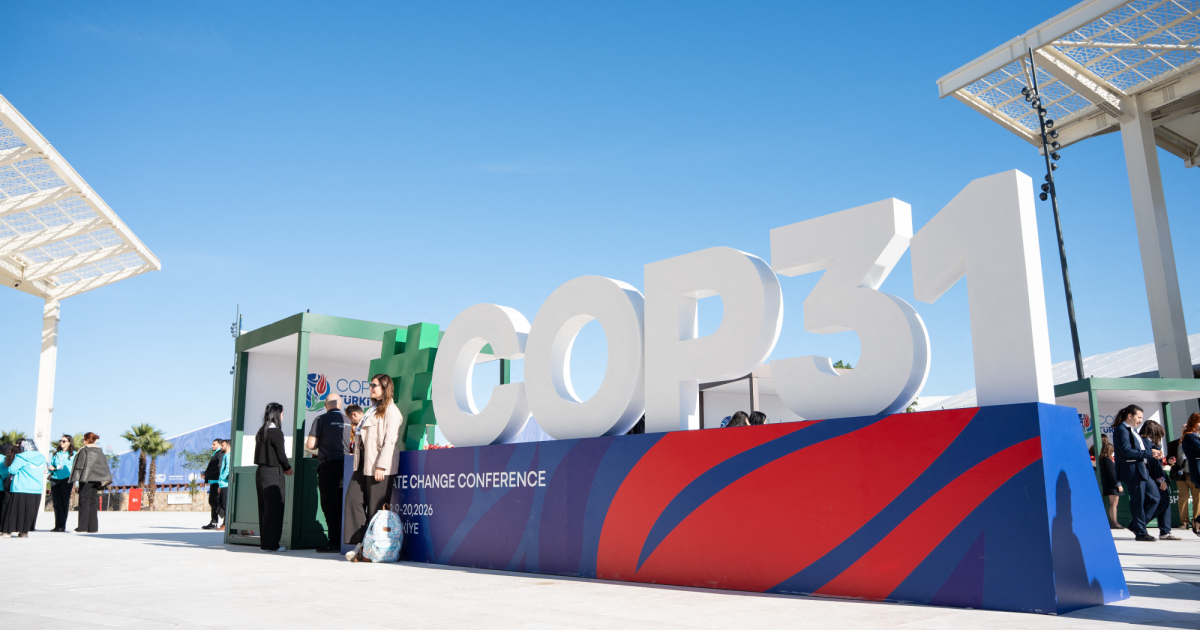
世界最大的气候大会今日在土耳其安塔利亚开幕,该国以日益加剧的政治压制著称。根据一项不同寻常的妥协安排,土耳其担任东道主,但澳大利亚政府将主持190多个国家为应对气候危机而进行的谈判。而连续第三年,一个问题贯穿所有其他问题:为什么没人能说出“化石燃料”这几个字?
The world’s biggest climate conference kicked off today in Antalya, Turkey, a country known for growing political repression. Under an unusual compromise, Turkey is hosting, but Australia’s government will preside over negotiations among more than 190 nations seeking to address the climate crisis. And for the third year in a row, one problem underscores all the others: Why can’t anyone say “fossil fuels”?
未来两周,来自世界各地的代表——值得注意的是,美国除外——将讨论他们在《巴黎协定》下的履约进展。这是他们于2015年签署的国际条约(唐纳德·特朗普曾两次让美国退出该协定)。根据该协议,各国承诺通过设定各自的温室气体减排目标,将全球升温幅度控制在远低于工业化前水平2摄氏度,并努力限制在1.5摄氏度以内。
For the next two weeks, delegates from all over the world—except, notably, the United States—will discuss their progress under the Paris Agreement, the international treaty they signed in 2015 (which Donald Trump has twice withdrawn the US from). Under that deal, countries committed to limiting global warming to well below 2 degrees Celsius above pre-industrial levels, and ideally to 1.5 degrees, by setting their own targets for cutting greenhouse gas emissions.
时机再紧迫不过了。我们正处于一个厄尔尼诺季节之中,它已打破全球气温纪录,并在尼泊尔引发灾难性洪水。而上个月,联合国警告称,我们正朝着完全超越1.5摄氏度的方向发展。紧迫性真实存在,愤世嫉俗的情绪也同样真实。
The timing couldn’t be more urgent. We’re in the middle of an El Niño season that has already smashed global temperature records and caused catastrophic flooding in Nepal. And last month, the United Nations warned that we’re on track to overshoot 1.5 degrees entirely. The urgency is real. So is the cynicism.
“联合国气候峰会几乎已成为低预期的代名词,空谈多、实干少,”“关注气候现在”(CCN)报道称,尽管“绝大多数世界民众,即 80% 至 89% 的人,希望本国政府在气候危机上‘做得更多’”。作为缔约方会议(COP)的正式名称,这一年度会议贯穿了我的一生。我对 2009 年哥本哈根峰会仅存模糊的中学记忆,那次会议以一份软弱、无约束力的协议草草收场,令许多观察人士倍感失落。
“UN climate summits have become all but synonymous with low expectations, long on rhetoric, short on action,” Covering Climate Now (CCN) reported, even though “an overwhelming majority of the world’s people, 80 to 89 percent of them, want their governments to ‘do more’ about the climate crisis.”The annual Conference of the Parties, as COP is officially known, has been the backdrop to my entire life. I have vague middle-school memories of the 2009 Copenhagen summit, which ended in a weak, non-binding accord that left many observers deflated.
2015 年,作为大学生,我记得当巴黎谈判代表达成一项被描述为“拯救我们唯一星球的最佳机会”的协议时,我感受到的那股可能性的激荡。成年后,我加入国家安全档案馆,采访了数十位前政府官员、科学家和倡导者,了解我们在拯救地球的征途中所有做错——和做对——的地方。
As a college student in 2015, I remember the surge of possibility I felt when negotiators in Paris emerged with a deal described as “the best possible shot to save the one planet we’ve got.”As an adult, I joined the National Security Archive, where I interviewed dozens of former government officials, scientists, and advocates about all the ways we’ve gotten it wrong—and right—in our quest to save the planet.
这段历史或许最荒诞的部分在于:近 30 年来——也就是我的一生——国际气候谈判很大程度上避而不谈气候危机的主要驱动因素:化石燃料。直到 2023 年迪拜举行的 COP28,最终协议才明确呼吁在能源系统中摆脱化石燃料,联合国气候事务负责人西蒙·斯蒂尔称这是化石燃料时代“终结的开始”。但该协议关键性地忽略了逐步淘汰将如何、何时进行。
Perhaps the most absurd part of this history is that for nearly 30 years—my entire life—international climate negotiations largely avoided naming the primary driver of the climate crisis: fossil fuels. It wasn’t until COP28 in Dubai in 2023 that a final agreement explicitly called for transitioning away from fossil fuels in energy systems, a step UN climate chief Simon Stiell called the “beginning of the end” of the fossil fuel era. But the deal crucially neglected to say how or when a phaseout would happen.
去年本应有所不同。巴西主办会议,这是一个令人振奋的信号:1992年,联合国气候变化框架公约在里约热内卢地球峰会上通过,这是一个转折点,开启了国际气候合作的新时代。在此之前的三年里,会议一直在经济严重依赖化石燃料的国家举行:埃及、阿拉伯联合酋长国和阿塞拜疆。但在亚马逊城市贝伦举行的第30届缔约方大会(COP30)上,代表们未能就如何永久摆脱石油、天然气和煤炭做出任何新承诺。
Last year was supposed to be different. Brazil hosted, which was a hopeful sign: In 1992, the United Nations Framework Convention on Climate Change was adopted at the Earth Summit in Rio de Janeiro, an inflection point that ushered in a new era of international cooperation on climate change. For the three years before that, the conference had been held in countries whose economies rely heavily on fossil fuels: Egypt, the United Arab Emirates, and Azerbaijan. But at COP30 in the Amazon city of Belém, delegates failed to make any new commitments on how they’d permanently ditch oil, gas, and coal.
在会议刚结束时,很难评估任何单届缔约方大会的长远意义。哥本哈根会议曾被视为失败,因为谈判代表未能达成一项取代1997年《京都议定书》的全球条约。但多年后,观察家认为它“扼杀了应对气候变化的自上而下的条约式方法”,正如公共事务教授、气候与安全中心研究员约书亚·巴斯比在2015年所指出的那样。
It’s difficult to assess the long-term significance of any individual COP in its immediate aftermath. Copenhagen was considered a failure because negotiators failed to produce a global treaty to replace the 1997 Kyoto Protocol. But years later, observers credited it with having “killed off the top-down treaty-based approach” to climate change, as Joshua Busby, a public affairs professor and researcher at the Center for Climate & Security, pointed out in 2015.
取而代之的是《巴黎协定》核心的国家自主贡献体系。这些承诺虽无法律约束力,却产生了实际影响。可再生能源项目蓬勃发展。能源需求增长放缓。本世纪末的预计升温幅度已从约3.6摄氏度降至2.6摄氏度。
In its place came the system of national pledges at the heart of the Paris Agreement. Those pledges, non-binding though they are, have had real impact. Renewable energy projects boomed. Energy demand growth slowed. Projected warming by the end of the century has dropped from about 3.6 degrees Celsius to 2.6 degrees.
当然,2.6摄氏度的升温幅度远非胜利,要避免最灾难性的气候情景,仍需付出巨大努力,这假设所有国家都能切实出力。去年大会上,特朗普总统拒绝派代表团出席,前国务卿兼气候特使约翰·克里对PBS表示,世界第二大温室气体排放国的领导人缺席“挫败了这些会议的根本目的”,因为“没有任何一个国家能单独解决这个问题”。
Of course, 2.6 degrees Celsius is hardly a victory, and a gargantuan amount of work remains to avoid the most catastrophic climate scenarios, assuming all nations meaningfully pitch in. When President Trump refused to send a delegation to last year’s conference, former Secretary of State and Special Climate Envoy John Kerry told PBS that the absence of of leaders from the world’s second-biggest greenhouse gas emitter “defeats the fundamental purpose of these meetings” because “no one country can solve this problem by itself.”
尽管今年峰会有少数民主党国会议员出席,但COP31将是连续第二年出现美国代表团规模的空缺。不过,许多其他国家已意识到我们必须与化石燃料“分手”,4月份有60多个国家在哥伦比亚圣玛尔塔聚首,在正式COP谈判之外讨论逐步淘汰化石燃料。
Despite a handful of Democratic members of Congress attending this year’s summit, COP31 will be the second year in a row with a US delegation–sized hole in it. But plenty of other countries have woken up to the idea that we have to break up with fossil fuels, with over 60 nations coming together in April in Santa Marta, Colombia to discuss a fossil fuel phaseout outside formal COP negotiations.
未能达成理想措辞的会议,仍能积累势头,改变下一届会议上政治上可行的范围。
A conference that fails to deliver the right language can still build momentum that changes what’s politically possible at the next one.
波茨坦气候影响研究所所长约翰·罗克斯特伦在10月一场网络研讨会结束时表示:“我们是一个多数力量,因此有信心拥有一个真心希望成功的全球共同体,而且为时未晚。机会之窗依然敞开,但正在迅速关闭。”
“We are a majority power that therefore can have confidence that we have a collective global community that really wants this to succeed, and that it isn’t too late,” Johan Rockström, director of the Potsdam Institute for Climate Impact Research, said at the close of an October webinar. “The window is still open, but rapidly shutting.”